


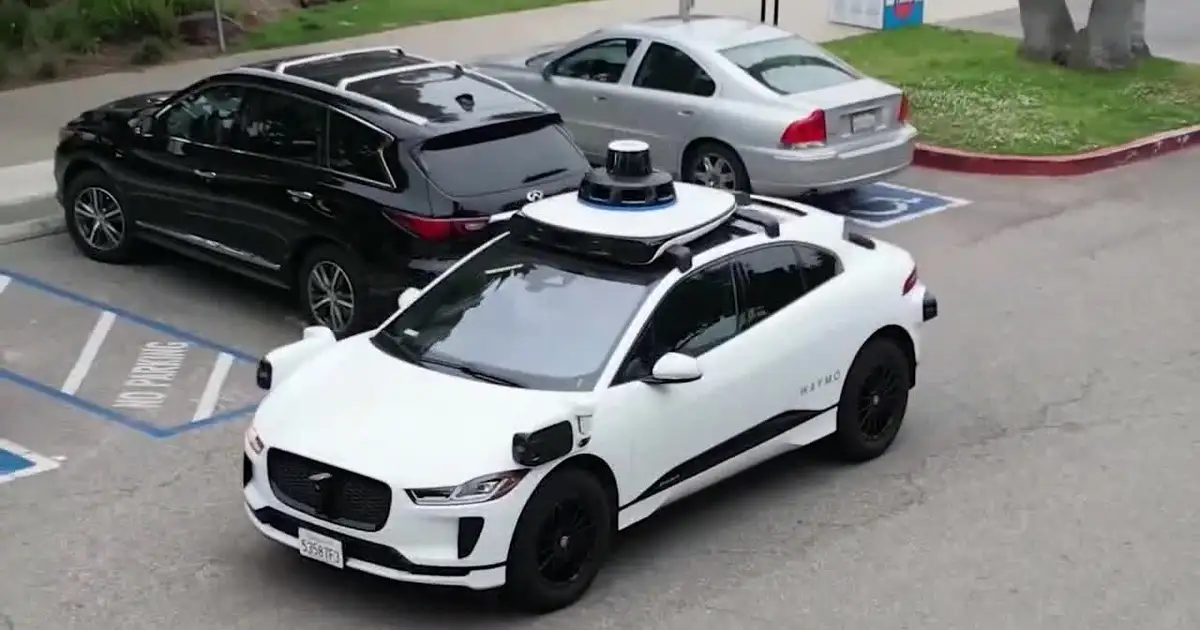
Minneapolis and St Paul have taken sharply different approaches to the arrival of driverless taxis, with one city moving to require a human inside autonomous vehicles and the other commissioning a study before deciding whether new safeguards are needed.
The St Paul City Council approved a resolution on Wednesday, October 14, directing officials to examine the possible effects of autonomous vehicles on public safety, emergency response, public transport, disabled people and rideshare workers.
The resolution, sponsored by council president Rebecca Noecker, also raises questions about winter driving, traffic, data privacy and the impact of driverless cars on pedestrians, cyclists and the city’s wider transport infrastructure.
Noecker said the council wanted to establish a clearer picture of the technology before imposing rules. She said a full study could take between six months and a year, although no formal deadline has been set.
“Our responsibility is to look out for the people of St Paul, not these corporations,” Noecker said. “Depending on what our recommendations are, depending on what our community tells us, there may be guardrails that we can put in place that allow for these vehicles to operate safely. But we need to do the work first to figure out if that’s even possible.”
Minneapolis driverless vehicle rules face veto battle
Across the Mississippi River, Minneapolis is already locked in a political dispute over how robotaxis should operate.
The Minneapolis City Council voted 7-6 on October 1 to approve an ordinance requiring companies such as Waymo to obtain a city licence and place a licensed human safety monitor in the driver’s seat of any autonomous rideshare vehicle.
The monitor would need immediate access to the steering, braking and acceleration controls and would have to be paid at least the minimum wage. If implemented, the measure would make Minneapolis the first US city to require a person in the driver’s seat of a driverless taxi.
Mayor Jacob Frey vetoed the ordinance, describing it as a back-door ban on the technology. The council is due to decide on Thursday, October 15, whether to sustain the veto or attempt to override it. Nine of the 13 council members would be needed for an override.
“Requiring a driver in a driverless car doesn’t make sense,” Frey said. “Minneapolis is open for business, open to innovative technology, and open to a variety of transportation options. Thoughtful regulation for safety is necessary, but not through a backdoor ban.”
The ordinance would not take effect until October 2027, according to reporting on the measure, giving state and local authorities additional time to consider broader regulation of autonomous vehicles.
Waymo has called the Minneapolis proposal a “de-facto ban”. The company has been testing vehicles in the Twin Cities with human drivers behind the wheel, but has not announced when it will begin offering driverless rides to customers.
Supporters of the Minneapolis rules say they are intended not only to address safety concerns but also to protect the livelihoods of rideshare drivers who could face competition from automated vehicles.
Robin Wonsley, one of the council members supporting the ordinance, said the debate was also about whether technological progress would leave workers behind.
“The entire basis of this ordinance was also – how do we protect workers,” she said. “As we’re welcoming technological advancements in our city we’re not going to leave workers behind.”
Critics of the measure argue that requiring a person to sit in a vehicle controlled by artificial intelligence defeats the purpose of an autonomous taxi. They also say driverless services could offer passengers greater choice and reduce the risk of assault, discrimination and cancelled journeys for people with disabilities.
Council member Elizabeth Shaffer said Minneapolis should wait for further research rather than imposing rules that could affect the wider region.
“No other city in the US requires this, and the authors have refused to wait to move this forward until we receive a full research report,” she said before the vote.
Frey has said local authorities should focus on issues including emergency response, traffic enforcement, insurance, liability, privacy and data reporting rather than requiring a human monitor to take the driver’s seat.
St Paul’s resolution calls for many of those questions to be examined before any commercial autonomous vehicle service begins there. Noecker has not ruled out requiring human safety monitors in the future, but said she did not want to prejudge the findings of the study.
