


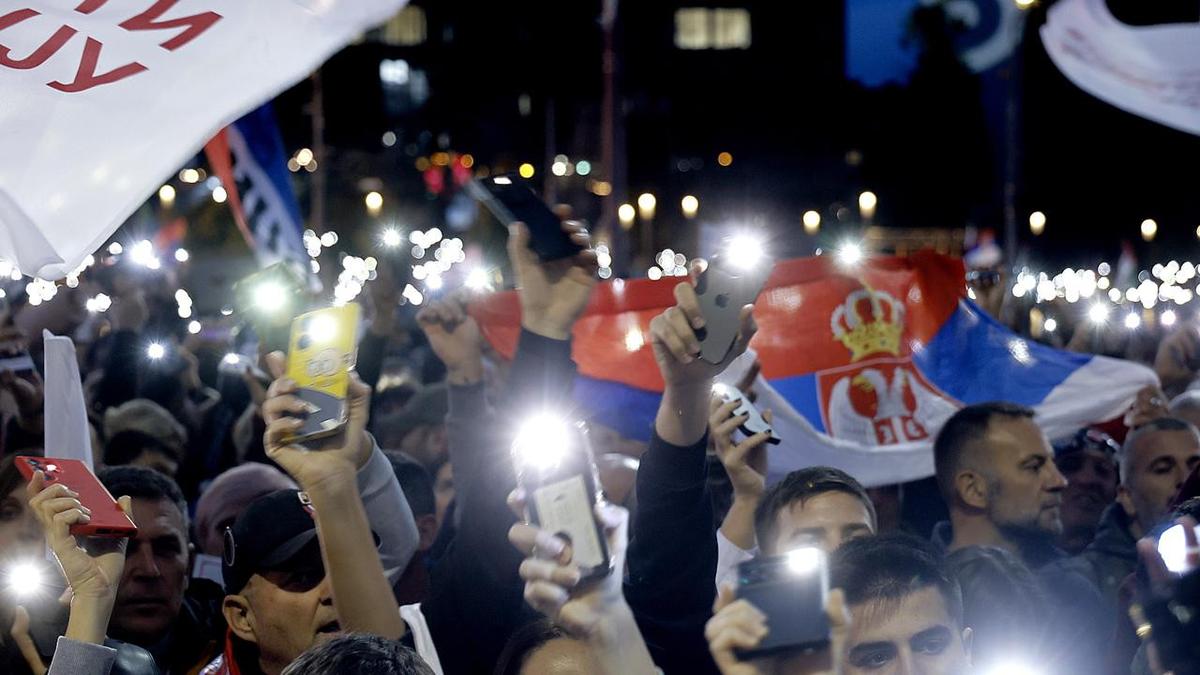
Serbia’s parliamentary elections will test whether a mass student protest movement can end Aleksandar Vucic’s more than decade-long grip on power.
Polling stations are due to open at 7am on Sunday and close at 8pm, with the first indications of the result expected around two hours later.
The snap election was called by Mr Vucic in September after almost two years of student-led demonstrations. The protests began following the deaths of 16 people when a railway station canopy collapsed in Novi Sad in 2024, and have since attracted widespread support.
The movement has accused the authorities of failing to tackle perceived corruption and allowing authoritarianism to grow. Its candidates are standing on a platform focused on rooting out graft and improving education.
The Student List’s 250 candidates include university professors, actors and farmers. It is led by cardiologist Ilija Srdanovic, although the group has given fewer details about its ambitions on Serbia’s international position.
Opinion polls suggest a closely fought contest. An Ipsos survey published on Thursday put Mr Vucic’s Serbian Progressive Party on 47 per cent, against 40 per cent for the students, while other polls have shown the Student List ahead.
“The Serbian election is shaping up to be a watershed moment for the country as the Student List mounts the biggest challenge against Vucic yet,” said Mario Bikarski, senior Europe analyst at risk consultancy Verisk Maplecroft.
A victory for the students would mark a profound shift in the Balkan country, which has a population of about six million. It could also provide a model for student movements elsewhere in Europe, where protests have recently focused on poor education standards and limited prospects.
Mr Vucic remains a strong incumbent. He has held power first as prime minister and then as president for more than a decade, and resigned as president to run again for prime minister.
His supporters credit him with bringing Serbia out of economic obscurity and overseeing sustained modernisation, including the construction of new highways, railways, schools and hospitals.
Domestically, he has promised higher pensions and public sector salaries, investment in state healthcare and subsidies for young couples. Abroad, he has pursued closer relations with China, a major investor, and Russia, Serbia’s traditional ally and main supplier of natural gas, while keeping open the possibility of joining the European Union.
