


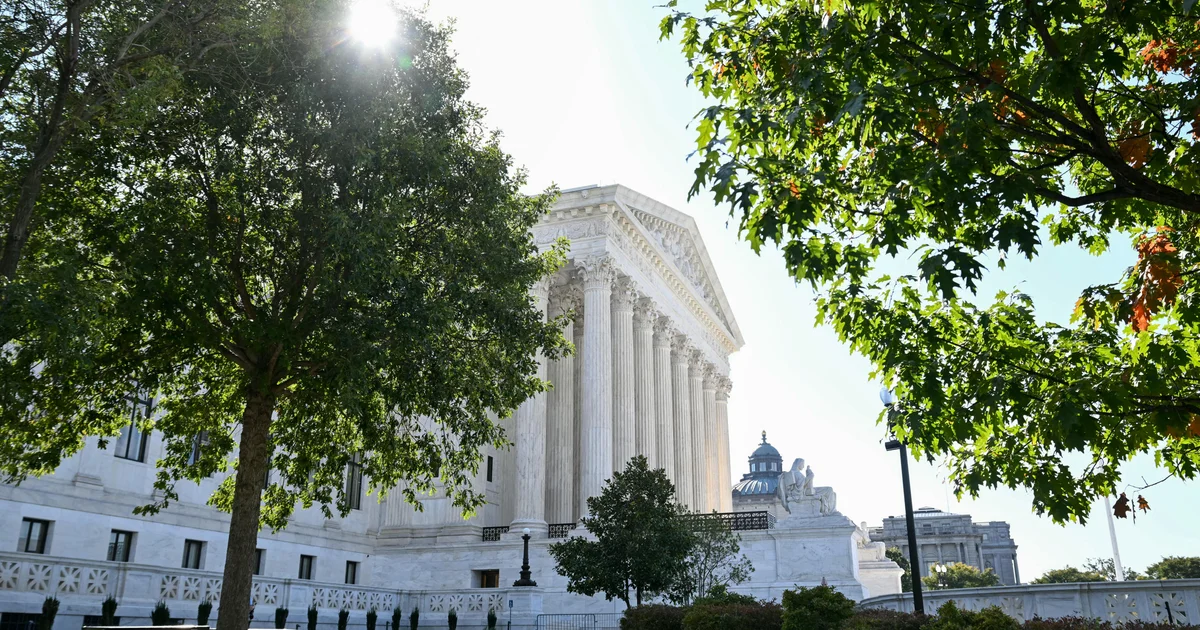
The US Supreme Court has left in place a lower court order blocking the Trump administration’s policy restricting gender-affirming care for transgender inmates in federal prisons.
In an unsigned, one-line order, the justices rejected an emergency request from the Justice Department to suspend the ruling and allow the Bureau of Prisons to enforce its new rules. Justices Samuel Alito and Clarence Thomas said they would have granted the administration’s request.
The policy would end surgery and hormone therapy for inmates diagnosed with gender dysphoria, while also removing social accommodations including breast padding, binders, wigs and make-up.
It would also allow prisoners receiving hormone treatment to be placed on a tapering plan leading to its eventual withdrawal. Lawyers for the challengers say the changes could affect nearly 1,000 inmates in the Bureau of Prisons’ custody.
Supreme Court transgender inmates ruling
The dispute began after Donald Trump issued an executive order barring federal funding for medical procedures or treatments for transgender inmates held by the Bureau of Prisons.
The bureau responded by issuing a new policy in February. It said the changes reflected treatment for gender dysphoria that was “more aligned with the latest scientific information” and took account of “complex security and administration concerns in the correctional environment”.
In June, US District Judge Royce Lamberth blocked the policy and ordered the Bureau of Prisons to continue providing medical interventions and social accommodations to a class of inmates with gender dysphoria. He continued the injunction in August.
Judge Lamberth wrote: “The court does not wade into the culture war being waged against transgender individuals. The court simply concludes that the government violated [federal law] when it issued a new policy restricting the provision of gender-affirming care to inmates diagnosed with gender dysphoria.”
A divided three-judge panel of the US Court of Appeals for the District of Columbia Circuit later declined to lift the injunction. The majority said the Bureau of Prisons had not adequately considered its previous experience providing gender-affirming care and had failed to show strongly that it was likely to win the case.
In its appeal to the Supreme Court, Solicitor General D John Sauer argued that the lower court’s decision prevented the executive branch from applying its chosen policy broadly. He said the Bureau of Prisons had considered its past experience and had separately concluded that security and prison-administration concerns justified the change.
The inmates’ lawyers disputed that account, saying the administration had provided no evidence showing whether Bureau of Prisons healthcare providers considered the restricted treatments effective, ineffective or harmful. They said the agency had replaced treatment with psychotherapy and psychiatric medication, while failing to identify a security incident linked to gender-affirming care.
The lawsuit was brought by a transgender woman and two transgender men in federal prisons on behalf of incarcerated people diagnosed with gender dysphoria. Their lawyers said the Bureau of Prisons had provided hormone treatment to people with the condition since 1992.
