


Donald Trump’s latest tariffs on Canada are hitting businesses and voters in Michigan’s remote Upper Peninsula, where trade, tourism and everyday shopping depend heavily on movement across the international border.
The economic pressure is unfolding as Michigan prepares for a closely watched US Senate contest, raising the prospect that the trade dispute could test the loyalty of Republican-leaning communities before November’s midterm elections.
Trump imposed an additional 50 per cent duty on almost $20 billion of Canadian imports after talks between Washington and Ottawa broke down. The measures were introduced under Section 338 of the Tariff Act of 1930, which allows tariffs of up to 50 per cent in response to what the US government considers discriminatory foreign trade practices. ([ustr.gov](https://ustr.gov/about/policy-offices/press-office/press-releases/2026/july/ambassador-greer-issues-statement-president-trump-imposing-section-338-tariffs-canada))
In Newberry, a small former logging town roughly 60 miles from the Canadian border, shopkeeper Ben Rahilly said the impact was already visible in rising wholesale and delivery costs.
“Prices are going up. Our shipping charges are getting more and more every day,” Mr Rahilly said. He runs an appliance shop, gift store, furniture business and concrete company in a county of about 5,300 people.
With the nearest major retail centre, Marquette, about 100 miles away, many residents rely on local firms despite the area’s high transport costs. Mr Rahilly said the squeeze was making it harder to keep prices affordable while protecting already narrow profit margins.
He voted for Mr Trump but said he was not convinced by every decision taken by the administration, arguing that the Upper Peninsula needed to trade with its closest neighbour because it lacked the workforce to replace imported goods quickly.
International Bridge traffic falls
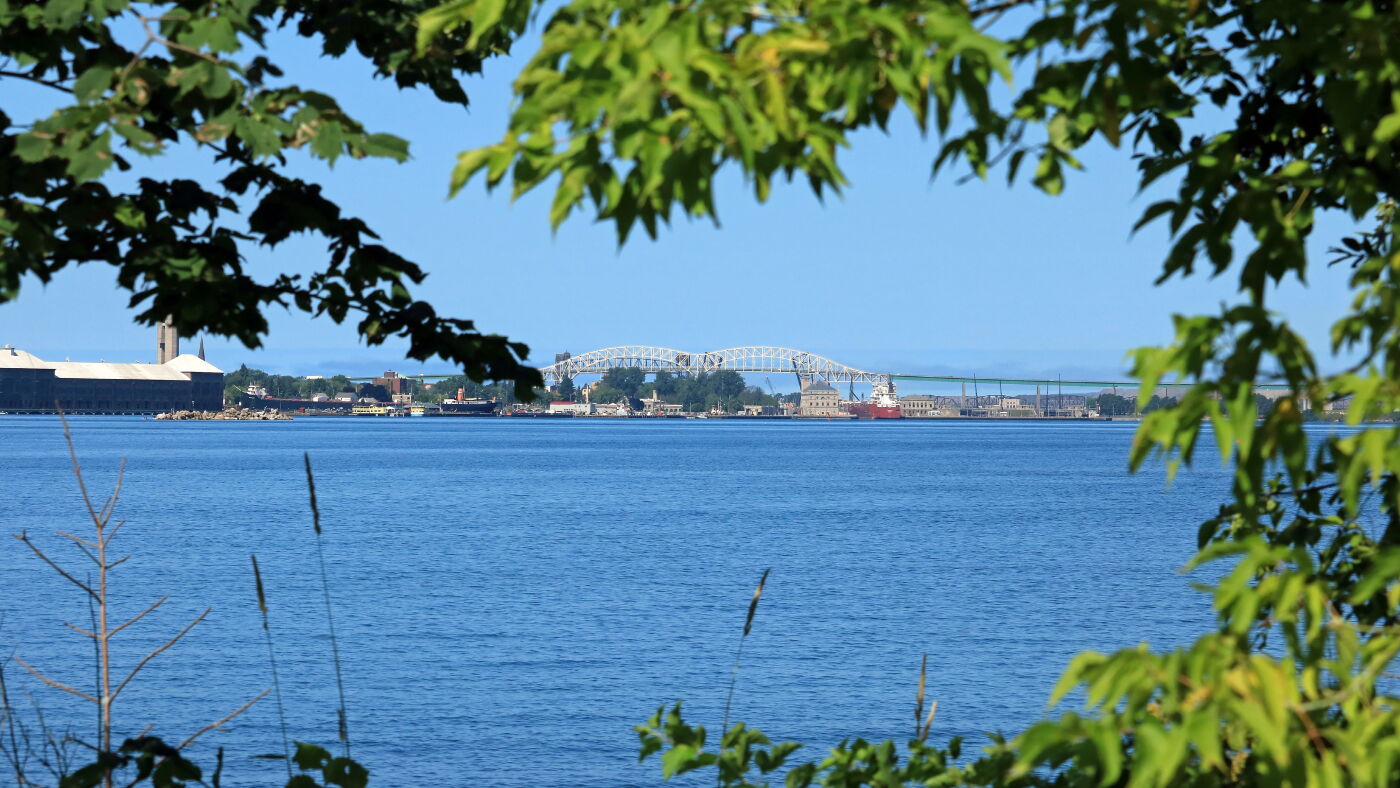
The pressure is particularly acute in Sault Ste. Marie, where the US city is linked to its Canadian namesake by the International Bridge. Passenger and commercial traffic has fallen by about a quarter since Mr Trump returned to office, according to the International Bridge Administration.
The authority estimates that businesses on the Michigan side have lost $62.7 million in revenue as a result of reduced crossings. Tony Haller, executive director of the Sault Area Chamber of Commerce, said firms were “not quite as busy as they should be” and were hoping for a return to normal trade. ([knkx.org](https://www.knkx.org/2026-09-02/how-will-tariffs-affect-the-midterms-in-this-michigan-border-town-its-complicated))
Michigan is unusually exposed to the dispute. The US Trade Representative says Canada was the state’s largest export market in 2025, accounting for $23.2 billion, or 39 per cent, of Michigan’s total goods exports. ([ustr.gov](https://ustr.gov/countries-regions/united-states-trade-data/michigan))
That dependence has left some conservative voters questioning the administration’s approach without necessarily moving them towards the Democrats.
Todd Campbell, a Tennessee trucking company owner visiting the Soo Locks with his wife, said he supported many Republican policies but disliked the escalating duties. “Both sides are really out for themselves, and we all get caught in the middle,” he said.
Homer Coleman, an independent voter from the Detroit area, said the United States and Canada were like “brothers” and questioned why Mr Trump was choosing to confront such a close ally.
Others remain supportive of the president’s trade policy. Don Laban, a retired engineer from Muskegon who describes himself as politically moderate, said Mr Trump was right to try to address the trade imbalance and criticised Democrats for offering opposition without a clear alternative.
Canada is due to introduce matching tariffs on $27.6 billion of US goods on September 8, with rates of 15, 25 and 50 per cent. The measures will cover products including appliances, dairy, agricultural equipment, steel and aluminium, potentially adding to the uncertainty for Michigan exporters and border communities. ([canada.ca](https://www.canada.ca/en/department-finance/programs/international-trade-finance-policy/canadas-response-us-tariffs/complete-list-us-products-subject-to-counter-tariffs.html?utm_source=openai))
