


General Motors and Ford are extending their rivalry beyond the car market, targeting military contracts and energy storage as they seek new growth from factories and battery expertise built up during the electric vehicle boom.
Ford has joined GM in pursuing defence work after the US administration encouraged manufacturers to use their mass-production capabilities to support the military. Both companies are developing military vehicles, while also preparing to supply battery storage systems for utilities, businesses and data centres.
The moves reflect a broader attempt to diversify as demand for fully electric cars has fallen short of earlier expectations, leaving both manufacturers facing heavy losses and underused battery-making capacity.
“They’re looking for new verticals,” said David Whiston, a senior equity analyst at Morningstar. He said Ford was following GM into defence, while energy storage offered a way to make use of electric vehicle capacity as demand from data centres grows.
The new businesses are expected to remain small compared with vehicle sales for the foreseeable future. Analysts nevertheless believe they could provide additional revenue and help cushion the companies as the US new-car market slows.
Ford and GM target energy storage
Energy storage systems use many of the same battery technologies developed for electric vehicles, allowing power to be stored for use by homes, companies and electricity networks.
Ford has created Ford Energy as a wholly owned subsidiary focused on battery energy storage. The company plans to invest about $2 billion over the next two years, repurpose plants in Kentucky and Michigan, and begin shipping systems in 2027 with annual capacity of 20 gigawatt hours.
Ford said in May that it had signed a five-year framework agreement with EDF power solutions North America, giving the energy company the option to procure up to 4 gigawatt hours of storage systems a year. Deliveries under the agreement are expected to begin in 2028. ([fromtheroad.ford.com](https://www.fromtheroad.ford.com/us/en/articles/2026/lisa-drake-appointed-president-ford-energy?utm_source=openai))
The Kentucky facility is intended to produce large, containerised battery systems for utilities, industrial customers and data centres. Ford also plans to use its BlueOval Battery Park Michigan site to make smaller cells for residential storage.
GM does not yet sell a standalone energy storage system under its own brand, but its Ultium Cells joint venture in Tennessee produces battery cells for LG Energy Solution’s storage business. GM has also partnered with Redwood Materials to explore the reuse of large electric vehicle batteries.
The company is considering a longer-term role in grid-scale storage, including sodium-ion battery technology developed with Denver-based start-up Peak Energy. GM’s battery chief Kurt Kelty said the technology could have a significant role in future energy storage.
Ford’s energy business sits within its Model e electric vehicle division, which is expected to lose $4 billion in 2026 before reaching break-even by 2029. Ford has described energy storage coming on stream from 2027 as a potential turning point for the division.
Automakers move into defence
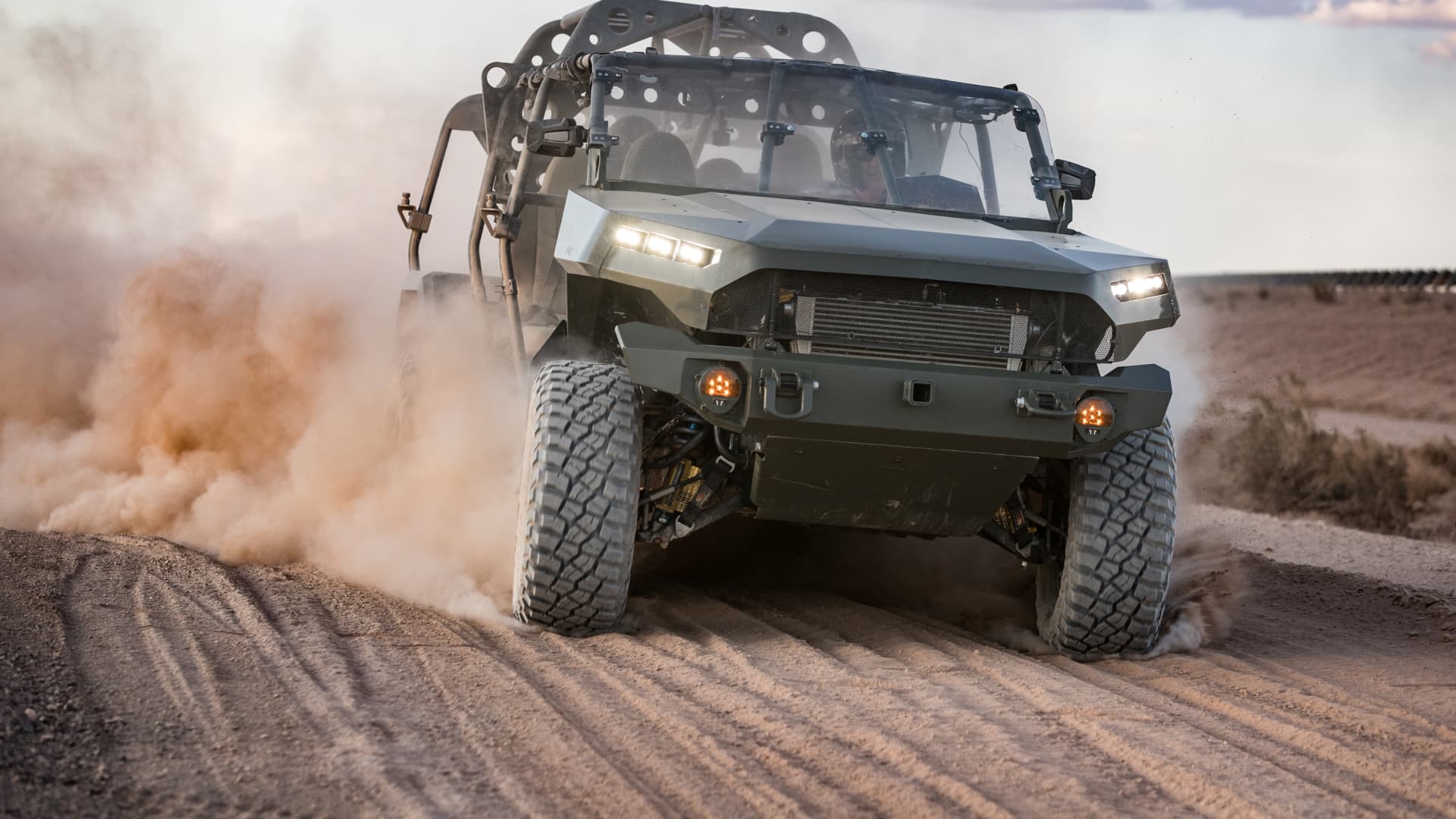
GM has a head start in military manufacturing. Its defence division was revived in 2017, and GM Defense already supplies the US Army with Infantry Squad Vehicles based on the Chevrolet Colorado ZR2 platform.
The Army’s latest planning documents show that the approved acquisition objective for the standard vehicle and its utility variant has risen to 11,582 vehicles. GM’s original production contract, awarded in June 2020, was valued at about $214 million for an initial fleet of 649 vehicles. ([army.mil](https://www.army.mil/article/236844/infantry_squad_vehicle_to_motorize_ibcts?utm_source=openai))
GM has since secured further work on the vehicles, with the potential value of its Army contract exceeding $1 billion depending on congressional funding. The company expects defence revenue to reach almost $700 million in 2026 and is targeting a positive operating result for the division this year.
GM chief executive Mary Barra has said the company is working with Lockheed Martin and other major contractors to improve the speed and resilience of the US defence manufacturing base. GM Defense and Lockheed Martin announced a collaboration in June focused on expanding those capabilities. ([news.gm.com](https://news.gm.com/home.detail.html/Pages/news/us/en/2026/jun/0616-lockheed-martin-gm-defense.html?utm_source=openai))
Ford has provided fewer details about its American defence plans, but it has joined GM and other companies in competing for heavier infantry vehicle work.
The company is also seeking opportunities in Britain. Ford has teamed up with General Dynamics Land Systems–UK and engineering firm Ricardo on a vehicle for the Ministry of Defence’s Light Mobility Vehicle programme.
The British programme is intended to find a successor to the Army’s ageing Land Rover fleet, with the first replacement vehicles expected to reach soldiers by 2030. The Ministry of Defence has estimated the wider procurement at up to £900 million including VAT, although no contract has yet been awarded. ([find-tender.service.gov.uk](https://www.find-tender.service.gov.uk/Notice/014337-2026?utm_source=openai))
Ford’s chief executive Jim Farley told investors that the company was discussing further defence-related projects with the US government. He said Ford wanted to offer public-sector customers the same advantages in manufacturing scale and supply-chain management that it provides to commercial buyers.
For both companies, the military and energy ventures are unlikely to transform their financial performance on their own. But they offer a way to put expensive factories, battery know-how and large-scale manufacturing networks to work while the carmakers reassess their electric vehicle strategies.
