


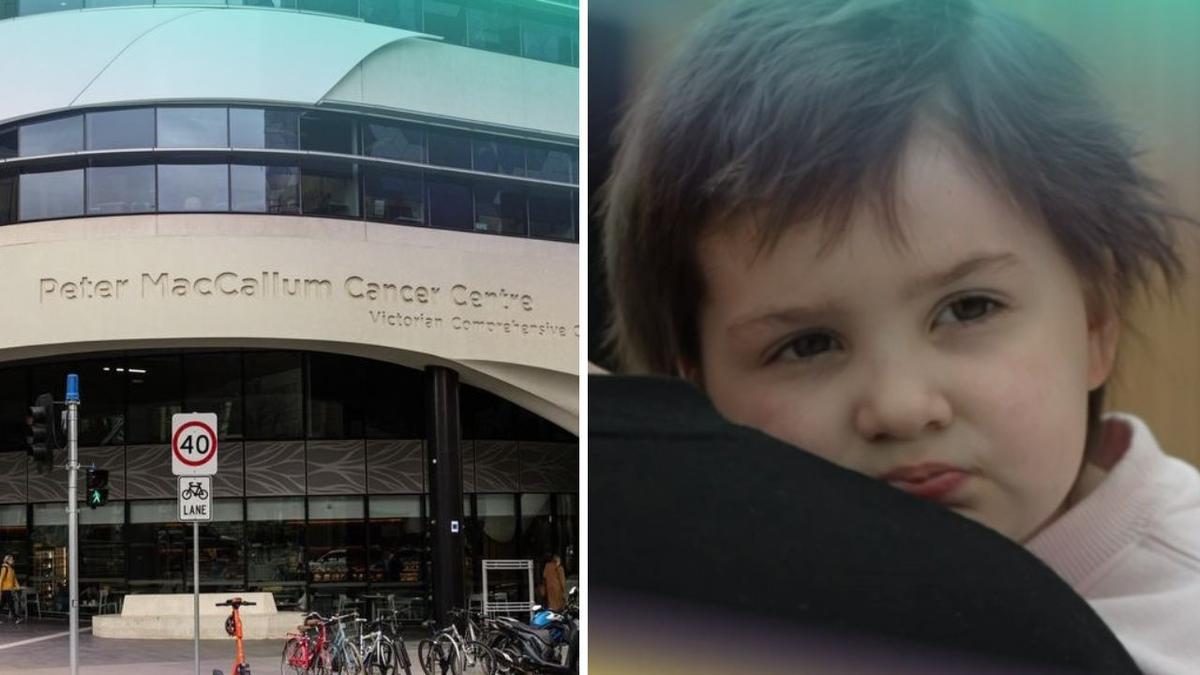
Victoria’s Opposition Leader Jess Wilson has pledged $10.4 million to establish proton beam therapy at Melbourne’s Peter MacCallum Cancer Centre if the Liberal and Nationals win November’s state election.
The centre is seeking matching contributions of $10.4 million from the Victorian and Federal Governments, with a further $10 million to be raised through hospital foundations.
Ms Wilson called on Prime Minister Anthony Albanese and Federal Health Minister Mark Butler to support the project, saying the treatment should be made available to patients in Victoria and across Australia.
“I’m calling on (Prime Minister) Anthony Albanese and (Federal Health Minister) Mark Butler to commit to this so that we get this treatment here for Victorians, we get it here for Australians, and we make sure that we can save lives,” she said.
The pledge comes amid continuing uncertainty over Australia’s first operational proton therapy centre. Mr Butler is considering proposals from Melbourne and Adelaide, with the possibility of two centres being established.
Proton beam therapy proposal in Melbourne
Proton therapy uses targeted radiation that can reduce damage to surrounding healthy tissue, an advantage considered particularly important for children whose bodies are still developing.
Peter MacCallum Cancer Centre has proposed a compact system that could be installed within its existing hospital infrastructure. However, questions remain over whether the technology would be suitable for very young children who need a general anaesthetic during treatment.
The South Australian proposal includes a rotating gantry system, which would allow children to receive treatment while lying down under general anaesthetic. The South Australian Government has not committed funding to that project.
Ms Wilson said the Victorian project was ready to move forward, arguing that advances in the technology meant it could be installed at the hospital.
She was joined at the announcement by Michael Jackett and his daughter Polly, who was diagnosed with an aggressive brain cancer at the age of three. After six months of chemotherapy at Melbourne’s Royal Children’s Hospital, Polly travelled overseas for proton radiation therapy.
“It’s not an easy thing to undertake to firstly learn that your child’s got an aggressive brain cancer but then also be told that the only available treatment or the best available treatment is overseas,” Mr Jackett said.
Despite the Victorian Opposition’s pledge, Commonwealth funding has not been secured and there is no confirmed date for Australia’s first proton therapy centre to begin operating.
