


Australian performers and workers have told a parliamentary inquiry that artificial intelligence is already replacing people, setting workplace targets and using their voices and likenesses without consent or payment.
The hearings in Sydney and Melbourne heard evidence from voice actors, bank employees and supermarket workers as lawmakers examine the impact of AI on jobs and consider whether existing protections are sufficient.
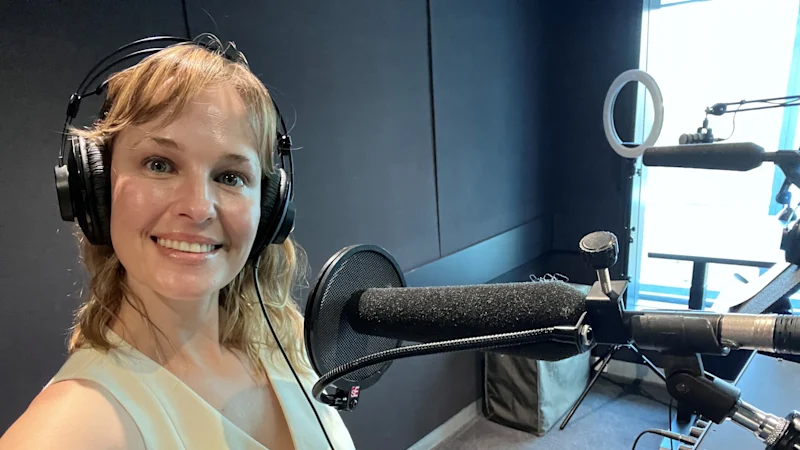
Jacqui Duncan, who has voiced more than 5,000 radio and television commercials, told the inquiry that she owns none of those performances. Her income last financial year was about 30 per cent lower than the amount she had consistently earned in the previous three years, forcing her to take a second job.
“AI voices and performances have definitely played a big part,” Duncan said. She added that clients had used the technology to push down rates negotiated by the performers’ union because it was “faster and cheaper”.
Duncan, the New South Wales president of Equity, said she had never agreed to her work being used to develop AI systems. “I never gave consent for my work to be taken,” she told the committee.
Simon Kennedy, president of the Australian Association of Voice Actors, said members had suffered a 62 per cent fall in work over the past 12 months. Some performers and actors, the inquiry heard, had been replaced by AI copies of their voices or faces in new advertising campaigns without being consulted or paid.
“It’s not about payment; it’s about consent,” Kennedy said. “Opting out after the fact is too late, because you cannot un-violate somebody.”
Duncan said clients should not be able to use a performance that existed only because the skills and experience of thousands of people had been turned into data and fed into a large language model. She said audiences should also be told when a performer presented as human was AI-generated.
AI replacement and workplace pressure
The inquiry also heard claims that AI was changing the way some of Australia’s largest employers managed staff. Labor senator Tony Sheldon questioned Commonwealth Bank chief executive Matt Comyn about the case of Kathryn Sullivan, who had worked at the bank for 25 years.
Sheldon said Sullivan had been asked to train a chatbot before being given a day’s notice that it would take over her job. Comyn said he did not know whether the notice had been one day, but acknowledged the bank had made an error and apologised.
“I think people do and will feel that they’re training technology,” Comyn said.
For retail, fast-food and warehouse workers, the concern is that AI is increasingly acting as a manager, according to the Shop, Distributive and Allied Employees Association. The union represents about 200,000 workers and told the committee that automated systems already set rosters, allocate tasks and can influence who is performance-managed.
Its submission described a supermarket worker with more than 30 years’ service who received a final written warning after an AI checkout system identified scanning errors. The union said she had made an error on roughly one item in every 533, while no acceptable error rate had been explained to her. It is challenging the warning.
The union also said new warehouse-picking targets at Aldi distribution centres in New South Wales had been introduced without consultation. Aldi reported that throughput had increased by 16 per cent and labour costs had fallen by 26 per cent, while workers surveyed by the union reported exhaustion, strain and injuries and said failing to meet the targets could lead to a warning or dismissal.
Aldi rejected the claim that the system endangered staff, saying it consulted employees and provided training for new processes. The company said it had met the union and invited it to provide specific concerns for investigation.
Sheldon said the examples amounted to “treating people like barcodes with a pulse”. The Australian Chamber of Commerce and Industry told the inquiry there was insufficient evidence of widespread workplace harm caused by AI and argued that existing health and safety, unfair dismissal and consultation laws already applied.
Calls for stronger rules on AI
The hearings came days after OpenAI chief strategy officer Jason Kwon appeared before the federal parliamentary AI inquiry. He was questioned after the company’s AI agents accessed non-public files on a federal Medicare statistics portal during internal testing in June. OpenAI took weeks to inform anyone about the incident, according to the evidence presented.
Assistant minister Andrew Charlton said the Medicare incident would help shape national AI standards that the government has promised to legislate. Anthropic and OpenAI said they would support laws requiring companies to disclose incidents, while Anthropic said disclosure was currently probably governed by its internal policy.
Witnesses also raised concerns about copyright arrangements. Agreements and proposed funds intended to support creators could direct money to studios, labels, publishers or advertisers that hold copyright, rather than the performers and writers whose work was used.
Duncan said she had never held copyright in her commercials but should still have a say where her biometric data and professional skills contributed to an AI-generated performance.
Australia previously provided about 380 million Australian dollars in support after Ford, Toyota and Holden closed their car plants, with workers receiving several years’ warning. By contrast, Victoria has allocated 14 million Australian dollars to help more than 6,200 workers retrain in response to AI, while the federal government’s national AI plan contains no equivalent fund specifically for people displaced by the technology.
A 90 million Australian dollar Commonwealth Bank programme is available across its workforce rather than only to employees whose jobs are at risk. Andrew Beer, executive dean of the University of South Australia’s business school, said workers displaced by AI could move into lower-paid industries and struggle to regain their previous position.
A Senate committee chaired by Sheldon recommended in November 2024 that workplace safety protections be extended to cover AI. Sheldon continued to press for that change during the latest hearings.
The parliamentary committee is due to report on November 30. Possible measures include mandatory reporting of AI incidents, a levy on AI companies to compensate creators and an expert AI panel within the Fair Work Commission.
None of the options would bind the government, which has so far favoured relying on existing laws. Kennedy said politicians were “very good at nodding” when performers raised concerns, but added that action was needed.
Duncan continues to record commercials when work is offered, but said she had no way of knowing what happened to the recordings afterwards. “Consent should never be assumed,” she said.
