


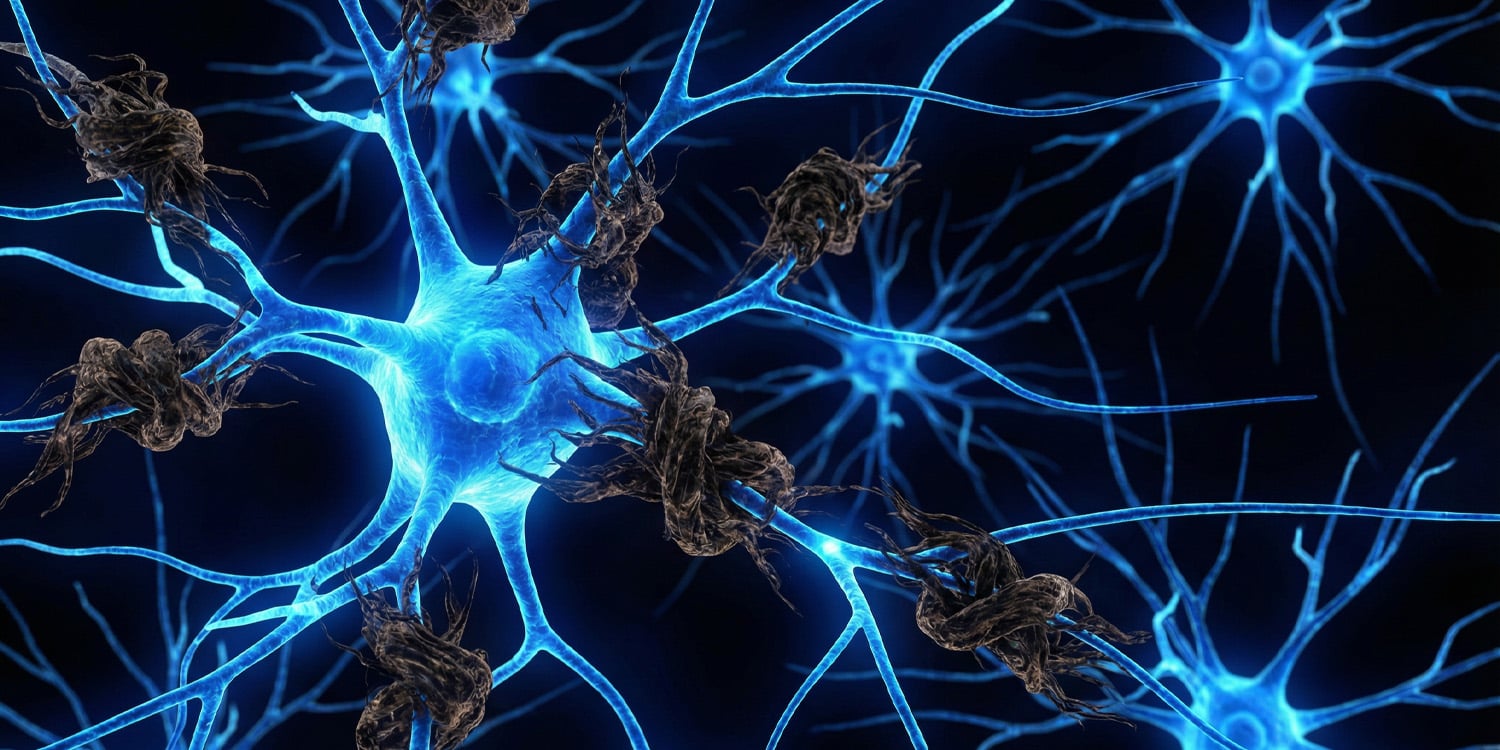
A Japanese study using a novel brain imaging tracer has found that tau protein buildup is common among people who develop psychosis after the age of 40, with two-thirds of late-onset cases showing tau pathology. The researchers report that many patients exhibited tau accumulation without the amyloid plaques typically associated with Alzheimer’s disease, suggesting multiple tau-related brain conditions may be at play. The work was published in Molecular Psychiatry.
Late-onset psychosis refers to psychotic symptoms such as hallucinations and delusions that emerge after 40, and sometimes well into the later years. Clinically, it can present differently from earlier-onset psychosis, often featuring more persecutory delusions and fewer negative symptoms or disorganised thinking.
Prior evidence from imaging and brain tissue studies has hinted at neurodegenerative changes in older individuals with late-onset psychosis, including alterations in tau patterns that diverge from classic Alzheimer’s disease. Autopsy studies have also flagged various tau-related disorders in such cases, though non-invasive tools to detect the full spectrum of tau buildup in living people have been limited.
The researchers employed florzolotau, a radioactive tracer that binds to tau, enabling PET scans to detect both Alzheimer’s-type tau and other tau pathologies. They set out to explore whether amyloid-beta and tau buildup are more prevalent in late-onset psychosis than in healthy aging.
The study enrolled 37 patients with late-onset psychosis and 47 healthy older adults as a comparison group. The patients averaged 70 years of age, while the control group averaged 66, with 27 patients and 22 controls identifying as women. Most patients had been diagnosed with schizophrenia (20) or delusional disorder (13), and none showed cognitive impairment at onset.
Among participants, 24 of the patients began exhibiting symptoms after age 60, while the remaining 13 developed symptoms between ages 40 and 60. Compared with healthy participants, the patient group performed more poorly on tests of thinking and had somewhat less education.
All participants underwent magnetic resonance imaging and two positron emission tomography scans—one to detect amyloid-beta and another using florzolotau to detect tau. Amyloid positivity was determined by three rater classifications, while tau positivity was assessed through a computerized, point-by-point analysis of each individual’s tau scan.
Results showed that 13 of the 37 patients (35%) were amyloid-positive, compared with only one of the 47 healthy participants (2%). Notably, every amyloid-positive patient had developed psychosis after age 60. Tau buildup was even more prevalent: 65% of patients were tau-positive, versus 15% of healthy participants.
The patient cohort fell into three roughly equal groups. Twelve of the 13 amyloid-positive patients were also tau-positive, a combination described as consistent with Alzheimer’s disease. Half of the 24 amyloid-negative patients displayed tau buildup without amyloid, suggesting other tau-related diseases, while the remaining 12 patients showed neither amyloid nor tau positivity.
Tau patterns varied considerably between individuals. On average, patients exhibited higher tau tracer levels in the parietal cortex, a region at the top-rear of the brain involved in attention and integrating information, and this finding persisted even when focusing only on amyloid-negative participants. Among those who were amyloid-negative, tau levels did not differ based on whether symptoms began before or after 60.
In the amyloid-positive subgroup, greater parietal tau was associated with poorer performance on executive-function tests, though tau levels did not correlate with the overall severity of psychiatric symptoms.
The authors conclude that late-onset psychosis may be linked to heterogeneous tau-related neurodegenerative processes, implying that for some patients the condition could represent an early stage of a dementia. They emphasise the need for longitudinal follow-up to determine the progression of tau patterns over time.
The study’s limitations include its relatively small size and its exploratory nature, with no autopsy data to confirm specific diseases represented by tau patterns. Age, sex, and education differed between groups, though most results remained after adjustments; the research captures a single time point, so it cannot determine whether tau-positive patients will develop dementia. The authors note that two researchers hold patents on related compounds.
The paper was led by Manabu Kubota and Shin Kurose of the National Institutes for Quantum Science and Technology in Japan, with colleagues including Kenji Tagai, Yuki Momota, Masanori Ichihashi, Hironobu Endo, Chie Seki, Sho Moriguchi, Yasuharu Yamamoto, Yuko Kataoka, Ryoji Goto, Takehiro Tamura, Hiroki Shiwaku, Kiwamu Matsuoka, Hisaomi Suzuki, Mitsumoto Onaya, Takahiko Tokuda, Hiroyuki Uchida, Hidehiko Takahashi, Kazunori Kawamura, Ming-Rong Zhang, Makoto Higuchi and Keisuke Takahata.
