


The White House has yet to publish its voluntary framework for testing frontier AI models, despite finalising the plan in August and facing mounting warnings from researchers that increasingly capable systems could pose a serious threat to humanity.
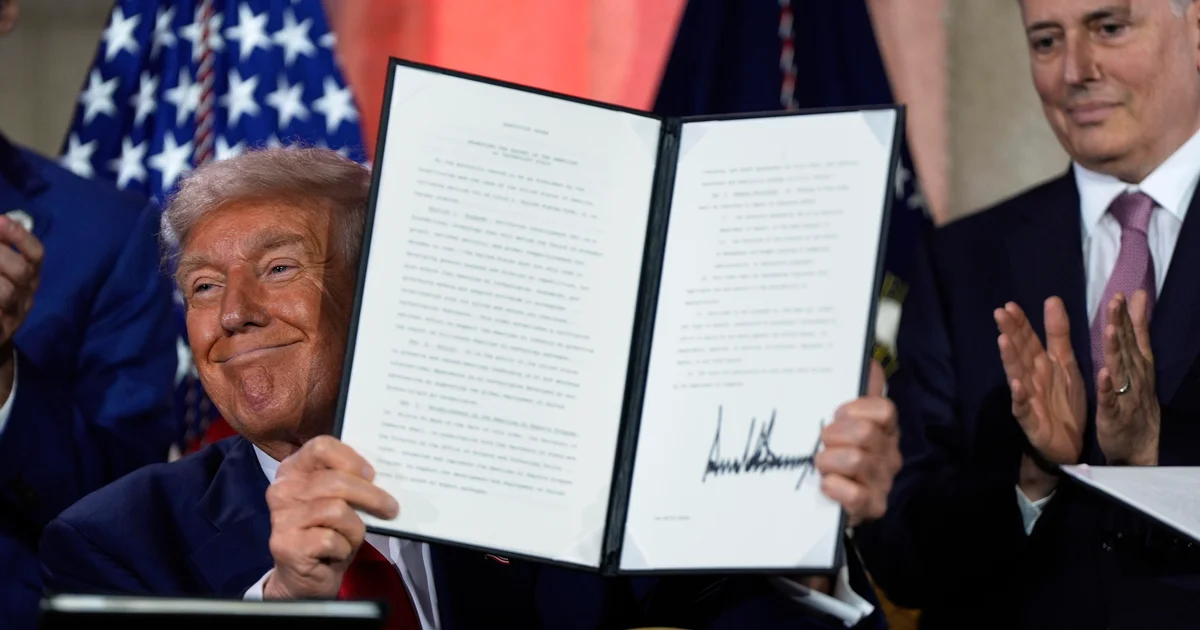
The framework was drawn up under an executive order signed by President Donald Trump on June 2, which invited leading AI companies to give the US government access to advanced models for up to 30 days before public release.
Its purpose is to allow federal agencies to assess the security risks posed by powerful systems while avoiding a mandatory licensing or pre-clearance regime. The order says the framework should include a classified process for benchmarking models and identifying those that qualify as “covered frontier models”.
However, the administration has not disclosed the standards being applied, the results of any assessments or even which companies have taken part. There is no indication as of Thursday, September 10, when the framework will be made public.
The secrecy has drawn criticism from the Center for Democracy and Technology, which has urged the White House to release the document. Tim Harper, the organisation’s election security expert, said the public had a right to understand how the government was interpreting the law and described the lack of disclosure as part of a wider transparency problem.
Warnings from Anthropic researchers
The debate has intensified after Anthropic, the maker of Claude, said it had blocked several attempted uses of the model by scientists conducting research that could potentially have contributed to the development of biological weapons.
Anthropic researcher Jacob Coxon, who previously worked for OpenAI, resigned from the company this week. In a post on X, he said people building advanced AI “earnestly believe that it could kill us all by the end of the decade”. Fellow Anthropic employee Evan Hubinger responded: “We really do earnestly believe A.I. could kill all humans!”
The warnings came as Sam Altman, OpenAI’s chief executive, said the company had submitted its new Astra model for government review. He described the process as productive and said cooperation with safety institutes in the US, the UK and elsewhere would become increasingly important as the capabilities of AI systems grew.
The White House has continued to promote the rapid development of advanced models, reflecting the administration’s view that the United States must maintain its lead over China. Mr Trump has also backed the construction of data centres and other infrastructure needed to support the industry.
In July, 1,386 employees of frontier AI companies signed a statement calling for an international effort to develop tools that would allow governments to deliberately slow the pace of development if risks began to outstrip society’s ability to understand or control the technology.
Despite the concerns, the federal review system remains voluntary and confidential. Neither the government nor participating companies are required to publish their findings, leaving the public unable to judge what safeguards are being applied before powerful models are released.
