


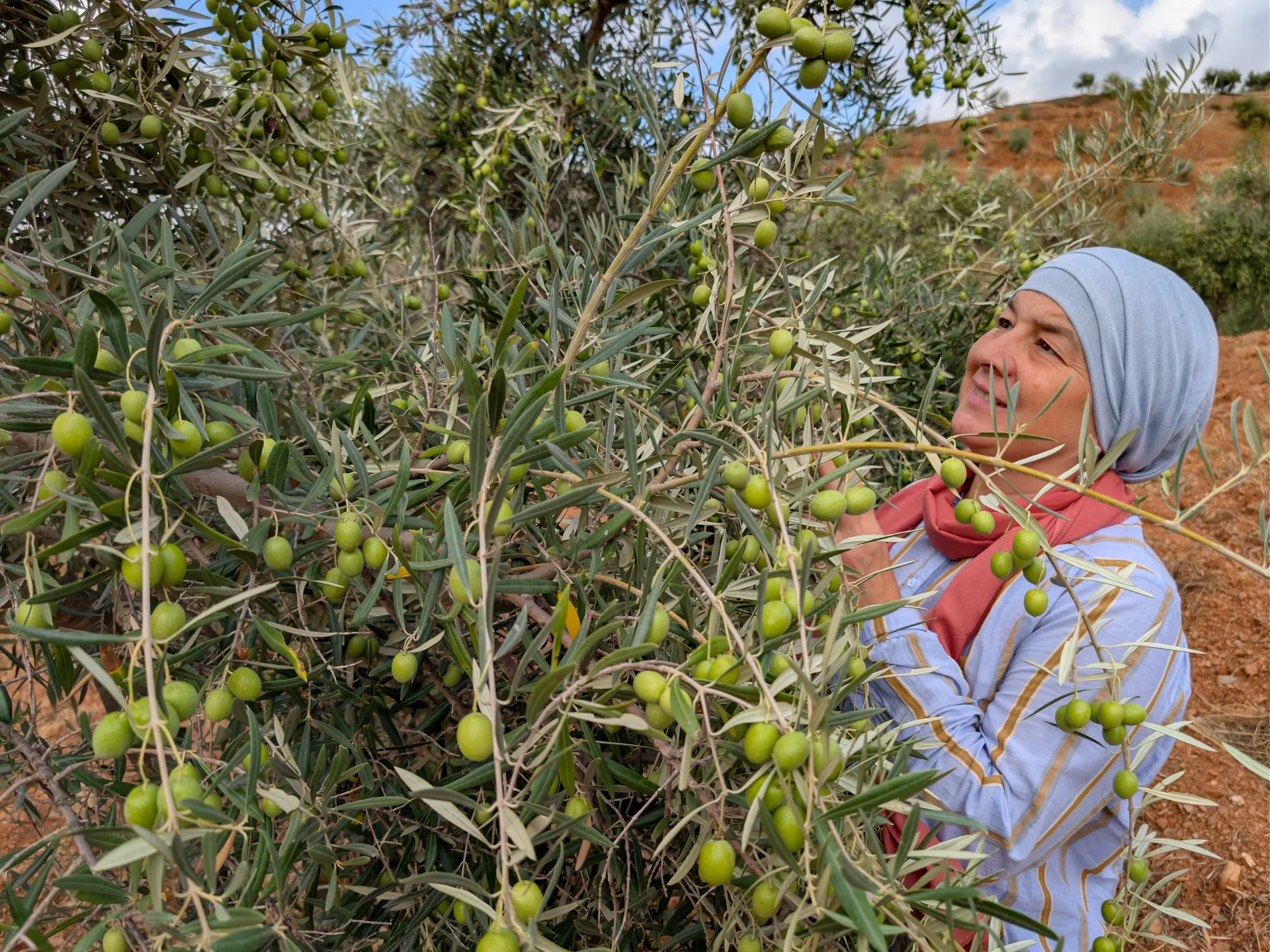
A British-Hungarian Muslim couple are creating a rural community in southern Spain for people seeking a stronger connection with Islam’s European history and a place where their faith feels less politically charged.
Henrietta Szovati and her husband, Ajmal Masroor, a therapist and imam, have spent the past two years turning an old farmhouse and its land near Álora, in Málaga province, into the House of Andalus.
The 14-hectare property contains almost 400 olive trees. Szovati hopes to expand the grove to 1,000 trees while developing a project intended to bring visitors closer to the landscape and the legacy of Muslim-ruled al-Andalus.
For Szovati, the appeal of Andalucia is personal as well as historical. She has lived in Britain since 2001 but says she has never fully felt accepted there, despite more than two decades in the country.
“I feel like an outsider there. I’m still not ‘one of us’ after more than 20 years,” she said.
In the mountains above Álora, she believes neighbours see her first as the woman living along the track rather than as a Muslim whose identity is caught up in wider political arguments.
“Practising Islam here is just easier,” she said.
Her daily life includes buying lemons, avocados and honey from a neighbour, Juan Garcia, who sometimes helps with the olive trees. The relationship has also brought her into contact with Garcia’s 79-year-old mother, Maria, a Catholic.
During one conversation at Maria’s home, the two women discussed Szovati’s headscarf and the Virgin Mary, who is also traditionally depicted with her head covered. Maria’s view was that the important thing was to be a good person, regardless of outward religious signs.
The exchange reflected the ordinary relationships Szovati says have helped Andalucia feel like home. She says community is built through everyday contact, including between people of different faiths, rather than through political rhetoric.
Muslims drawn to the legacy of al-Andalus
That sense of belonging is tied to a wider fascination with the region’s Muslim past. Tharik Hussain, a British Muslim travel writer and historian, said al-Andalus retains a powerful place in the Muslim imagination because of the scale and eventual loss of the medieval territory.
Muslim dynasties ruled parts of the Iberian Peninsula for almost eight centuries. Their influence remains visible in the architecture of cities including Córdoba, Seville and Granada, as well as in irrigation systems, language, scholarship and artistic traditions.
Hussain described the lost civilisation as having an “Atlantis-like aura”, with its memory reflected in Muslim writing over the centuries.
For Muslims settling in or visiting Andalucia, the region offers more than a warm climate and a historic backdrop. It provides a reminder that Islam has long been part of Europe, while offering the possibility of practising the faith without feeling defined by public disputes over it.
Yet modern Andalucia is not a preserved version of the medieval past. The region has its own social and economic pressures, while Spain is also experiencing political arguments over immigration and national identity.
The far-right Vox party has made opposition to immigration and what it calls the “Islamisation” of Spain central to its campaigning. That has raised questions about how secure the belonging sought by Muslim residents and visitors can be.
Szovati accepts that being Muslim can be difficult anywhere, but says she is more interested in what can be built locally than in circumstances beyond her control.
“Circumstances change, but community, connections and faith don’t,” she said.
