


Returning to China after four decades, an Australian traveller found that the country’s unfamiliar technology and sheer scale were less daunting than expected — particularly once a first bowl of spicy lamb noodle soup had been paid for using Alipay.
Travelling alone in Shanghai, the writer admitted to feeling out of practice after years away from the uncertainty of backpacking. Even the simple act of buying bottled water became a test of confidence, with China’s all-purpose payment app initially appearing to be a potential obstacle.
Instead, the transaction at a 7-Eleven went smoothly. At a small restaurant nearby, ordering was made easier by large photographs of the dishes: pointing to a lamb soup was enough to secure dinner and another successful payment by phone.
That early experience helped ease the nerves before joining Intrepid Travel’s eight-day China Highlights tour, which runs from Shanghai to Beijing via Xi’an. The itinerary combines high-speed rail with visits to the Terracotta Warriors, the Great Wall, Tiananmen Square and the Forbidden City. ([intrepidtravel.com](https://www.intrepidtravel.com/us/china/china-highlights-174192?utm_source=openai))
From Shanghai to Xi’an and Beijing
The group of 15 included travellers from across the English-speaking world. Their local guide, Gavin Lee, was accustomed to helping visitors negotiate the country’s maze of apps and connectivity problems, while one member of the group avoided digital payments altogether by carrying a large supply of yuan.
Shanghai provided a dramatic introduction. A cruise along the Huangpu River brought the illuminated colonial buildings of the Bund face to face with the skyscrapers of the financial district, creating a nightly spectacle rather than a once-a-year light show.
There was also time for more informal exploration, including soup dumplings at Jia Jia Tang Bao and drinks at Cloud Nine, the bar high inside the Jin Mao Tower.
From Shanghai, the group travelled around 1,500 kilometres to Xi’an on a G-Series bullet train. The journey took less than six hours, with speeds reaching 350km/h and meals available on board.
Xi’an offered a markedly different atmosphere: an ancient walled city, the Giant Wild Goose Pagoda and the lively Muslim Quarter, where street vendors sold pomegranate juice and other local specialities. The city’s historic importance is tied to its role as the eastern starting point of the Silk Road.
The Terracotta Army remained the major draw. Thousands of life-size figures created for China’s first emperor attract crowds so large that visitors may have to wait for a view of the main excavation pit, while restoration work continues on some of the warriors.
Rather than join the rest of the group for a Tang Dynasty performance and dinner, the traveller spent an evening walking through Xi’an and buying a freshly cooked rice-noodle dish from street vendors. The meal, together with fruit, cost less than $12.
The final stage took the group north to the Jinshanling section of the Great Wall, where a family-run guesthouse provided a quieter base away from Beijing. An evening walk and early-morning visit allowed the travellers to see the wall against the surrounding green hills before continuing to the capital.
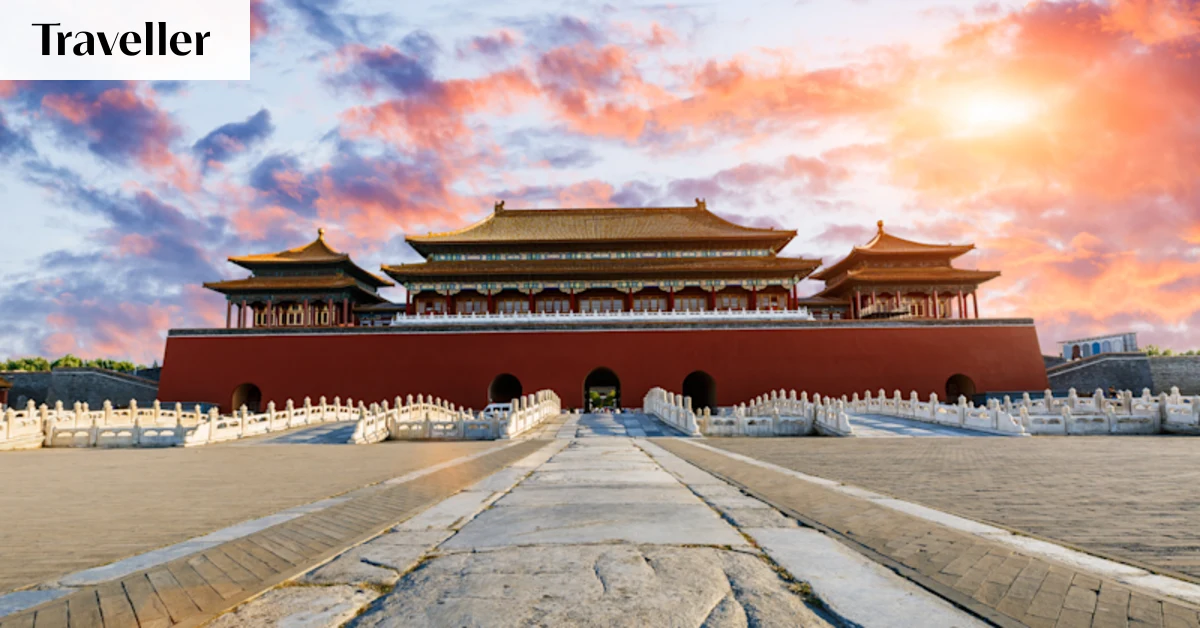
Beijing brought the familiar landmarks of Tiananmen Square and the Forbidden City, as well as the practicalities of navigating the subway. By the end of the journey, the initial apprehension had given way to new friendships, shared photographs and a greater confidence in travelling through a country that can still feel challenging to first-time Western visitors.
Australian citizens travelling on ordinary passports can currently enter China visa-free for tourism for stays of up to 30 days, under a policy listed by Australia’s Smartraveller as running until December 31, 2026. ([smartraveller.gov.au](https://www.smartraveller.gov.au/destinations/asia/china?utm_source=openai))
