


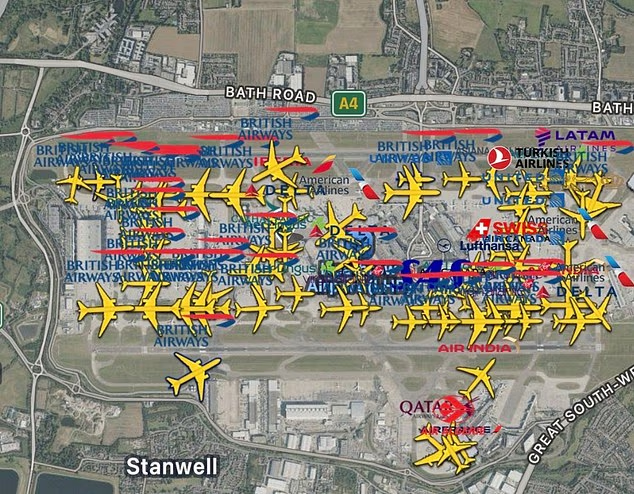
Nearly 300 flights have been cancelled after a technical failure in the UK’s air traffic control system disrupted departures from Heathrow, Gatwick and airports across the country.
Thousands of passengers faced long delays on Tuesday, September 8, with disruption expected to continue into the evening as engineers worked to restore normal operations.
More than 10 airports reported problems, including Manchester, Birmingham, Bristol, Edinburgh, Glasgow, Aberdeen, Nottingham, London City and Stansted. Heathrow, Gatwick, Manchester and Birmingham were among the worst affected.
National Air Traffic Services (NATS), which provides air traffic control services to 15 UK airports, said the fault had been traced to its flight processing system.
“We have identified that the issue was in our flight processing system,” a NATS spokesman said. “Our engineers are on site and working urgently to resume normal operations as quickly as possible.”
The organisation later said it had implemented a fix and that the system had begun to recover, although it warned that restoring services fully would take time.
“We are continuing to work closely with our airline and airport customers on recovery,” NATS said. “We apologise sincerely for the disruption to people’s journeys today and they should continue to check with their airline.”
The fault affected departing flights, while Heathrow said arriving services were not initially impacted. Some inbound aircraft from mainland Europe were held on the ground, and disruption was also reported on flights to Ireland and the Channel Islands.
Flight-tracking data showed 352 Heathrow flights delayed from a typical daily schedule of about 1,300. Gatwick recorded 281 delays from an average of around 850 flights, while Manchester had 249 delays and Birmingham 101.
At least 96 British Airways flights, 92 easyJet services and 20 KLM flights were listed among the cancellations.
Ryanair said more than 65,000 of its passengers had been affected. The airline criticised NATS chief executive Martin Rolfe and called for him to resign, describing the disruption as an “overpaid failure”.
EasyJet warned that some of its flights were “unable to operate” because of the air traffic control problem, stressing that the fault was outside the airline’s control.
Transport Secretary Heidi Alexander said she was aware of the disruption and that technicians were working to resolve it.
“I know this will be frustrating for passengers and I’m sorry,” she said. “Please check with your airline for latest advice.”
Heathrow advised passengers to attend the airport at their scheduled time unless their airline told them otherwise, while urging travellers to check directly with carriers for the latest information.
Gatwick, Edinburgh and Jersey airports issued similar warnings. Jersey Airport said the UK air traffic control issue was affecting services between the Channel Islands and Britain.
Passengers described being left waiting for updates at terminals and on aircraft. One traveller on a flight from Dublin to Malta said passengers had been repeatedly told that an update would come within 15 minutes, without being given a revised departure time.
Another passenger said they were sitting on the tarmac at Alicante on a flight bound for Manchester, while a traveller at Luton reported being stranded on board.
NATS said there was no indication at present that the fault had been caused by a cyber attack or hacking. The organisation has not disclosed the underlying cause of the technical failure.
The incident follows a major NATS outage in August 2023, when more than 700,000 passengers were affected after a problem with the flight-planning system led to widespread delays and cancellations.
