


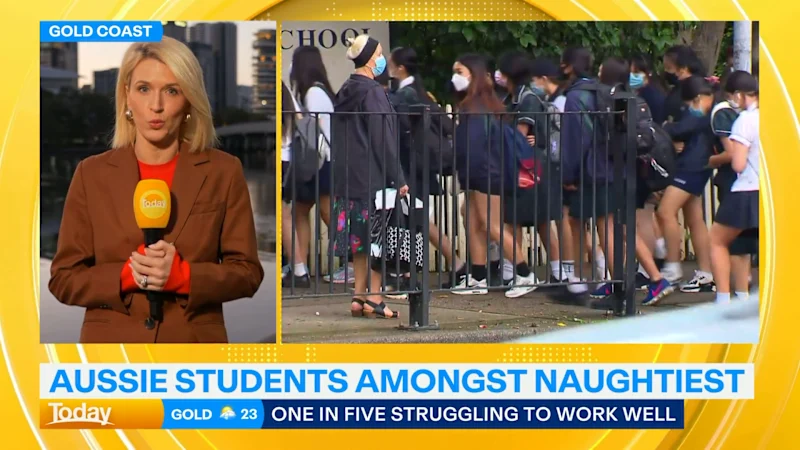
Classroom disruption in Australian schools is among the highest recorded internationally, with new OECD research showing widespread noise, disorder and difficulty concentrating during science lessons.
The findings come from the OECD’s Programme for International Student Assessment, which surveyed 15-year-olds in 91 countries and economies. In Australia, 41% of students said noise and disorder disrupted most or every science lesson, compared with an OECD average of 31%.
More than a third of Australian students, 34%, also reported that classmates did not listen to what the teacher said in most or every lesson. The OECD average was 29%.
About 21% said they could not work well in most or all science lessons, slightly above the international average of 19%.
The latest results, released on Tuesday, are based on assessments taken in 2025 by 14,658 Australian students across 766 schools. The survey also gathered information about pupils’ experiences of learning and the wider school environment.
Digital distractions add to classroom disruption
Digital devices were identified as another source of disruption. Some 39% of Australian students said their peers were often distracted by devices during most or all science lessons, compared with 28% across the OECD.
However, the proportion of students attending schools with a ban on mobile phone use has risen sharply. In 2025, 85% of Australian students were in schools where phones were not allowed on school premises, up from 53% in the OECD’s 2022 assessment.
The OECD said students in schools with phone bans were, on average, about 13% less likely to report digital distraction.
The report also found that almost half of Australian students, 49%, attended schools where principals said teaching was hindered to some extent by a shortage of teaching staff. That compared with 39% across the OECD, although the Australian figure had fallen from 61% in 2022.
Despite the problems with classroom discipline, Australian students continued to perform above the OECD average in science, mathematics and reading. But the latest results showed mathematics and reading scores had fallen from 2022, with both subjects recording their lowest levels since Australia began taking part in the assessment.
