


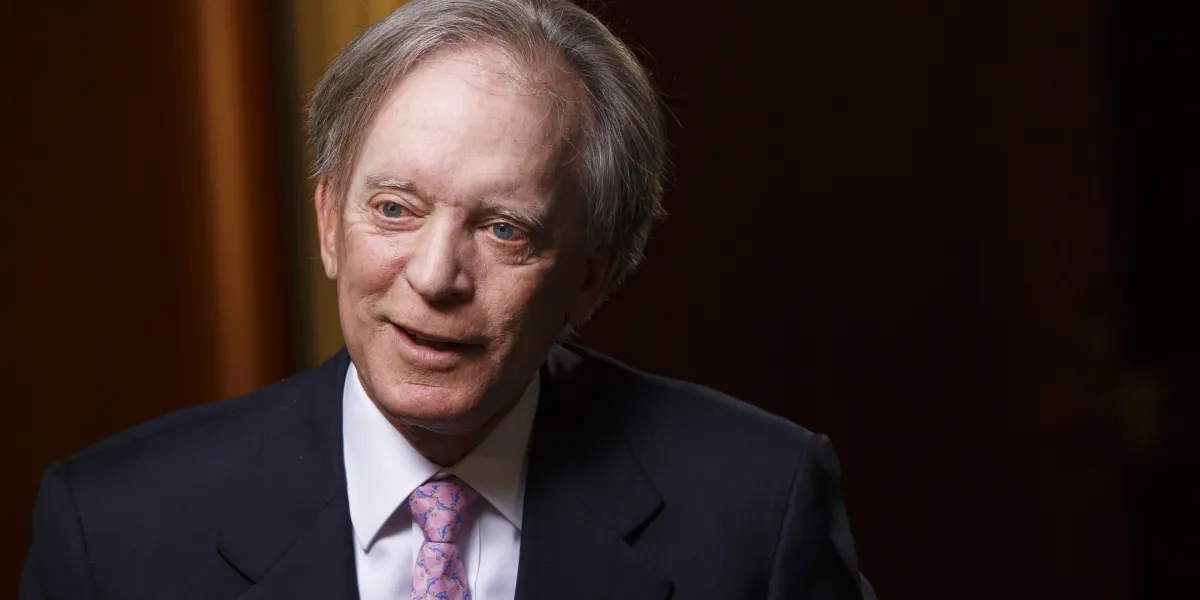
Bill Gross, the PIMCO co-founder known as the “Bond King”, has warned investors to avoid longer-term debt as rising borrowing and increased trading activity threaten to make bond markets more volatile.
In an op-ed for the Financial Times, Gross said government, mortgage and corporate debt had reached about $84 trillion. He argued that balance sheets had become increasingly lopsided, putting future economic growth at risk.
“Too much debt can lead to too much risk and too much equity can lead to less earnings per share growth under certain underperforming productivity cycles,” Gross wrote. “Move them both at the same pace consistent with industry standards and economic growth more than likely expands as well.”
Gross said the surge in borrowing was supporting growth in the short term but had also contributed to higher inflation and was likely to weigh on expansion in the future. He highlighted the debt boom in the artificial intelligence sector as unusually large by historical standards, while federal debt had reached 100% of GDP, a peak for peacetime.
Bill Gross warns of greater Treasury volatility
His investment advice was notably cautious. “In such an environment, my view is: don’t own bonds, with the exception of one-year Treasury bills, which are now at 4.55%,” he said.
Gross also urged caution over stocks trading at record levels, arguing that higher yields over time could reduce profit margins. He warned investors to prepare for “the end of ‘what you are used to’ stock markets” and increased price volatility in benchmark 10-year Treasury bonds.
The warning carries particular weight because Gross built his reputation by using active trading strategies to generate returns from bonds, rather than simply holding them until maturity and collecting interest.
The structure of the bond market has since changed. Central banks are no longer reliably buying and holding Treasury debt as they diversify their reserves, while hedge funds have become larger and more price-sensitive participants, making them quicker to sell.
Hedge funds have increasingly used the so-called basis trade, seeking to profit from small price differences between Treasury bonds and Treasury futures. Their share of total Treasury holdings has almost doubled since 2023 to 8.5%, exceeding the holdings of depository institutions and mutual funds, according to the material.
The shift has coincided with a sharp move in 10-year Treasury yields this year. They have risen by more than 100 basis points since the Iran war started and recently reached their highest level in 24 years.
Joe Maher, a markets economist at Capital Economics, said hedge funds could weaken the reputation of bonds as a safe-haven asset. In periods of market stress, he warned, funds could unwind leveraged positions as financing conditions tighten, causing liquidity to dry up.
Maher also said hedge funds could transmit pressure between asset classes. A stock market sell-off, for example, could force them to sell bond positions to cover losses in equities.
Gross said he was suspicious of AI hyperscalers unless they had price-to-earnings ratios below 20. He also said that, although Verizon and AT&T offered decent yields, their mobile phone businesses faced a threat from SpaceX’s Starlink.
Some income funds trading below their net asset values could provide opportunities, Gross added, although they would be vulnerable if short-term interest rates rose more than expected.
“Preserve and protect is my current investment motto,” Gross wrote.
