


Australian employers have been warned that dress codes designed to protect a company’s image could expose them to discrimination claims if they unfairly disadvantage workers because of their age, sex, race, religion or disability.
Businesses can generally set rules covering uniforms, grooming, tattoos, piercings and facial hair. But workplace lawyers say those requirements are more difficult to defend when they are based on personal taste or an idea of what an employee should look like, rather than safety, hygiene or a genuine requirement of the role.
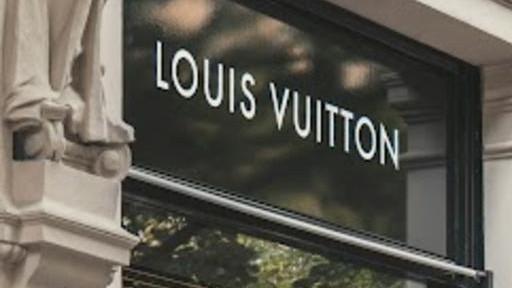
The issue has returned to the spotlight after overseas reports alleged that luxury group LVMH recruited staff based on being young, slim and attractive, prompting renewed scrutiny of appearance standards in the workplace.
When workplace appearance rules become discriminatory
The Fair Work Ombudsman said Australian law does not specifically regulate tattoos, piercings, make-up, facial hair or general presentation. Such matters are usually dealt with through workplace policies, guidelines or employment contracts.
However, employers must not take adverse action against current or prospective employees because of protected attributes. That can include dismissing someone, treating them less favourably, changing their job to their disadvantage or refusing to hire them. ([fairwork.gov.au](https://www.fairwork.gov.au/employment-conditions/protections-at-work/protection-from-discrimination-at-work))
Maurice Blackburn employment lawyer Jessica Miscamble said appearance itself was not generally a protected attribute, which could make disputes about tattoos and piercings difficult unless the rule was connected to another legally protected characteristic.
She said the greater risk arose when a seemingly neutral rule had a disproportionate impact on a particular group. A requirement for women to wear lipstick could raise sex discrimination concerns, while a blanket clean-shaven policy could be challenged by an employee who kept a beard for religious reasons.
An employer would have a stronger justification if facial hair genuinely interfered with protective equipment, Ms Miscamble said, but it would need to demonstrate that the rule was necessary.
LegalVision employment lawyer Joel Hayden said appearance policies should be “lawful, reasonable and connected to the work being performed”. Rules restricting loose jewellery in a food business might be justified on hygiene or safety grounds, whereas an office-wide ban on visible tattoos based simply on management preference would be harder to defend.
He also cautioned businesses against rejecting applicants because they did not “fit the brand” if that language concealed bias relating to age, race, gender, disability or religion.
Fair Work guidance says an adverse employment decision may be lawful where it relates to a necessary requirement of the job, rather than a protected personal characteristic. ([fairwork.gov.au](https://www.fairwork.gov.au/employment-conditions/protections-at-work/protection-from-discrimination-at-work))
Fair Work Commission skirt case
A 2025 Fair Work Commission case involving Townsville dealership operator Carney Townsville Partnership illustrated how a legitimate uniform rule could still be handled poorly.
Amy Tonkin applied to the commission after a dispute over whether her work skirt met the dealership’s dress code. The commission rejected the argument that she had been forced to resign, meaning her general protections application was dismissed.
Ms Tonkin had been told that her skirt appeared to sit above the knee and that she should try a larger size or have it altered. A subsequent memo circulated to her line managers referred to her “body proportions”.
Deputy President Lake said management was entitled to discuss compliance with the uniform policy, but described the handling of the matter as poor and said a conversation about the length of an employee’s skirt should be conducted sensitively.
The commission found that including explicit references to Ms Tonkin’s body in a written memo and copying several managers was unacceptable, even though the dealership was entitled to enforce its policy. ([fwc.gov.au](https://www.fwc.gov.au/documents/decisionssigned/pdf/2025fwc2098.pdf))
The decision records that the dispute followed a customer complaint about a “short skirt club” at the business. The dealership subsequently reminded staff that skirts were expected to reach the knee or fall below it. ([fwc.gov.au](https://www.fwc.gov.au/documents/decisionssigned/pdf/2025fwc2098.pdf))
Mr Hayden said employers often created legal and practical difficulties by using vague phrases such as “professional appearance”, “neat feminine makeup” or “no extreme hairstyles”. Such wording could be subjective and inconsistently enforced, he said.
The Fair Work Ombudsman says workers who believe they have been unlawfully discriminated against can seek assistance from the agency or their union and may be able to lodge a general protections dispute with the Fair Work Commission.
For employers, the safest approach is to write clear rules, apply them consistently and ensure they are tied to a genuine workplace need rather than an undefined preference for a particular look.
