


California voters are being asked to approve a one-off wealth tax on billionaires, amid warnings from opponents that Proposition 40 could eventually be expanded to cover a much wider group of taxpayers.
The measure would require residents with assets worth more than $1 billion to pay a levy equal to 5% of their wealth. The Service Employees International Union-United Healthcare Workers West, which is backing the proposal, says it could raise $100 billion and help offset federal reductions in health spending.
Critics have described Proposition 40 as a “Trojan horse”, arguing that its provisions could allow future lawmakers to extend the tax beyond billionaires or impose it more than once.
California’s billionaire tax proposal
Under the initiative, the state legislature could amend the measure with a two-thirds majority, provided any changes were “consistent with and furthers the purposes of the 2026 Billionaire Tax Act”. Supporters insist the proposal is aimed only at billionaires.
Any attempt to broaden its reach would also face potential legal challenges. California courts have both upheld and rejected legislative changes to ballot measures in previous cases, while the state Supreme Court ruled in 1995 that amendments could be made if they advanced voters’ original intent “by any reasonable construction”.
In 2019, however, the Third District Court of Appeal rejected an attempt to amend the Political Reform Act, finding that the change “directly conflicts with a primary purpose” of the law.
Opponents say the proposal could also place pressure on forms of wealth that are difficult to sell, including unrealised capital gains and privately held shares in start-up companies. The measure has therefore exposed divisions among California’s political and business leaders.
Governor Gavin Newsom is opposed to Proposition 40, while US Representative Ro Khanna supports it. Mr Khanna has nevertheless said he does not want illiquid holdings or voting shares to be taxed, and some unions have argued that other state spending priorities should come first.
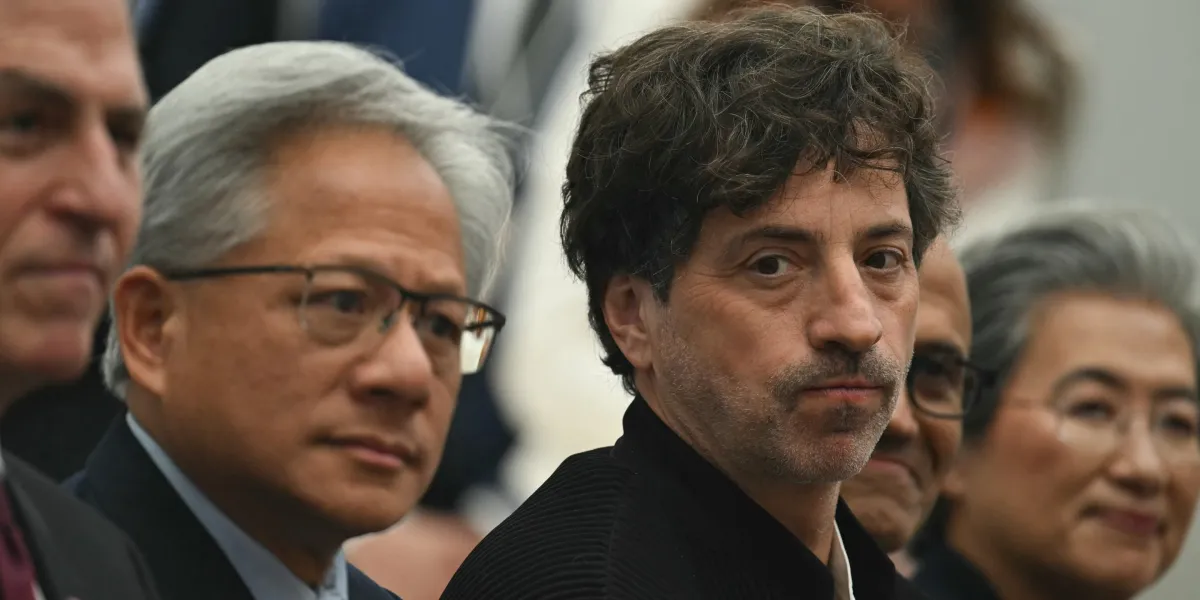
Nvidia chief executive Jensen Huang has said he is “perfectly fine” with the proposal, while Google co-founder Sergey Brin has contributed more than $100 million to efforts to defeat the billionaire tax.
Tax proposal highlights California’s reliance on wealthy residents
California’s tax revenues are heavily dependent on the fortunes of its wealthiest households, leaving the state vulnerable to sharp swings in income linked to stock-market performance.
The top 1% of households have accounted for roughly 40% to 50% of all personal income tax revenue in recent years, according to the conservative Hoover Institution. In 2021, when markets surged, they paid more than $60 billion in state personal income tax.
The reverse effect was seen during the financial crisis, when falling markets contributed to severe budget deficits. Supporters of Proposition 40 argue that taxing wealth would provide a way to capture more revenue from the state’s richest residents.
A group of Nobel laureate economists backing the measure has said billionaires had made important contributions but had also been “amply rewarded”, while using loopholes to avoid tax on returns from capital. In a letter, Daron Acemoglu, Abhijit Banerjee, Peter Diamond, Esther Duflo, Paul Krugman and Joseph Stiglitz said the vote could “kickstart a movement” beyond California.
The economists also argued that the levy would not undermine Silicon Valley. Supporters point to California’s artificial intelligence boom and say the state has attracted 80% of new venture capital funding in the US since the beginning of 2026, compared with about 50% before 2025.
Separate ballot measures could further complicate the vote. Proposition 41 would subject any new taxes to California’s existing spending limit, while Proposition 42 would prohibit taxes on financial assets and personal property other than real estate.
A recent Public Policy Institute of California poll found majority support for all three measures. Mark Baldassare, the organisation’s survey director, said supporters of Proposition 40 had “a lot of work to do”.
Even if the billionaire tax passes, another ballot initiative could be introduced in future to impose wealth taxes for different spending priorities. Its supporters say the measure could become a model for similar proposals elsewhere, while opponents maintain that its one-off character cannot be guaranteed.
