


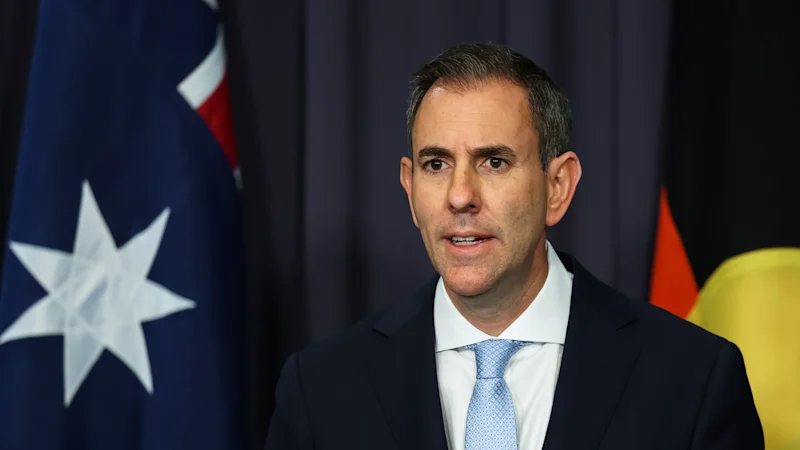
Australian Treasurer Jim Chalmers has flagged further tax cuts as the government prepares to publish a 40-year economic forecast warning of serious pressures on the country’s budget and economy.
The intergenerational report, due to be released on Monday, will say recent budget measures have reduced the tax burden on working-age Australians and created scope for additional relief in future budgets.
Excerpts released ahead of its publication say the share of personal income tax paid by workers is expected to be two percentage points lower by the end of the medium term than it would have been without the reforms. That share is forecast to fall further as more property investment and capital gains become subject to new tax settings.
“People are under pressure, which is why we’ve delivered multiple rounds of income tax cuts, including tax cuts targeted specifically to workers,” Dr Chalmers said.
“At the same time, we’ve improved the budget position, which has created more room for tax cuts into the future.”
This year’s budget included a new 250 Australian dollar tax offset, due to begin next July, and a reduction in the tax rate for people in the lowest tax bracket.
Independent economist Saul Eslake said the prospect of further tax cuts was “plausible”, but questioned assumptions about productivity growth underpinning improved debt and deficit projections. He described those assumptions as “fanciful” and unlikely to be delivered.
Australia’s population and economy face major changes
Dr Chalmers said the report would contain “confronting” findings, showing that Australia faced “serious risks to our economy and serious pressures on the budget” alongside substantial advantages.
The forecast says the average number of children born to each woman will fall from 1.48 currently to 1.34 by 2066. Fertility has remained below the replacement rate of 2.1 children per woman for about five decades, leaving successive governments reliant on higher overseas migration to support economic growth.
Life expectancy is expected to rise over the same period. It is forecast to reach almost 90 years for women, up from about 86 now, while the figure for men is projected to increase from 82 to 86.
The report is also expected to identify artificial intelligence as the “defining influence” on the economy over the next 40 years. Dr Chalmers said the technology would bring “very substantial risks”.
In his speech launching the report, the treasurer will say: “The world is becoming more dangerous, more unpredictable, more unequal and more divided.”
“These are not just individual threads but part of a bigger fraying of that intergenerational promise, of better times,” he will say.
The Coalition has meanwhile proposed cutting fuel excise when global oil prices rise sharply. Opposition Leader Angus Taylor’s plan would halve the excise when Brent crude averaged 100 US dollars a barrel over two weeks, reducing the cost of an average tank of petrol by about 15 Australian dollars.
Mr Taylor said the proposed fuel price shield would take effect automatically during a serious oil shock, with the standard rate restored when prices returned to more normal levels.
Dr Chalmers dismissed the policy as “uncapped and unfunded”, arguing that it was aimed at winning back voters from One Nation rather than addressing petrol prices. “What we’ve seen overnight from Angus Taylor is more about polling numbers than petrol prices,” he said.
