


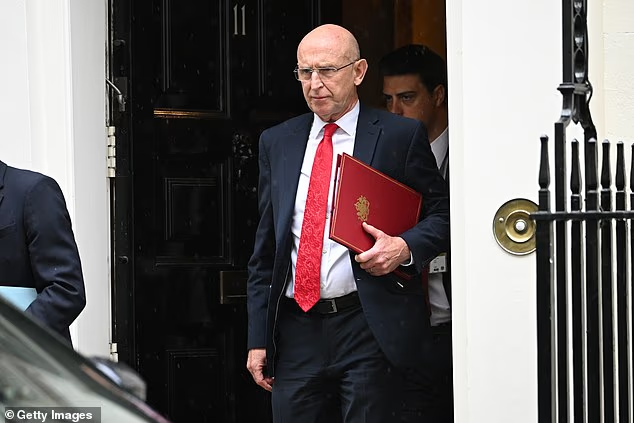
Chancellor John Healey has been warned against awarding large pay rises to public sector workers or significantly increasing the minimum wage, amid fears that such measures could unsettle bond markets and add to inflationary pressure.
With Labour’s first Budget in just over a month, analysts have urged the Government to prioritise reducing inflation. They said a populist increase in the National Living Wage on October 28 could risk doing the opposite.
Inflation is already rising, with oil prices pushed higher by the Iran War. At the same time, a global sell-off in government bonds has increased borrowing costs, with investors demanding 5.4 per cent on 10-year UK gilts.
The rate is close to levels last seen in 2007, before the financial crisis, leaving Mr Healey facing pressure to meet spending commitments while retaining the confidence of investors, the public and Labour voters.
Patrick Milnes of the British Chambers of Commerce said another substantial increase in the National Living Wage, after it rose to £12.71 in April, would “pile more pressure on firms already struggling under a huge cost stack”.
Simon French, chief economist at investment bank Panmure Liberum, said the Treasury could offset a reduction in its forecast £23.6 billion fiscal headroom through other measures.
He said slowing future increases in the minimum wage could provide relief for struggling employers, while offering an alternative to scrapping the state pension triple lock, a move currently favoured by investors.
Mr French said even measures with “modest near-term impacts on fiscal headroom” would “receive a favourable market reaction”.
Paul Dales of Capital Economics said the Government should avoid granting large public sector pay rises, warning that “chunky rises” would suggest ministers were “not as serious about controlling inflation as they seem to suggest”.
He said the minimum wage was already “on a par with comparable countries” after rising “significantly” over the past decade.
Kallum Pickering, chief economist at Peel Hunt, said “excessively generous” increases to the minimum wage had already contributed to inflation. He added that financial markets needed “strong signals” that the Government was seeking to avoid “adding inflationary pressure to the economy”.
Allen Simpson, chief executive of UK Hospitality, said higher wages could also slow recruitment, and called for a “cautious approach” from ministers.
