


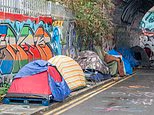
A group of delivery riders are living in a makeshift tent encampment beneath a railway bridge in Shoreditch, amid complaints about public urination, drug use and antisocial behaviour.
The site on Fleet Street Hill, close to Brick Lane and little more than a mile from the City of London, is occupied by around a dozen men, many understood to be Sudanese migrants. Deliveroo and Gopuff bags, bicycles and electric bikes sit beside the tents, with riders appearing to use the location as a base between shifts.
The camp has no running water or proper sanitation. Residents cook on portable stoves, store clothing in makeshift furniture and sleep beneath the graffiti-covered railway arches. The area is also used by rough sleepers and has become a focus of concern among nearby residents.
A 26-year-old man, Ibrahim Mohammed, who previously spent a year at the site while working for Uber Eats, described the conditions as difficult.
“How are you going to take a shower, for example?” he said, adding that people living there had little support and, in some cases, no family in Britain.
The encampment is situated among coffee shops, technology businesses and restaurants in one of east London’s most fashionable districts. Residents and visitors have complained about the smell of urine, discarded food and rats moving through the area.
Some riders are understood to work through delivery accounts registered to other people. One man at the site said it was common for migrants to use a friend’s account to obtain work, a practice that can bypass identity and right-to-work checks.
The claims have raised fresh questions about how effectively delivery platforms monitor substitutions and account sharing. Deliveroo says it carries out document and criminal-record checks on account holders and has introduced facial verification and fraud-detection technology.
A Deliveroo spokesman said the company had not been provided with evidence that the individuals at the site had accessed its platform unlawfully. However, he said the firm was “extremely concerned” by the reports and was increasing monitoring in the area to identify suspicious activity.
The company said it operated a zero-tolerance policy towards illegal working and organised criminal exploitation, and was liaising with Tower Hamlets Council and the Home Office.
Gopuff also said it took right-to-work compliance seriously. The firm said account holders were checked when they registered and that facial-verification measures for account holders and substitutes were due to be introduced from October 1.
The issue has been a priority for ministers, who have warned that account sharing can leave companies unaware of who is carrying out deliveries in their name. In June last year, Deliveroo, Uber Eats and Just Eat agreed to strengthen checks, including more frequent facial verification.
The Home Office has since stepped up enforcement against riders suspected of working illegally. During a week-long operation in July 2025, officers stopped and spoke to 1,780 people, resulting in 280 arrests. Fifty-three individuals had their asylum support referred for review, while police seized 71 vehicles, including 58 electric bikes.
A further operation in November 2025 led to 171 delivery riders being arrested, with 60 detained for removal, according to the department.
Ministers have also legislated to extend right-to-work requirements to parts of the gig economy, including food delivery. Companies that knowingly employ illegal workers can face criminal penalties, while businesses failing to carry out the necessary checks may be liable for substantial fines.
Yet the conditions at Fleet Street Hill highlight the human cost behind the enforcement debate. Riders working long hours in the city’s takeaway economy are living without basic amenities, while local people say they are left dealing with the consequences of an informal camp in a public space.
Similar encampments have been reported elsewhere in London, including at Clissold Park in Stoke Newington, where tents and delivery bags have appeared close to areas used by families.
