


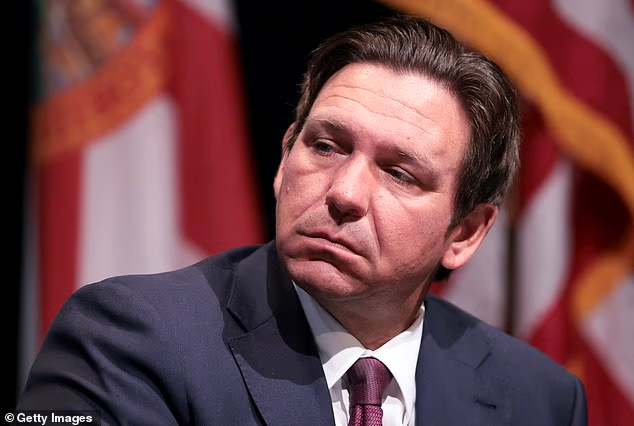
Ron DeSantis has condemned the Republican Party’s performance in the US midterm elections, warning that defeats in Texas could damage the party for a decade and signalling a possible challenge to Donald Trump’s political successor.
The outgoing Florida governor described the results as “close to an extinction-level event for Republicans in many parts of the country”, highlighting Democratic victories in the Texas governor and Senate races.
“Let’s just be clear, that is going to hurt, not just for the next two years, that’s something that can reverberate for the next decade or more,” Mr DeSantis said at a press conference in Tallahassee.
He added: “And if the Republican Party doesn’t have Texas as an anchor, then we are not going to be viable nationally going forward.”
DeSantis warns of long-term Republican damage
Mr DeSantis had criticised the Trump administration before the election results were known, arguing that Republicans were “gaslighting” voters by refusing to acknowledge the impact of the US-Iran war on fuel prices.
“Gas is higher. It hurts working-class people, and it’s higher because of this conflict. That’s just a fact,” he said in a podcast interview. “If you can’t admit that to voters, then you’re gaslighting them, and they’re not gonna listen to you on other things.”
He called the conflict a “big drag” on the Republican Party, saying it might not have become an election issue had it ended as quickly as the Venezuela operation.
“[Trump] obviously ran saying he wasn’t going to do a Middle East war. They did,” Mr DeSantis said. “So we have some of our voters who’ve checked out because they’re like, ‘I didn’t want any more Middle East wars, and now we’re doing it.’”
He also warned that a conflict continuing through the remainder of Mr Trump’s term would weaken the president’s ability to govern and make the next election cycle more difficult for Republicans.
Democrats were on course for at least 54 Senate seats, compared with 44 for Republicans, and had secured at least 228 House seats against 139 for the Republican Party, with many contests yet to be called.
Mr DeSantis predicted that the final figures would be worse for his party. “Dems will get 55 Senate seats and 250+ House seats,” he wrote on X.
“Looking at the Senate map and considering such a massive House margin, it is very unlikely Republicans will recapture the Congress in 2028. Might not have a shot at Senate control until 2032,” he added.
Texas defeat fuels speculation over 2028
The Republican defeat in Texas was particularly damaging. Ken Paxton, Mr Trump’s hand-picked candidate for the Senate, lost to Democrat James Talarico. The last Democrat elected to the Senate in Texas was in 1988.
Mr DeSantis also pointed to losses in the governors’ races in Texas, Ohio and Georgia, saying Florida would be the only Republican-led state among the ten most populous states.
Trump-backed Republican Byron Donalds narrowly defeated Democrat David Jolly in Florida, winning about 50 per cent of the vote to Mr Jolly’s 48.7 per cent and becoming the state’s first black governor.
The result was significantly closer than Mr DeSantis’s 19-point re-election victory in 2022, which helped establish him as a leading contender for the Republican presidential nomination.
Mr DeSantis challenged Mr Trump for the 2024 nomination but withdrew after finishing a distant second in the Iowa caucuses, later endorsing his former rival.
His latest criticism has prompted speculation that he could seek the White House again in 2028. His odds rose sharply overnight on the prediction market Kalshi, placing him behind vice-president JD Vance and Secretary of State Marco Rubio.
Conservative commentator Ben Shapiro, who supported Mr DeSantis in the 2024 Republican primary, said: “Ron is going to run.”
Mr Vance has acknowledged that voters who supported the Republican ticket in 2024 had sided with Democrats in condemning the administration over the unpopular US-Iran war.
The Republican Party now faces a debate over its direction, with Mr Trump term-limited and Mr Vance viewed as the presumed successor without the president’s endorsement. Mr DeSantis’s intervention positions him as a potential alternative as the party assesses the fallout from the election defeat.
