


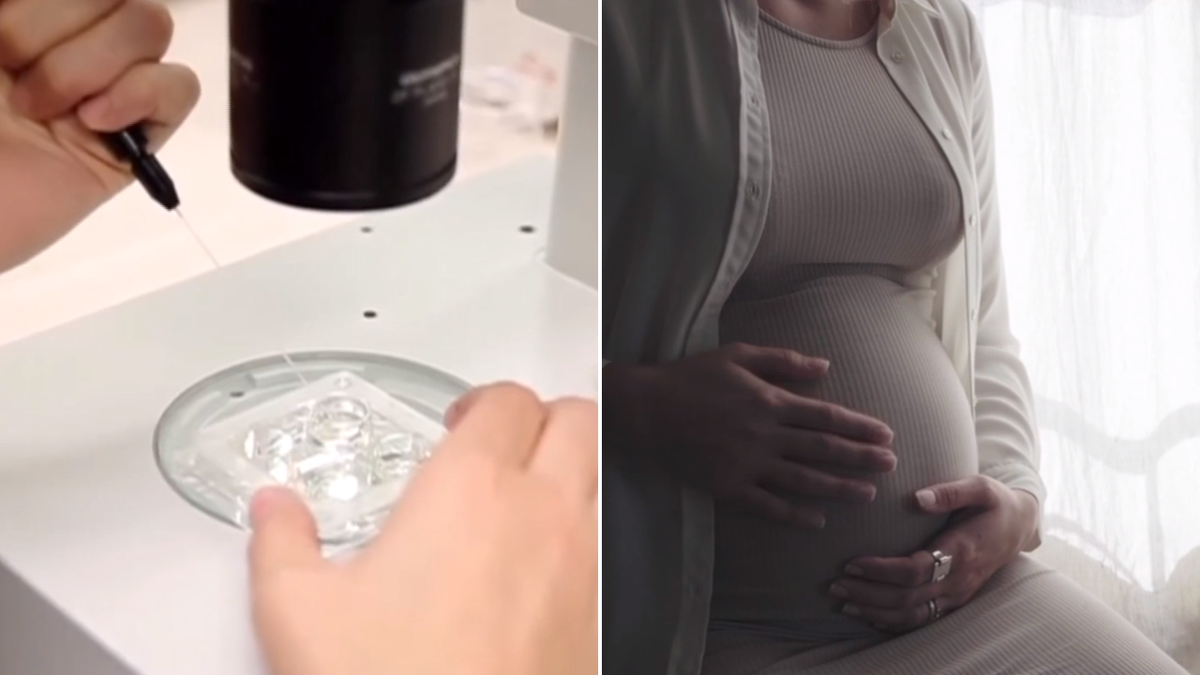
Egg freezing is becoming increasingly common in Australia as women delay motherhood, but fertility specialist Dr Joe Sgroi has warned that the age at which eggs are collected remains crucial to the chances of having a baby later.
Australian Bureau of Statistics figures show the median age of mothers reached 31.9 years in 2023, the highest level recorded. The fertility rate among women aged 40 to 44 has also risen sharply over recent decades, as more people postpone starting a family while pursuing careers, securing financial stability or waiting to find a partner.
At the same time, national IVF data show a marked increase in fertility-preservation treatment. The latest report from the Australian and New Zealand Assisted Reproduction Database recorded almost 9,000 preservation cycles in 2023 — 28 per cent more than the previous year and more than double the number recorded in 2020.
The figures include cycles in which suitable eggs or embryos are frozen for possible future use. In 2024, one in seven fresh cycles using a patient’s own eggs or embryos was undertaken for fertility preservation, according to the database’s latest summary.
Why women are choosing egg freezing
Dr Sgroi said the decision was usually influenced by a combination of social and economic pressures, rather than one isolated reason.
“There’s a range of complex issues, namely social and also economic issues,” he told the Australian breakfast programme Sunrise.
He said many women were remaining in the workforce for longer, while also trying to find a partner and reach a point when they felt ready for parenthood.
“I always say you contemplate pregnancy when you’re physically, financially, socially, emotionally and medically ready to do so,” Dr Sgroi said.
Egg freezing allows younger eggs to be stored until a woman is ready to try for a child. But the specialist said the quality of those eggs was largely determined by the woman’s age when they were collected, not by her age when she returned to use them.
“The younger you are when you’re making a reproductive choice to elect to freeze your eggs, probably the better,” he said.
For a 35-year-old woman, Dr Sgroi said around 20 eggs might be needed to provide a 90 per cent chance of a live birth, although individual outcomes vary and patients should receive advice based on their own medical circumstances.
The number of eggs retrieved can depend on factors including ovarian reserve, response to medication and the number of treatment cycles undertaken. Not every egg will survive thawing, fertilise successfully or develop into an embryo suitable for transfer.
Frozen eggs do not guarantee a baby
Eggs can technically remain frozen for decades, but storage does not remove the health risks associated with pregnancy at an older age. Dr Sgroi said women should consider using their eggs when they felt ready, rather than assuming they could postpone pregnancy indefinitely.
“We’d be certainly encouraging women to come back as soon as they feel reasonably satisfied they’re ready to be a mum to utilise those eggs,” he said. “We want to have a healthy outcome for pregnancy.”
He stressed that egg freezing offered an additional opportunity to have a biological child, not a guarantee of one.
“There’s absolutely no guarantee that there’s a baby with utilising those eggs,” Dr Sgroi said, urging women who wanted to become mothers to seek medical advice sooner rather than later.
The latest IVF data also show that fertility treatment is becoming a more significant part of family formation in Australia and New Zealand. More than 20,000 babies were born following assisted reproductive treatment in 2023, while frozen embryos were used in 40 per cent of cycles and recorded higher birth rates than fresh transfers.
