


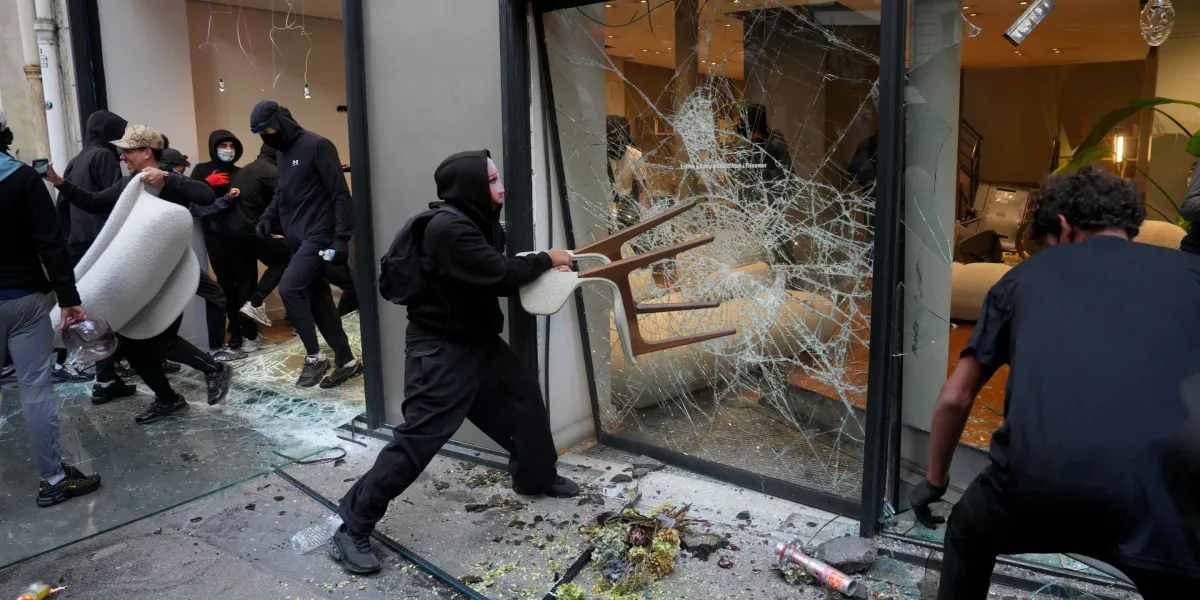
French authorities have demanded that online marketplaces remove suspected stolen goods after more than 3,000 businesses were looted or damaged during protests over the country’s debt crisis, poor school conditions and political deadlock.
Listings for cosmetics, skincare products and handbags began appearing online within hours of raids on shops in Paris’s Les Halles district, including Hermès, North Face and Louis Vuitton.
Commerce Minister Serge Papin and digital minister Anne Le Hénanff summoned Vinted, Leboncoin, Amazon, eBay, Meta and TikTok to a video conference on Monday evening to address the suspected resale of goods taken during the unrest.
Vinted, Europe’s leading second-hand marketplace, said it had introduced measures to deal with suspicious listings and was working with investigators and French authorities.
“The sale of stolen goods, or soliciting them, is strictly prohibited on Vinted, and we have zero tolerance for it,” a Vinted spokesperson said. “We are actively collaborating with law enforcement and the French authorities, and we continually adapt our processes to detect and counter emerging risks and malicious behaviour.”
The company said there had been a marked increase in luxury-item listings, with such products appearing in volumes not normally seen on the platform.
The marketplaces agreed to report suspicious adverts to investigators and monitor warning signs including unusually low prices, large batches of new goods and products still bearing security tags. They will also warn buyers that purchasing stolen property is a crime and publish figures showing how many listings they remove, with an initial tally due within 48 hours.
French President Emmanuel Macron said those responsible would be pursued. Handling stolen goods carries a maximum sentence of five years in prison and a fine of €375,000 in France.
“Those who looted will have to pay back, and those who sought to bring down the Republic will be held accountable,” he said.
The French Senate is due to begin debating a so-called “casseurs-payeurs”, or “rioters pay”, bill on October 27. The proposed legislation would make everyone who took part in a gathering that caused damage collectively liable for the losses.
How online marketplaces are tackling suspected stolen goods
Luxury cosmetics, fragrances and electronic goods are attractive to thieves because they are relatively small, easy to photograph and in demand. Items taken during looting can be offered quickly, in bulk and below normal prices, while the money generated may pass through payment accounts linked to wider fraud.
Platforms can look for listings posted shortly after a looting event, unusually cheap goods, bulk sales and descriptions claiming that products are in excellent condition. Monitoring keywords and examining user accounts can help identify suspicious activity, although proving that a specific item has been stolen remains difficult.
European Union rules require online marketplaces to collect and check trader details before they can sell, while also carrying out random checks for illegally listed products. If a platform discovers that an unlawful item has been sold, it must inform buyers.
TikTok said its shopping service does not permit consumer-to-consumer sales. Registered businesses must provide evidence that products were legitimately obtained, such as brand authorisation or wholesaler certification, while a dedicated taskforce checks listings and videos for suspicious activity.
eBay said the sale of stolen property was prohibited on its platform. A spokesperson said the company used algorithms, data-driven tools and specialist teams to identify suspicious patterns and potentially stolen goods, while working with law enforcement agencies.
The suspected online resale comes as retailers face the wider financial impact of the unrest. Morningstar DBRS has estimated that insured losses could reach €1.2 billion if there is no further violence, while France’s main retail federation has put direct damage at several hundred million euros.
Carrefour cut its 2026 profit forecast after around 50 of its stores were affected on the first day of the unrest, with many looted. Chief executive Alexandre Bompard said the damage could reduce operating income by between €80 million and €200 million.
The announcement sent Carrefour shares down by as much as 15%, wiping about €1.7 billion from the company’s market value.
Retail theft has also become increasingly associated with organised crime, including gift-card fraud, telephone scams and theft from supply chains. The British Independent Retailers Association estimated in 2024 that about 60% of goods stolen from its members were eventually sold online.
Financial crime specialists have warned that online sales can form part of money-laundering networks, with proceeds moved through bank accounts, payment processors and credit cards. Europol identified 10,759 money mules and 474 recruiters in 2023, while the Financial Conduct Authority said firms closed 238,396 suspected mule accounts in 2025, up from 233,269 the previous year.
