


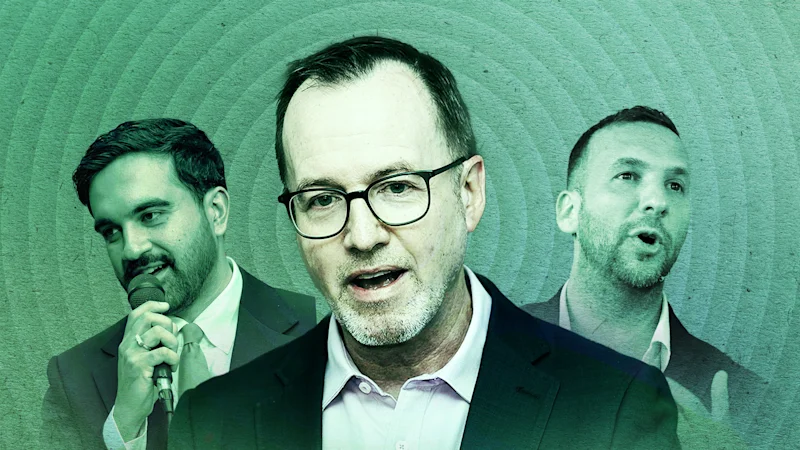
Australia’s Greens have elected hard-left senator David Shoebridge as their new leader, promising a more combative and openly populist strategy aimed at breaking the party’s long-standing electoral ceiling.
Shoebridge takes charge as the party looks to capitalise on growing dissatisfaction with established politics and the momentum enjoyed by figures such as New York mayor Zohran Mamdani and UK Greens leader Zack Polanski.
The Greens have struggled to gain ground despite Labor’s poor polling, prompting questions about why voters turning away from the major parties have not moved in greater numbers to the minor party. One Nation, by contrast, has been surging.
The leadership change followed Larissa Waters’ resignation because of health issues. Waters, regarded within the party as a respected consensus-builder, had helped hold the Greens’ vote together but was criticised by some colleagues for lacking a sufficiently forceful public presence.
Shoebridge defeated senators Sarah Hanson-Young and Mehreen Faruqi in a rare contested ballot. Steph Hodgins-May will serve alongside him in the new leadership team.
Greens turn towards populist politics
The new leader has argued that the party must connect more directly with public anger over inequality, while directing blame towards wealthy corporations rather than migrants or other workers.
“The challenge for the Greens has been connecting with that anger, letting people understand that we see it and we feel it,” Shoebridge said. He added that the party should focus on “the 1 per cent who are driving [inequality]”.
He has also embraced the language of populism used by Mamdani and Polanski, whose campaigns have included promises aimed at easing living costs and increasing taxes on the wealthy.
“I’m unashamedly populist because our agenda is unashamedly for the 99 per cent,” Shoebridge said.
He cited proposals to tax profits from Australia’s gas exports and impose restrictions on technology companies building artificial intelligence data centres as examples of policies he believes can attract broad support.
The Greens’ direction has been influenced by the party’s review of last year’s federal election, in which it lost three lower-house MPs, including former leader Adam Bandt. The review concluded that the party had failed to distinguish itself clearly enough from Labor.
Its central election message – to keep Peter Dutton out of office and pressure Labor to act – was judged insufficiently compelling. Some within the party say they warned against that approach at the time.
Shoebridge has indicated that the Greens could adopt a more obstructive parliamentary stance after 18 months under Waters, while seeking to present themselves as an alternative party of government rather than a crossbench force that helps Labor pass progressive measures.
Prime Minister Anthony Albanese criticised the ambition to replace Labor, saying it was concerning at a time when a far-right party was gaining support. He said the comments sounded similar to those made by politicians who had failed to win seats in the lower-house election.
Questions over the Greens’ electoral strategy
Supporters of the new approach believe the party needs to take greater risks and build a grassroots movement involving ordinary members and voters. Former MP Max Chandler-Mather, now leading the Green Institute think tank, has argued that the success of Mamdani and Polanski was rooted not only in their policies but in the way they built their campaigns.
He has called for Greens members to be given a say in choosing their leader, saying that a party seeking to build a movement must place real power and trust in ordinary people. That proposal was not adopted in this week’s leadership contest.
Not all Greens believe that copying overseas successes will work in Australia. Mamdani’s victory came in New York, one of the United States’ largest and most diverse cities, while Polanski’s rise in Britain came as Labour was struggling under Keir Starmer. UK Greens support has since fallen back to about 10 per cent under Andy Burnham, according to polling cited in the party debate.
Some members argue that the Australian political system has generally rewarded centrist politics and that the Greens must continue appealing to voters who might otherwise support Labor. Others believe that maintaining a vote of about 12 per cent is not a sufficient ambition for a party seeking to become a genuine alternative.
Resolve pollster Jim Reed said the Greens faced a choice between remaining a minority progressive force and attempting to grow into a party capable of replacing Labor. He said polling suggested the party had either lost ground or remained static in recent federal, Queensland and ACT elections.
Reed attributed that difficulty to the party’s shift from an environmental movement towards a wider focus on international causes, including Gaza, which he said had spread its appeal too thinly.
Shoebridge’s supporters believe his aggressive parliamentary style and appetite for controversy could give the party the energy it has been missing. His critics, however, fear that choosing a straight white former barrister from Sydney risks reinforcing the Greens’ image as an inner-city party and does little to address concerns about its lack of Indigenous and multicultural representation.
The new leader’s central challenge will be to turn a promise of sharper opposition and economic populism into wider electoral support without losing the progressive voters who form the party’s existing base.
