


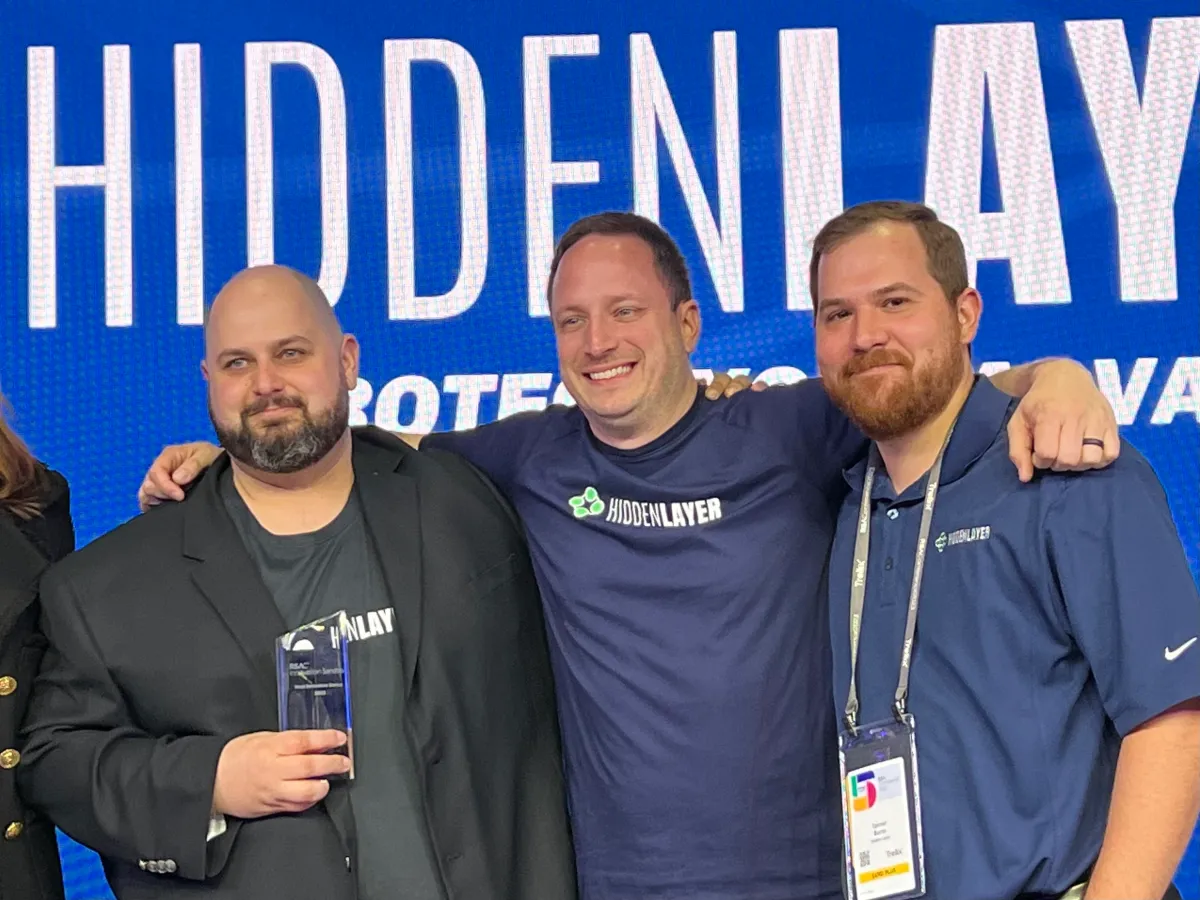
HiddenLayer, the Austin-based cyber security company protecting artificial intelligence systems from attacks, has raised $100 million as businesses accelerate efforts to secure AI models, agents and automated workflows.
The Series B funding round was led by Delta-v Capital, with backing from Ten Eleven Ventures, Morgan Stanley, Microsoft’s M12 venture fund, Booz Allen Hamilton and other investors.
HiddenLayer said its annual recurring revenue had increased more than tenfold over the past year and was now in the “tens of millions” of dollars. More than 90% of that growth came from customers signed during the same period, according to co-founder and chief executive Chris Sestito.
The company’s largest markets are currently financial services and major technology firms developing AI products. It also has contracts with the US Department of Defense and the intelligence community.
One customer is described as a leading frontier-model provider with more than 700 million weekly users, although HiddenLayer has not named the organisation.
AI security market expands
The fundraising comes as demand grows for tools capable of monitoring AI systems in operation, including the external tools and add-ons used by autonomous agents.
Gartner forecasts that global spending on products designed to secure AI tools will reach $2.83 billion this year, an increase of 83% on 2025. It expects the market to approach $4.78 billion next year.
HiddenLayer was founded to detect adversarial attacks, vulnerabilities and malicious code aimed at AI models. Its products cover the discovery of models, protection at runtime, attack simulation and security checks across the AI supply chain.
As companies have moved from experimenting with generative AI to putting it into production, the firm has expanded those products to cover prompt injection, manipulation of AI agents and the misuse of tools connected to them.
“Inference is still inference,” Mr Sestito told TechCrunch. “So whether it’s on a traditional machine learning model, whether it’s Gen AI, whether it’s an agentic work stream, a lot of our technology still applied. So really, we haven’t had to pivot, but we’ve had to grow our scope … from traditional modelling to Gen AI to agentic.”
He said runtime protection had become a particular priority, comparing the approach with endpoint detection and response software used to monitor conventional computers and networks, but adapted for AI systems.
Open-source and open-weight models present another area of concern. HiddenLayer says it can analyse about 50 AI file frameworks to check that models are genuine and have not been replaced or tampered with.
“We’re looking at things like models purporting to be one thing, but they’re another — hidden models inside of models,” Mr Sestito said.
The new funding will be used to expand HiddenLayer’s sales and distribution operations, while continuing investment in engineering and research. The company also plans to grow in Europe and the wider EMEA region.
HiddenLayer faces competition from both established cyber security groups and newer specialist companies. Cisco, Palo Alto Networks and Check Point are among the large providers that have historically used acquisitions to add new capabilities, while startups including Noma and Zenity have raised significant sums in neighbouring areas of AI security.
Mr Sestito acknowledged that some of HiddenLayer’s functions could eventually be incorporated into broader platforms operated by companies such as Microsoft, OpenAI and Amazon Web Services. He argued, however, that AI infrastructure providers were more likely to concentrate on governance features such as model discovery, identity and policy controls.
For HiddenLayer, the immediate challenge is to expand alongside the growing use of AI while establishing a durable position before larger cyber security companies move further into the market.
