


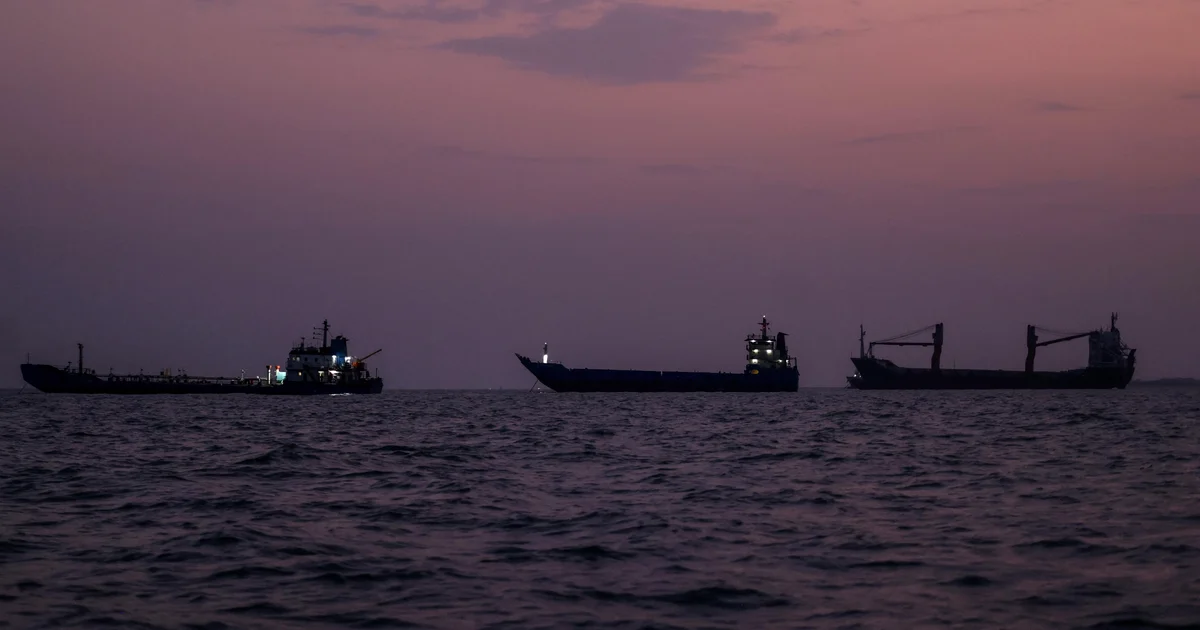
Iran is preparing to announce a new maritime “exclusion zone” near the Strait of Hormuz, escalating a confrontation with the United States after American forces struck three Iranian oil tankers.
Mohsen Rezaei, secretary of Iran’s Supreme National Security Council, said the restricted area would target vessels attempting to pass through the strategic waterway without Tehran’s approval. He said details, including maps of a proposed shipping corridor, would be released in the coming days.
According to Iranian state media, the zone would begin at the line of the US naval blockade, extend towards the Strait of Hormuz and continue into the Persian Gulf. Rezaei gave no indication of how the measure would be enforced or whether commercial vessels would be prevented from using the route.
The announcement follows a sharp exchange of attacks at sea. US Central Command said American forces had “permanently disabled” three Iranian crude carriers on Saturday after Iran launched ballistic missiles towards two US Navy warships.
Admiral Brad Cooper, the commander of Central Command, said the tankers were part of a network funding Iran’s Islamic Revolutionary Guard Corps. “If you shoot at two of our ships, we will impose an even higher economic cost — taking out three of yours,” he said.
Mohammad Bagher Ghalibaf, Iran’s parliamentary speaker, warned that Tehran’s response would no longer be proportionate. “Any aggression against Iran’s interests and security will receive a faster, more intense and more painful response,” he said in remarks carried by Iranian state media.
The worsening standoff has further restricted shipping through the Strait of Hormuz, one of the world’s most important energy routes. Brent crude rose to almost $97 a barrel on Monday, while the average US petrol price reached $4.14 a gallon ahead of the Labor Day holiday.
Iran and Oman discuss temporary route through Hormuz
At the same time, Iran said talks with Oman on managing commercial traffic through the strait had entered their final stage. Iranian foreign ministry spokesman Esmaeil Baghaei said the two countries expected to register an understanding on a temporary safe route with the International Maritime Organization in the coming days.
Oman has said the proposed corridor is intended to support safe passage and freedom of navigation, without imposing transit fees. The International Maritime Organization has previously stressed that vessels require verified safety guarantees and coordination with coastal states before attempting to pass through the waterway.
Qatar’s foreign ministry spokesman, Majed Al Ansari, said the conflict had shown that Gulf states could not depend entirely on the United States for their security. Anwar Gargash, a diplomatic adviser to the United Arab Emirates president, said restoring a working relationship with Iran was necessary, although rebuilding trust would be much harder.
Iran has also warned South Korea against joining US naval operations around the Strait of Hormuz. Baghaei said any military deployment by another country would amount to direct support for Washington and would have “serious consequences”.
