


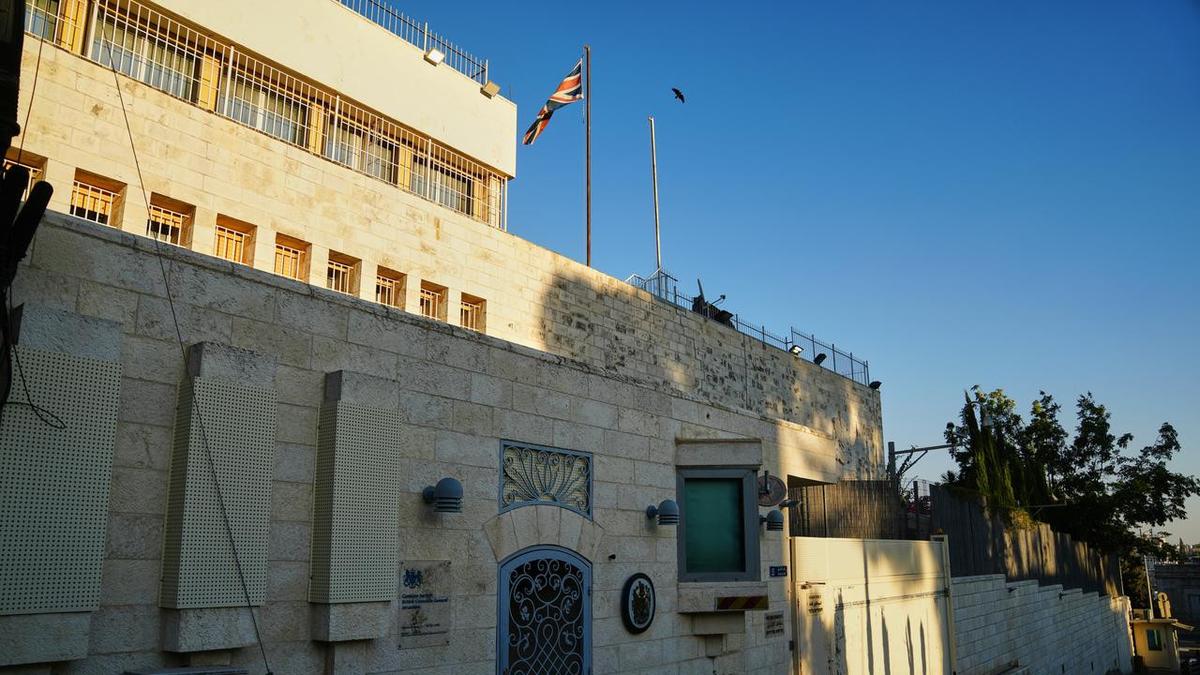
Israel has announced plans to close Britain’s consulate in East Jerusalem in retaliation for new UK measures targeting goods and services linked to Israeli settlements in the occupied West Bank.
Israeli Foreign Minister Gideon Saar said the decision had been co-ordinated with Prime Minister Benjamin Netanyahu after Britain, France and Canada said they would introduce restrictions on trade with settlements, which they regard as illegal under international law.
Mr Saar also said British representatives would be removed from a US-led mechanism involved in co-ordinating humanitarian and reconstruction work in Gaza. British personnel involved in training Palestinian Authority security forces in the West Bank will also be affected, while some British nationals will be barred from entering Israel.
Among those named for an entry ban is former Labour leader Jeremy Corbyn, alongside other British politicians and nationals whom Israel accuses of anti-Israel activity.
Israel condemns UK position on West Bank
Mr Saar described the British measures as “morally distorted” and “blatant interference” in Israel’s affairs and electoral process. He also rejected comments by Foreign Secretary Ed Miliband that Palestinians were facing ethnic cleansing in parts of the West Bank, calling the accusation an “outrageous lie”.
The British Consulate General in East Jerusalem represents the UK in Jerusalem, the West Bank and Gaza, and is accredited to the Palestinian Authority. Britain regards East Jerusalem as occupied territory and does not recognise Israeli sovereignty over it pending a final settlement.
Mr Miliband told the House of Commons that the British Government agreed Palestinians were being subjected to ethnic cleansing in areas of the West Bank by settler groups. He said the UK could no longer simply condemn the expansion of settlements without taking action.
Britain’s measures include a ban on imports from Israeli settlements and restrictions on companies providing services connected to them, including finance, construction, infrastructure, property and advertising. The Government has said the action is directed at settlements and settlement expansion, rather than Israel as a whole.
In a joint statement, the UK, France, Canada and nine other countries said the expansion of settlements and rising settler violence were undermining the prospect of a negotiated two-state solution. They also condemned Israel’s plans to advance tenders for the E1 settlement project, which the UK says risks separating the West Bank from East Jerusalem.
Mr Miliband said: “Today we refuse to be bystanders to further suffering and to the destruction of the two-state solution.”
The United States has rejected the trade restrictions. Secretary of State Marco Rubio said they could destabilise the West Bank and confirmed that Washington would not follow Britain, France and Canada in blocking imports from Israeli settlements.
Settlement exports, including dates, citrus fruit, herbs and wine, account for only a small proportion of Israel’s overall trade. The measures are therefore expected to have limited direct economic impact, but they mark a significant deterioration in relations between Israel and several traditional Western allies.
