


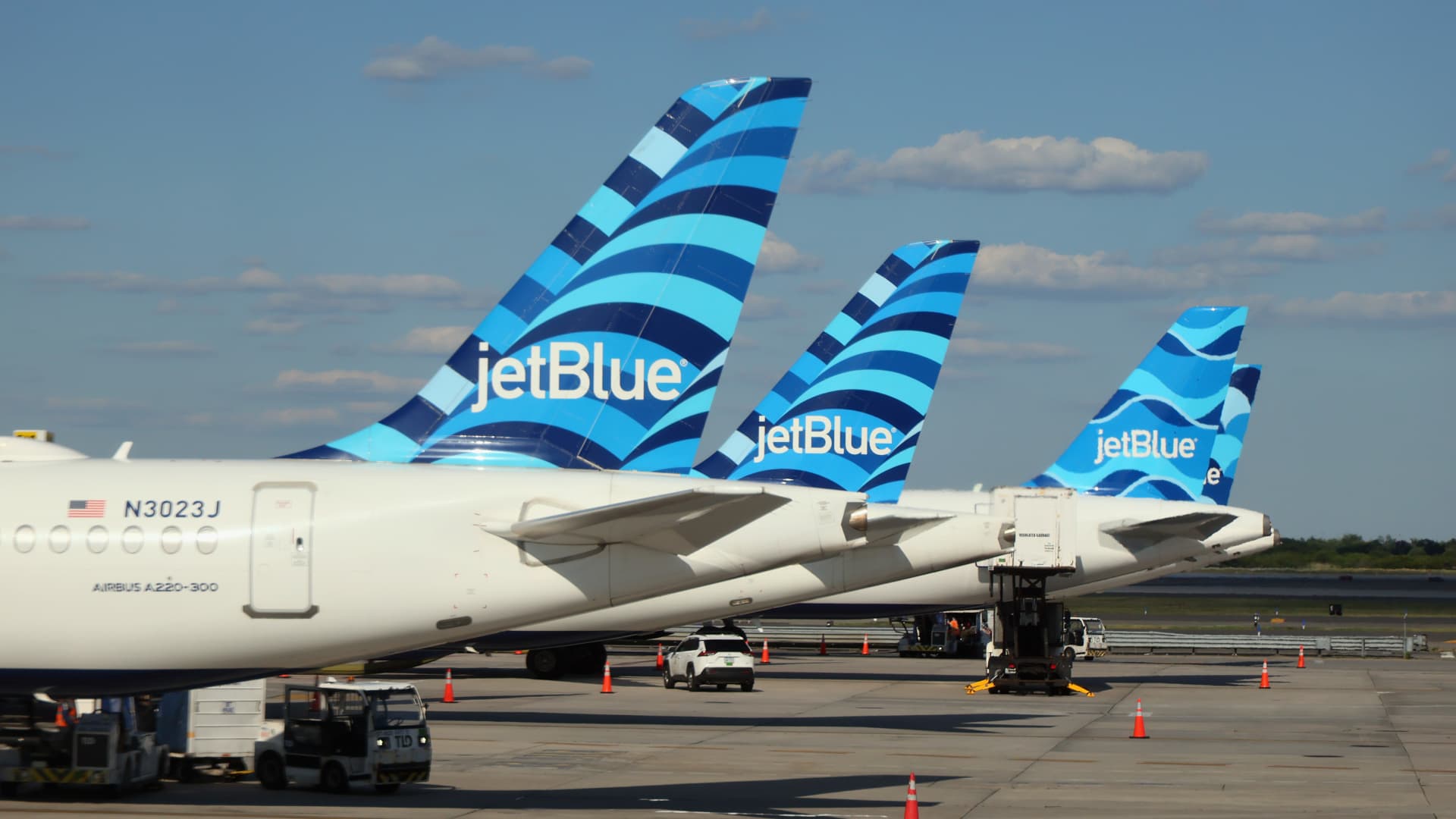
JetBlue Airways reported a wider third-quarter loss of $257 million as fuel costs surged, although the New York-based carrier said resilient travel demand and stronger fares had helped offset some of the pressure.
The loss for the three months to September 30 compared with a $143 million loss in the same period last year. JetBlue’s fuel bill rose 61 per cent to $868 million.
Revenue came in at $2.81 billion, broadly in line with Wall Street expectations of $2.82 billion. The airline reported an adjusted loss of 60 cents a share, compared with an expected loss of 55 cents.
Joanna Geraghty, JetBlue’s chief executive, said: “Resilient demand and strong yields drove revenue well ahead of our initial expectations, allowing us to recapture more of the increase in fuel costs than we initially expected.”
She added that the momentum had continued into the fourth quarter, with Fort Lauderdale producing “exceptional results” as the airline expanded capacity.
JetBlue’s turnaround plans
JetBlue said it ended the quarter with $2.2 billion in liquidity and an unencumbered asset base worth $7 billion, including $2.8 billion in aircraft and engines.
The airline has not posted an annual profit since 2019 and is pursuing a multi-year turnaround that includes cost-cutting and efforts to increase revenue through premium seating. A new domestic first-class section has recently gone on sale.
Higher fuel costs have weighed on airline profits across the industry, while JetBlue said fares had risen by more than 20 per cent this year without undermining travel demand. The carrier has also faced pressure from larger rivals.
JetBlue’s shares fell to a new low on Monday, before the results were released. Senior creditors are reportedly working with restructuring adviser PJT Partners, according to a report cited in the source material, and company executives are due to face analysts’ questions on the airline’s long-term prospects on Tuesday.
The carrier’s plans to buy Spirit Airlines were blocked by a federal judge, who ruled that the deal was anti-competitive. A separate regional partnership with American Airlines was also blocked, while JetBlue now has a partnership with United Airlines.
