


Luxury travel is shifting into autumn, with wealthy holidaymakers increasingly choosing September, October and November for trips to Europe as they seek milder weather and fewer crowds. New figures from the luxury travel network Virtuoso show that autumn bookings are 59 per cent higher than last year, while sales have risen 69 per cent.
September has emerged as the strongest month, with sales up 77 per cent. October sales have increased by 54 per cent, while November sales are 71 per cent higher than a year ago.
Virtuoso has dubbed the trend the “fallcation”, as high-net-worth travellers move holidays traditionally taken in July and August into the autumn. The network’s latest findings suggest the change is becoming more than a temporary response to overcrowded resorts: over the past two years, autumn travel to Europe’s traditionally summer destinations has more than doubled.
Misty Belles, Virtuoso’s vice-president, said September was now beginning to overtake August as the preferred month for luxury travel.
“Especially for the high-net-worth and ultra-high-net-worth group, we’re seeing huge gains for fall this year,” she said. “September is really eclipsing August. That shoulder season is no longer really a shoulder season. It’s becoming a peak season unto itself.”
Why wealthy travellers are moving holidays into autumn
Repeated summer heatwaves across Europe have made travel in July and August less appealing, while demand for sought-after hotels and restaurants has pushed prices higher in destinations such as southern Italy and France.
Affluent travellers are also increasingly prioritising experiences over goods, helping to drive demand for luxury holidays. Demographic changes have widened the pool of people able to avoid school-holiday dates, with retired baby boomers, Gen X travellers whose children have grown up and younger digital nomads all enjoying greater flexibility.
“Wealthy travellers have more experience. They have experienced destinations in the summer,” Ms Belles said. “They know it’s hot. They know it’s crowded. They know it’s not often the best time to see a destination, so they’re shifting over to fall because the lines are going to be shorter, less crowded and the temperatures are more moderate.”
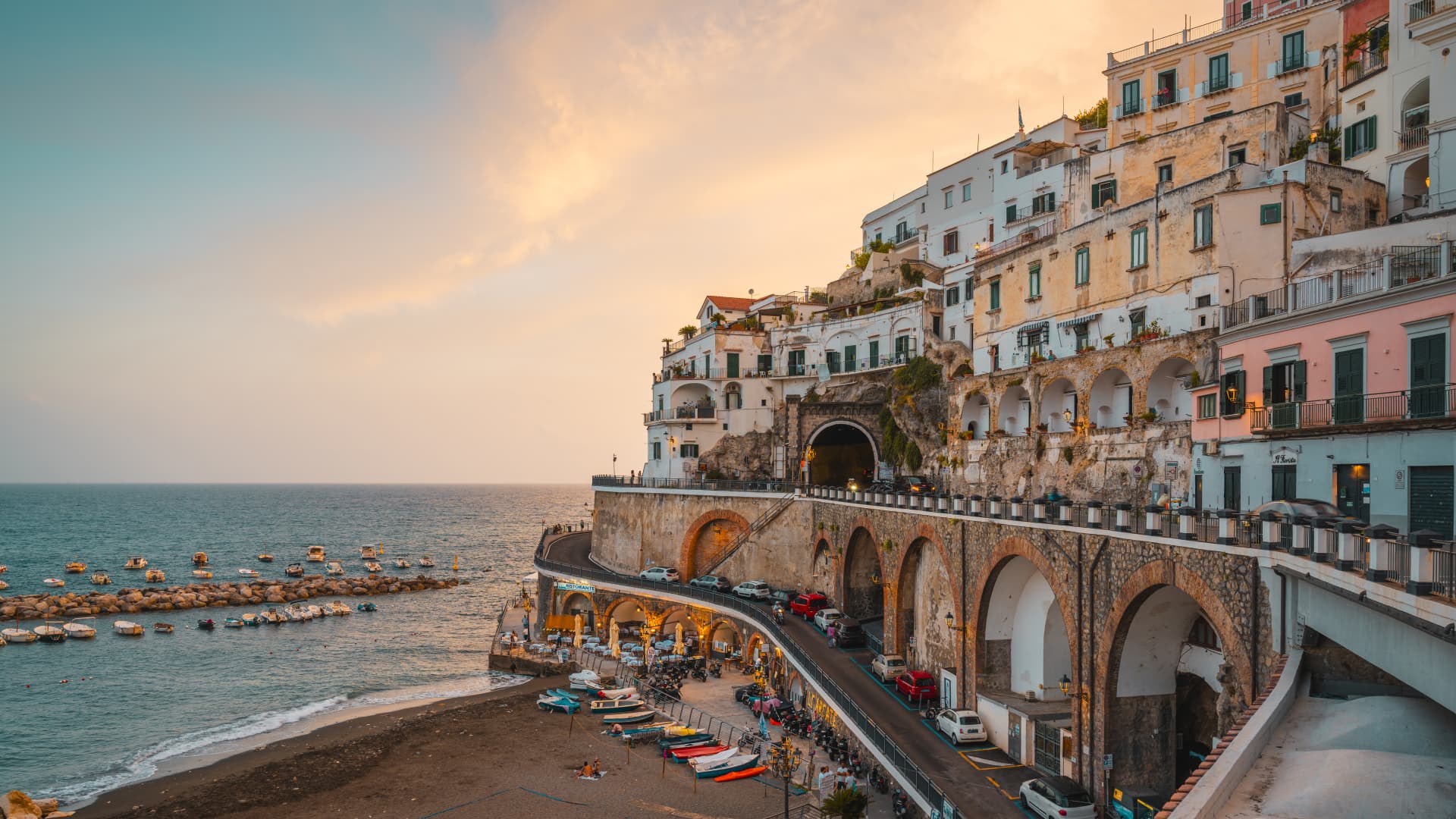
Paris is the most popular destination among wealthy Americans booking trips for this autumn, followed by the Amalfi Coast, the French Riviera, Tuscany and New York. London, Lake Como, Maui and Rome also feature prominently on the list.
Europe has been a particular beneficiary of the shift. Virtuoso said bookings to the continent for autumn were up 49 per cent, while sales increased 64 per cent despite hotel rates rising by more than 7 per cent.
Autumn travel no longer guarantees cheaper prices
The growing popularity of the new peak season is already eroding the savings traditionally associated with travelling outside the summer months. September hotel rates in Europe are now approaching, and in some cases exceeding, those charged during July and August.
Average daily rates have risen by 131 per cent in the Greek Isles, 78 per cent in Puglia and 179 per cent on the French Riviera, according to Virtuoso data.
That surge raises the prospect that crowds in southern Europe’s wealthiest resorts could soon begin to resemble those seen in high summer. Travellers may find better conditions in November, although bookings for the month are already up by about 70 per cent.
Luxury accommodation is becoming more expensive worldwide. Bookings at hotels charging at least $1,500 (£1,190) a night are up 37 per cent year on year, while the average nightly rate at international luxury hotels has reached $1,653, compared with $985 in 2019.
“Rates are growing at a faster clip [for luxury] than the lower-rate hotels, so that tells us there is a premium placed on the experience,” Ms Belles said. “The demand is certainly strong.”
