


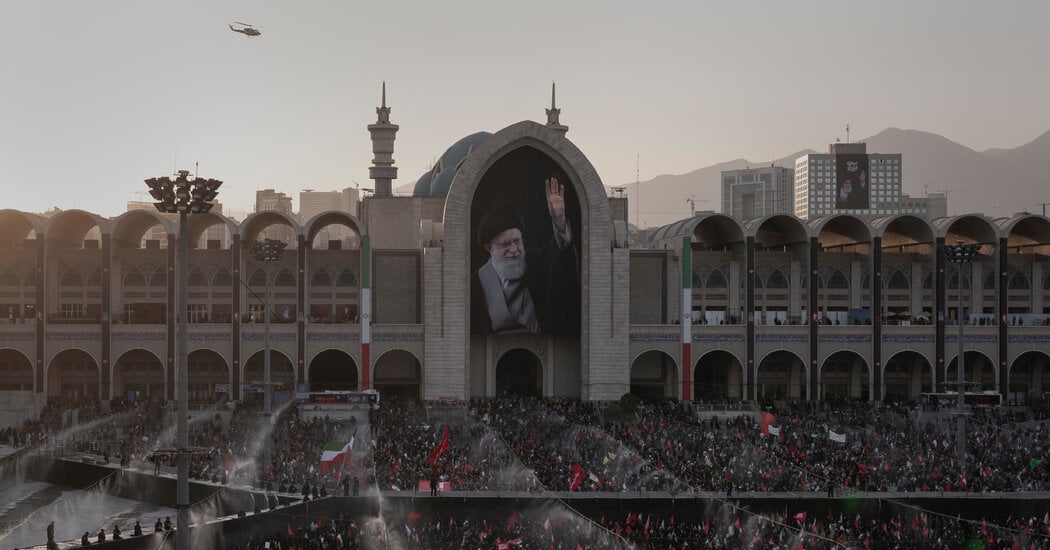
Iran war intelligence reports suggest Tehran is increasingly confident in its ability to strike US and allied targets across the Middle East and is preparing to prolong the conflict, potentially into the November midterm elections.
The assessments, seen by current and former US officials, indicate that Iran’s leadership believes it has gained a clearer understanding of its military strengths during months of intermittent fighting. Officials warn that the hard-line government may now be considering a significant escalation.
The latest exchanges have remained limited, but Iran has recently targeted commercial shipping in the Strait of Hormuz and American forces in the region. The US has responded with strikes inside Iran, killing military personnel and civilians, according to officials briefed on the intelligence.
US Central Command said on September 1 that its forces had struck Iranian Revolutionary Guard targets including air-defence sites, radar systems, maritime assets, communications facilities and equipment linked to mine-laying operations. It said more than 50,000 US service members were operating across the Middle East. ([centcom.mil](https://www.centcom.mil/MEDIA/PUBLIC-RELEASES/Article/4588389/centcom-completes-strikes-on-irgc-targets-in-iran/?utm_source=openai))
Iran conflict expected to remain politically damaging
There are few indications that Tehran is ready to agree to a permanent settlement. Instead, officials believe Iran may seek to exploit the war’s economic and political costs in the United States, where higher energy prices and disruption to shipping have become increasingly sensitive issues for the Trump administration.
President Donald Trump has so far rejected negotiations and has argued that economic pressure will force Iran to make concessions over the strait and, eventually, its nuclear programme. Officials familiar with the intelligence assessments say sanctions are more likely to provoke further retaliation in the short term.
Iran could repeat attacks seen in July, when it struck US bases in the Middle East, killed three Americans in Jordan and targeted shipping and infrastructure in Kuwait and elsewhere.
Vice-President JD Vance sought to play down the threat to the American public during a White House briefing on Thursday, while acknowledging that Tehran was likely to continue looking for ways to strike the United States.
“If you look at the Iranian ability to disrupt the normal lives of Americans, I think it is quite limited,” Mr Vance said. “It’s not zero, but it’s quite limited. I’d be much more worried about cyberattacks from other actors.”
Mr Vance also declined to predict that the conflict would be over before the November 3 midterm elections and said he would not describe the fighting as a war. Shipping through the Strait of Hormuz remains well below pre-conflict levels, with 102 vessel transits recorded last week compared with more than 130 a day before the fighting began, according to Lloyd’s List Intelligence. ([washingtonpost.com](https://www.washingtonpost.com/business/2026/09/03/iran-war-trump-strait-of-hormuz-vance-oil/e20c28ce-a7f7-11f1-9e38-f705d048bd5a_story.html?utm_source=openai))
Iran’s ability to threaten the strait is central to the US assessments. The waterway carried about a fifth of the world’s oil before the conflict and remains Tehran’s most powerful source of leverage over global energy markets.
Representative Jason Crow, a Democrat from Colorado and member of the House Intelligence Committee, said Iran’s leadership appeared more united after the attacks and retained substantial missile and drone stocks.
“Iranians are feeling pretty bullish about their position,” Mr Crow said. “They have taken substantial damage, but that has always been built into their system. They understand they can take damage, and they are playing a much longer game here.”
Other officials briefed on the reports said Iran may believe that the US military would struggle to sustain major new attacks as its stocks of precision munitions decline. Tehran is also understood to believe that time is working in its favour ahead of the US elections.
Iran-linked cyberattacks raise concern
Cyberattacks are expected to remain an attractive instrument for Iran, even if they cause limited disruption. US officials believe Iran-linked hackers were responsible for attacks on more than 100 water systems across the country in late July, although no system was reported to have been compromised in a way that made drinking water unsafe.
Some attacks forced operators to switch to manual controls and issue precautionary boil-water notices. Current and former officials said the hackers had also shown interest in American oil and gas infrastructure, though it was unclear whether any energy systems had been breached.
US authorities have previously warned that Iranian Revolutionary Guard-linked groups have targeted internet-connected control systems used by water, energy and other critical infrastructure operators. A joint advisory by the FBI, the Cybersecurity and Infrastructure Security Agency and other agencies said the activity posed an ongoing risk to US organisations using such equipment. ([cisa.gov](https://www.cisa.gov/news-events/cybersecurity-advisories/aa23-335a?enkwrd=%2A+&utm_source=openai))
Alex Orleans, a former US government cybersecurity contractor who tracks Iranian hacking groups, said the operators were likely to feel emboldened by the wider conflict.
“Even if such attacks fail to meaningfully unsettle the American public, they can still play into a broader effort to exhaust domestic patience with this administration’s handling of the conflict,” he said.
US officials also believe Iran is seeking to influence American political debate. Meta said last week that it had identified a small network of Facebook and Instagram accounts originating in Iran, some using artificial intelligence-generated material and promoting anti-Republican views.
Iranian media has also devoted growing attention to Mr Trump and the midterms. Threat intelligence company Alethea said more than 1,200 Persian-language articles referring to both had appeared in the previous two weeks, with the dominant message portraying the conflict as a political liability for the president.
Representative Josh Gottheimer, a Democrat from New Jersey and another member of the Intelligence Committee, said Iran believed it had gained maximum leverage.
“So, from their perspective, why not keep sticking it to the president?” he said.
