


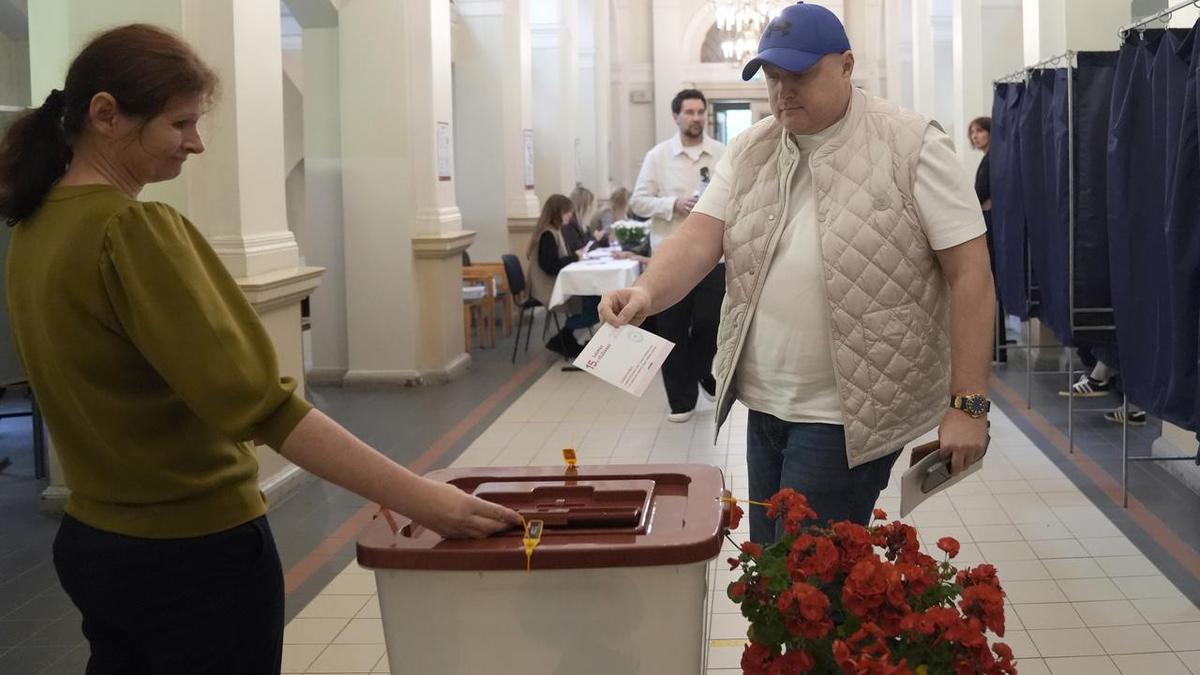
Latvian Prime Minister Andris Kulbergs’s centrist, pro-Ukraine party has secured a commanding lead in the parliamentary election, according to partial results, as voters cast their ballots amid warnings of possible Russian aggression.
With 72% of ballots counted, United List had won 36.5% of the vote. The populist Latvia First party was in second place on 13%, after appealing to Latvia’s sizeable ethnic Russian minority during the campaign.
“It’s remarkably good. I was not expecting such a result,” Mr Kulbergs told supporters at the party’s headquarters in Riga.
The prime minister said he hoped to remain in office but would not want to form a government with Latvia First. Despite the strong performance, United List will still need coalition partners to secure a majority.
The pro-Russian Sovereign Power party was third in the exit poll ranking with 10.5%, followed by the nationalist National Alliance on 9.6%. Sovereign Power has called for Latvia to end aid to Ukraine and focus instead on cost-of-living pressures, particularly among Russian-speaking residents.
Latvia election held under shadow of Ukraine war
Baltic countries have warned that Russia is carrying out sabotage, cyber attacks and other forms of hybrid activity across Europe in an effort to weaken support for Ukraine and spread fear. Western officials have dismissed concerns that Moscow is capable of launching a direct assault on Nato, of which Latvia is a member.
Russia has rejected the allegations as baseless and described them as part of anti-Russian hysteria.
Mr Kulbergs, a businessman and amateur rally driver, became prime minister in May after the previous coalition collapsed over its handling of incidents involving military drones that entered Latvian airspace undetected. The drones were Ukrainian, although officials blamed Russia for causing them to veer from their intended flight paths.
During the campaign, Mr Kulbergs pledged to expand Latvia’s anti-drone capabilities and keep defence spending at 5% of gross domestic product, among the highest levels in Nato.
Latvia has a population of 1.9 million and lies between the Baltic Sea, Russia and Belarus. It borders Nato and European Union members Estonia and Lithuania to the north and south, while its ethnic Russian population remains divided between those angered or embarrassed by the Kremlin’s war and those who oppose domestic policies they regard as discriminatory.
