


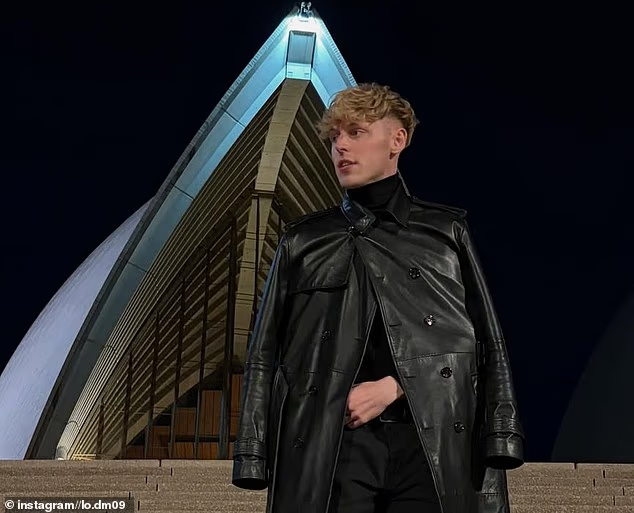
Loïc De Marie has described the moment he chose not to jump into a swimming pool to rescue his drowning sister because he did not want to get his clothes wet.
De Marie, 26, from Belgium, recalled the incident during an interview for SBS’s Insight programme, saying he was six when his younger sister fell into the family pool while their mother was inside preparing dinner.
“She was drowning, and I looked at her, and that was kind of troubling,” he said. “And I didn’t jump into the pool because I didn’t want my clothes to get wet.”
Instead, he used a plastic golf club to pull the girl towards the pool ladder, allowing her to climb out.
De Marie said the incident was one of the earliest signs that he experienced emotions differently from other people. He also recalled feeling unmoved when a classmate was killed in a car crash, despite other children crying.
“This was the first time I understood that emotions are different with me because the look that the teacher gave me was, ‘Why is this kid not crying?’” he said.
Diagnosis of antisocial personality disorder
Now living in Vancouver, Canada, De Marie sought help from a psychologist three years ago after years of feeling different and struggling to understand other people’s emotions.
He was diagnosed with antisocial personality disorder and traits associated with psychopathy at the age of 23. The assessment included traits such as manipulation, lying, disregard for other people’s safety and a lack of remorse or empathy.
As he grew older, De Marie became involved in fights and said he was arrested after taking a baseball bat to school with the intention of attacking a rival student.
“I would have smashed his head like a watermelon,” he said, adding that he could have faced prison for making a threat with a weapon but did not receive serious legal consequences.
De Marie said therapy had helped him understand how other people expected him to respond in situations involving grief or distress, even when he did not feel the same emotions himself.
“Before therapy I couldn’t change my behaviour, even when someone was crying. I would continue to act that way,” he said.
“Sometimes you need to fake it.”
He rejected the idea that people with psychopathic traits are automatically violent or evil, saying most people with such traits never kill anyone.
“I don’t think I was born bad. I was born different,” he said.
His father, Philippe, said receiving a diagnosis had helped the family make sense of years of troubling behaviour.
“It was good to put a name on a disorder, and then you understand a lot of things,” he told SBS. “We try to do the best we can to support him with a lot of communication and love.”
Eva Kimonis, a clinical psychologist and professor at the University of New South Wales, said research suggested callous and unemotional traits could be identified in children as young as two or three.
“If we can address the problem when empathy is developing and it’s starting to go the wrong way, then I think yes, we can teach empathy,” she said.
The interview forms part of an Insight episode examining whether harmful behaviour is shaped by nature, upbringing or personal choice. The programme, Born Bad?, is due to air on SBS at 8.30pm on Tuesday, September 1, and will be available on SBS On Demand.
