


Melbourne’s build-to-rent boom is delivering thousands of new apartments, but many are being offered at prices well beyond the reach of renters facing the city’s housing affordability crisis.
The developments promise long-term leases, professional management and resort-style facilities, from heated pools and cinemas to gyms, saunas and private dining rooms. Yet an analysis of rental listings across 14 completed schemes found apartments were typically 20 to 70 per cent more expensive than comparable homes nearby.
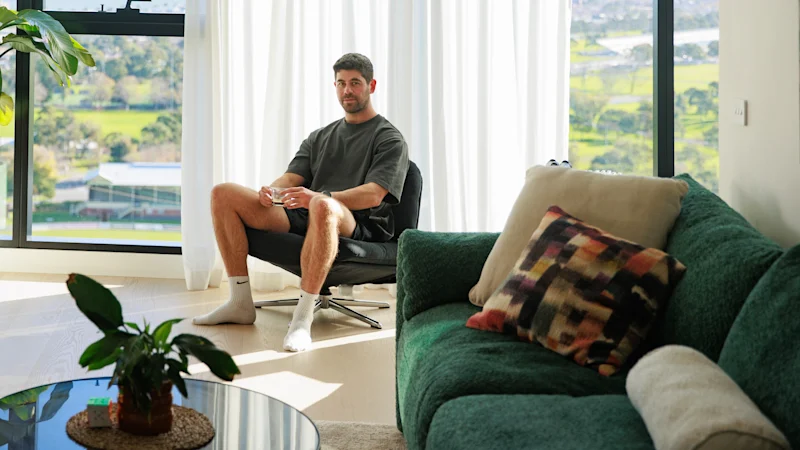
For some tenants, the premium is worthwhile. Travis Fein pays $1,275 a week for a two-bedroom apartment at Beach House, a 297-unit development at St Kilda Junction, where floor-to-ceiling windows overlook Albert Park Lake, Port Phillip Bay and the Melbourne skyline.
“You’re not paying for a normal rental. You’re paying for a nice lifestyle, which would cost a shit-ton of money otherwise,” said Fein, a 28-year-old property investor and social media personality.
Beach House, developed by Gurner Group, includes a heated pool, cinema, bowling alley, billiards room, private bar and spa facilities. The developer describes it as a way to “live like a millionaire, mortgage free”.
But the weekly rent is almost twice St Kilda’s median of $650 for a two-bedroom flat, highlighting the central tension in Melbourne’s rapidly expanding build-to-rent sector: new homes are being added to a city short of rental accommodation, but many are targeted at people with money to spare.
Build-to-rent apartments outpace conventional supply
Build-to-rent developments are owned by a single investor and operated as purpose-built rental communities, rather than being sold one apartment at a time. The model has attracted major developers and institutional investors, encouraged by tax concessions and planning support.
In Victoria, qualifying schemes can receive a 50 per cent reduction in the taxable value of land for up to 30 years, as well as an exemption from the absentee owner surcharge. Eligible developments must generally contain at least 50 self-contained dwellings and meet other ownership and management requirements. ([sro.vic.gov.au](https://sro.vic.gov.au/owning-property/land-tax/exemptions-and-concessions-land-tax/discount-build-rent-developments?utm_source=openai))
The scale of the change is now visible across Melbourne. Apartment towers have appeared in Docklands, South Melbourne, Southbank, Kensington, Brunswick, Fitzroy and Collingwood, with more projects planned around transport hubs and major employment areas.
Charter Keck Cramer’s latest market research says build-to-rent accounted for more than half of Melbourne’s apartment completions in the 2025 financial year, with 3,440 units delivered. Its 2026 research warns that conventional build-to-sell supply remains under significant pressure, increasing the importance of rental construction to the city’s housing pipeline. ([charterkc.com.au](https://charterkc.com.au/expert-national-state-of-the-market-report-bts-btr-h1-2026/?utm_source=openai))
The trend is also reshaping projects that once depended on individual buyers. Stalled or reworked developments are being converted into rental towers, while the Victorian Government continues to approve new schemes. In May, it announced almost 800 further build-to-rent homes in Docklands and Fitzroy. ([premier.vic.gov.au](https://www.premier.vic.gov.au/hundreds-more-homes-approved-build-rent-capital?utm_source=openai))
Richard Temlett, national executive director of research at Charter Keck Cramer, said Melbourne needed far more apartments overall, particularly as its population continued to grow and more people were unable to buy.
“People still need a place to live, and a lot more of them are just being forced to rent,” he said.
Housing researchers, however, question how much the premium end of the market can do to ease the affordability problem. An assessment of 1,223 listings between July 2025 and June 2026 found rents at Beach House were 66 to 70 per cent above the St Kilda median.
At Realm in Caulfield North, some one-bedroom apartments cost more than twice the suburb’s median weekly rent. Even Local, which presents itself as a more affordable operator, advertised Kensington apartments at between 37 and 48 per cent above the local median.
Only one of the 14 developments examined, Union Quarter in Spotswood, offered rents broadly in line with the suburb’s median.
Dr Tom Alves, acting managing director of the Australian Housing and Urban Research Institute, said build-to-rent had become more relevant as home ownership rates declined, particularly among younger adults and lower-income households.
But he said the current model was doing little to help those most exposed to rising rents.
“What’s this doing in terms of affordability? I think very little is the answer. If anything,” Alves said.
A premium model with limited affordable housing
WeAreLiving’s Preston development illustrates the financial pressures behind the sector. The building offers a gym, sauna, steam room, cold plunge pool and communal dining space, with rents ranging from $545 a week for a studio to $1,390 for a three-bedroom townhouse.
It contains no affordable housing. Warwick Dowler, head of residential at Barings Real Estate, which developed the project with Aware Super, said the scheme had been designed to meet the required return for the super fund’s 1.2 million members.
“Our starting position here was a return for Aware and return for their members,” Dowler said. “So, from our perspective, that’s number one. To hit that minimum return hurdle here it had to be market rent.”
Victoria’s accelerated planning process offers faster approvals for projects that include at least 10 per cent affordable housing, but Dowler said that incentive alone would not produce enough lower-cost homes.
“Quite honestly … if [the government] want to see more affordable product, they need to look at subsidy programs,” he said.
The same calculation affects operators at the lower end of the market. Sasha Sheko pays $605 a week for a two-bedroom apartment at Assemble’s 15 Thompson Street development in Kensington, compared with a suburb-wide median of $550.
Sheko values the communal areas and resident community, including a group of hens kept at the property, but said maintenance problems had undermined the promise of a more professional rental experience.
“I’m at the point where if I have any more issues I will ignore them and probably won’t be there in six months, which is a shame because the community is really lovely,” they said.
Professor Piyush Tiwari, of the University of Melbourne, said the financial viability of most first-wave projects depended on securing rents above the prevailing market rate.
“The original proposition was that BTR provides a higher end rental offering, including amenities, so the rents would be higher,” he said.
He said developers had generally expected a premium of about 20 to 25 per cent, but many buildings were now charging more than that.
Henry Pedersen, chief executive of property app Homer, considered renting a three-bedroom apartment at Mirvac’s Home development in Richmond. His family instead chose a four-bedroom townhouse in the same suburb that cost $250 a week less.
“The amenities of those things are really cool and that somewhat inflates the value, but at the same time I didn’t think it was worth that much of a difference in price personally,” Pedersen said.
He said paying a premium could make it harder for renters to save a deposit.
“Paying 10 to 20 per cent more doesn’t help you save to enter the property market,” he said.
When luxury buildings become student accommodation
Some operators have also turned to international students to fill buildings that struggled to attract enough tenants willing to pay premium rents.
David Powlett initially found Mirvac’s LIV Aston in Docklands quiet, comfortable and well managed. He paid $1,270 a week for a three-bedroom apartment for himself and his two children, valuing the building’s construction quality and location.
But six months into his tenancy, large numbers of international students moved into the building, changing the atmosphere and placing greater pressure on shared facilities.
“It just didn’t feel like premium accommodation, it felt like a student campus,” Powlett said.
He said residents struggled to book the cinema, media room and dining areas, some of which were reserved months ahead. He left when the proposed rent increase exceeded $300 a week.
A similar experience was reported at Mirvac’s LIV Munro near Queen Victoria Market, where a former tenant said the building had initially attracted a mixture of professionals and retirees before becoming dominated by overseas students.
Mirvac says its buildings attract different resident groups depending on their location, including students, professionals, families, essential workers and downsizers. LIV Munro contains 490 apartments alongside a wellness centre, co-working facilities, multimedia rooms, a pet park and communal dining areas. ([mirvac.com](https://www.mirvac.com/investor-centre/property-portfolio/build-to-rent/liv-munro?utm_source=openai))
The company is continuing to expand its build-to-rent portfolio, arguing that population growth, migration, low vacancy rates and a shortage of new homes provide strong long-term demand.
For critics, however, the current wave of high-amenity developments is evidence of a housing system increasingly split between renters able to pay for convenience and those simply looking for a secure, decent home.
“At the end of the day, millennials are budget conscious,” Tiwari said. “They are not necessarily looking for all those amenities, they’re looking for a decent home.”
