


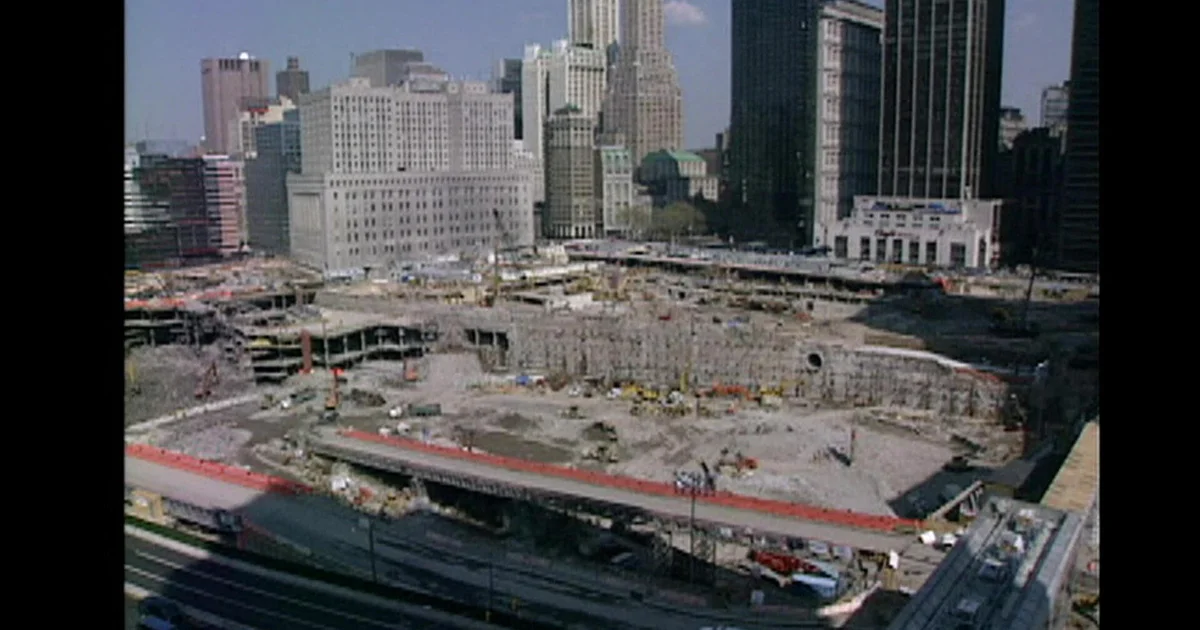
Months after the September 11 attacks, the vast clean-up at Ground Zero had become an painstaking search for human remains, personal belongings and evidence of what had happened inside the World Trade Center.
Archival footage from 60 Minutes shows workers carefully examining the tonnes of debris removed from the site in lower Manhattan, where the remains of the Twin Towers had been reduced to a sprawling and unstable mound of steel, concrete and dust.
The material was transported to Fresh Kills landfill on Staten Island, which was temporarily reopened and treated as a crime scene. There, teams sifted through the rubble for fragments of victims, identification documents and objects that might help investigators reconstruct the attacks.
The search for human remains took precedence over the speed of the operation. Work could be paused whenever crews believed they had found something significant, adding to the already dangerous and emotionally demanding conditions faced by recovery workers.
More than 1.6 million tonnes of debris were eventually removed from the World Trade Center site. Government records estimate that workers spent about 3.1 million hours clearing the area, with the operation lasting roughly eight months.
At Fresh Kills, New York City sanitation workers, police officers, FBI teams and other specialists processed about 1.2 million tonnes of material. The debris was sorted and screened before the remaining material was placed in a marked section of the landfill.
The clean-up at Ground Zero was completed on May 30, 2002, when the final piece of steel was removed. Processing and examination of material at Fresh Kills continued until July 15 that year.
The television report captures the closing stages of a recovery effort that had begun with hopes of finding survivors and gradually became a painstaking attempt to account for the dead and preserve whatever traces remained of the buildings and the people who had been inside them.
