


Melbourne’s build-to-rent boom is producing thousands of new homes, but many are being offered at prices well above local market rates, raising doubts about whether the sector can ease the city’s housing affordability crisis.
The model has expanded rapidly across inner Melbourne, with high-rise developments offering residents gyms, pools, cinemas, wellness rooms and communal entertaining spaces in return for premium rents.
For tenants with money to spare, the arrangement can provide a level of amenity that would be expensive to replicate. For lower and middle-income renters, however, the developments risk creating another costly tier of housing rather than a solution to the shortage of affordable homes.
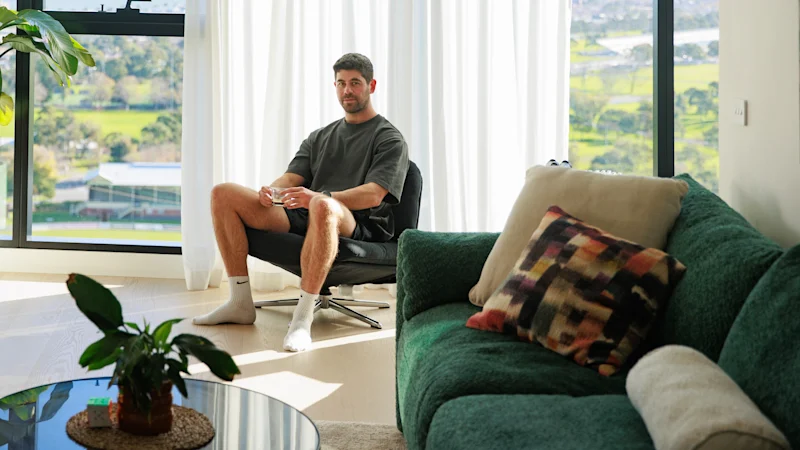
Travis Fein, a 28-year-old property investor and social media personality, pays $1,275 a week for a two-bedroom apartment at Beach House, Gurner Group’s 297-unit development at St Kilda Junction.
The rent is almost twice St Kilda’s median price for a two-bedroom unit, but Fein says the views across Albert Park Lake, Middle Park and Port Phillip Bay, together with the building’s facilities, make the cost worthwhile.
“You’re not paying for a normal rental. You’re paying for a nice lifestyle, which would cost a shit-ton of money otherwise,” he said.
Beach House, built at a cost of about $300 million, includes a heated pool, cinema, bowling alley, billiards room, private bar, day spa and pet spa. It is marketed as a way to “live like a millionaire, mortgage free”.
It is also emblematic of Melbourne’s first major wave of build-to-rent housing, in which entire apartment buildings remain under single ownership and are leased rather than sold individually.
Build-to-rent rents carry a steep premium
An analysis of 1,223 listings across 14 completed build-to-rent developments between July 2025 and June 2026 found that median rents were between 20 per cent and 70 per cent higher than those for other apartments in the same suburbs.
Beach House listings were priced at up to 70 per cent above the St Kilda median, while the Realm development in Caulfield North was charging more than twice the suburb’s median weekly rent for some one-bedroom apartments.
Even Local, which has positioned itself as a more affordable operator, listed Kensington apartments at between 37 per cent and 48 per cent above the suburb’s median.
Only Union Quarter in Spotswood was found to be offering rents broadly in line with the surrounding market.
Dr Tom Alves, acting managing director of the Australian Housing and Urban Research Institute, said the developments were doing little to improve affordability.
“What’s this doing in terms of affordability? I think very little is the answer. If anything,” he said.
The build-to-rent sector has nevertheless become an increasingly important source of new apartments as conventional projects struggle with high construction costs, expensive finance and weak demand from buyers.
Charter Keck Cramer estimates that 4,400 of the 8,200 apartments completed in Melbourne in the 12 months to July 2026 were build-to-rent homes. In 2021, none of the city’s estimated 14,000 new apartments were built under the model.
Developments have appeared in Docklands, South Melbourne, Southbank, Kensington, Brunswick, Fitzroy and Collingwood, with several thousand more planned or under construction.
Richard Temlett, the property advisory firm’s national executive director, said the new homes were needed in a city absorbing more than 100,000 residents a year while apartment construction remained well below previous levels.
“People still need a place to live, and a lot more of them are just being forced to rent,” he said.
But the shift towards institutional landlords has also been supported by government incentives, including a 50 per cent reduction in Victorian land tax and an exemption from the absentee owner surcharge for eligible developments.
At the launch of WeAreLiving’s Preston development in April, Planning Minister Sonya Kilkenny said the state wanted more secure, well-built homes in accessible locations and described Victoria as the nation’s build-to-rent capital.
The Preston building includes a gym, sauna, steam room, cold plunge pool and bookable dining room. Its rents range from $545 a week for a studio to $1,390 for a three-bedroom townhouse, and it has no affordable housing component.
Warwick Dowler, head of residential at Barings Real Estate, which developed the project with Aware Super, said market rents were necessary to meet the return expected by the superannuation fund’s 1.2 million members.
“Our starting position here was a return for Aware and return for their members,” he said.
Dowler said faster planning approvals for projects that included affordable housing would not be enough to meet the scale of the need without direct government subsidies.
Tenants question the promised lifestyle
Some residents have also found that the experience does not always match the premium marketing.
Sasha Sheko moved into a two-bedroom apartment at Assemble’s 15 Thompson Street development in Kensington, paying $605 a week. The building offers communal spaces, a rooftop basketball court and four resident hens, but Sheko has been disappointed by maintenance standards and expects to leave within a year.
They said the community was welcoming, but that repeated problems with property management had undermined the development’s ethical and sustainable image.
At Mirvac’s LIV Aston in Docklands, David Powlett initially welcomed the quiet, well-built three-bedroom apartment he rented for $1,270 a week. The building’s atmosphere changed, he said, after large numbers of international students moved in.
“It just didn’t feel like premium accommodation, it felt like a student campus,” he said.
Residents found that the cinema, media room and dining areas were often booked months in advance. Powlett left after his first year when the proposed rent increase exceeded $300 a week.
A similar experience was reported by Alaisdair Leith, who moved into Mirvac’s LIV Munro near Queen Victoria Market with his partner. They enjoyed the building during its quieter early months, but later found communal facilities difficult to book after the development filled with overseas students.
Professor Piyush Tiwari, a University of Melbourne property researcher, said the financial model depended on charging more than standard market rents. Amenities were designed to attract tenants willing to pay the premium needed to make the buildings viable.
“The original proposition was that BTR provides a higher end rental offering, including amenities, so the rents would be higher,” he said.
Henry Pedersen, chief executive of property app Homer, decided against renting a three-bedroom build-to-rent apartment in Richmond after finding a larger four-bedroom townhouse nearby for $250 less a week.
He said the facilities were attractive but did not justify the difference in price, particularly for renters trying to save enough to buy a home.
Edward McAuliffe, director of build-to-rent operations at Salta, said high rents were currently necessary to secure finance and make projects viable.
“Yes, some of it’s at the premium end at the moment, but that’s a function of what you need to do to get a project to become viable,” he said.
Supporters argue that the sector will eventually broaden beyond luxury apartments and begin serving more families and mid-market tenants, as it has in parts of Europe and the United States.
For now, Melbourne’s build-to-rent expansion is largely concentrated at the upper end of the market. As home ownership becomes less attainable and lifelong renting becomes more common, analysts warn that the people most in need of secure, affordable housing may continue to be priced out.
“At the end of the day, millennials are budget conscious,” Tiwari said. “They’re not necessarily looking for all those amenities, they’re looking for a decent home.”
