


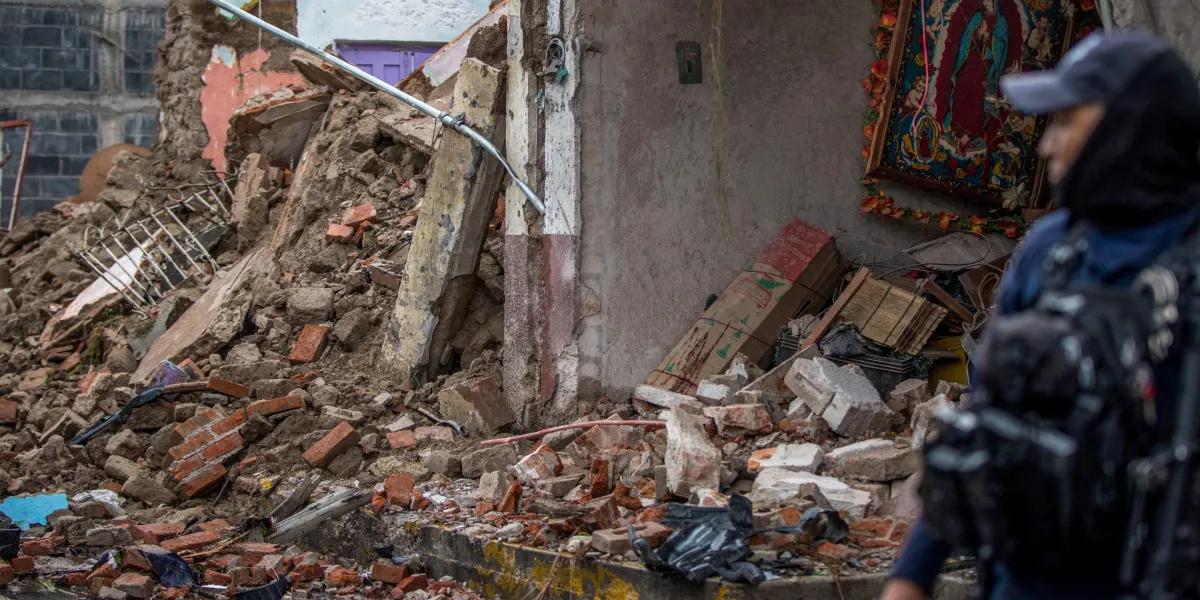
A car bomb packed with about 200kg of explosives injured 11 people and damaged more than 60 properties in the Mexican town of Ojocaliente, as authorities warn of a growing use of explosive devices by criminal groups.
The blast struck outside the municipal police station in Zacatecas state on the evening of Sunday 30 August. The explosion damaged ten homes severely, caused lesser damage to 53 others and affected 15 vehicles, Mexico’s security secretary, Omar García Harfuch, said on Friday.
Three people have been detained in connection with the attack, according to Mexican authorities. One of them, identified only as Juan Pedro N, was arrested on 31 August and is alleged to have been linked to the vehicle used in the bombing.
The vehicle reportedly had been stolen in the neighbouring state of Jalisco. During the arrest operation, security forces said they seized an improvised explosive device, a grenade, ammunition, drugs and equipment used to puncture tyres.
Harfuch said initial investigations pointed to the long-running struggle between the Jalisco New Generation Cartel, known as the CJNG, and the Sinaloa Cartel for control of territory, trafficking routes and illegal activities in Zacatecas.
State authorities said Zacatecas had recorded 23 attacks involving explosives so far this year, including six in which cars or motorcycles were packed with explosive material.
Mexican cartels turn to car bombs and drones
Explosives have become a more prominent weapon in Mexico’s criminal conflicts in recent years. Cartels have used devices buried in roads to target security forces and rivals, while bomb-laden drones have been deployed to attack positions and defend areas under their control.
The authorities have not published updated nationwide figures, but Mexico’s military said in 2023 that it had seized about 2,800 explosive devices over the previous four and a half years. Nearly 3,200 devices were deactivated in Michoacán alone in 2024, while an explosion in the state killed eight soldiers in 2025.
Vanda Felbab-Brown, an organised crime specialist at the Brookings Institution, described the development as a “steady intensification of violence” that would increase fear and the risk of reprisals.
Experts say car bombs can serve several purposes for criminal groups: intimidating rivals, attacking police and putting pressure on governments. Their visibility and destructive power can also be used to force authorities to respond publicly or enter negotiations.
Mexico has traditionally avoided describing cartel violence as terrorism, partly because officials fear that such a classification could encourage foreign intervention and damage tourism and investment. Cartels are generally driven by profit rather than an ideological or political programme, officials have argued.
That distinction has become more politically sensitive since the administration of US President Donald Trump designated eight Mexican cartels, including the CJNG, as foreign terrorist organisations. Trump has repeatedly threatened military action against the groups, placing further strain on relations with President Claudia Sheinbaum’s government.
Sheinbaum said on Friday that a nationwide fall in killings showed her government’s security strategy was working. The Ojocaliente bombing, however, has highlighted the continuing capacity of criminal organisations to inflict severe damage in populated areas while Mexico’s forces pursue them.
