


Brazil’s presidential runoff between Luiz Inácio Lula da Silva and Flávio Bolsonaro was extended by two hours after both campaigns raised concerns about voting disruptions in their respective strongholds, delaying the start of the final count and raising the prospect of legal challenges.
The decision was made by Supreme Court Justice Cristiano Zanin just three minutes before polls were due to close. In some locations, the order was relayed only after polling stations had already shut, leaving officials uncertain whether they had to remain in place.
Vote-counting was paused until the additional voting period ended. Brazil normally conducts its election electronically, with results usually available within hours of polling stations closing.
Brazil presidential runoff faces dispute over voting extension
Lula’s request followed reports of problems involving buses taking voters to polling stations in nine states. Flávio Bolsonaro sought an extension because of heavy rain in southern Brazil.
In Bahia, a stronghold of Lula’s Workers’ Party, at least 75 public buses were prevented from leaving municipal garages, according to a state electoral judge. The judge ordered the arrest of Salvador’s mobility secretary, Pablo Souza, in connection with the incident.
Salvador mayor Bruno Reis, an ally of Bolsonaro, blamed trade unionists and alleged that Workers’ Party material had been illegally attached to transit vehicles. Electoral authorities said they were examining a report about the bus problems.
Lula’s party chairman, Edhinho Silva, said the campaign was considering legal action over what he called “interference in the electoral process”. Bolsonaro’s campaign had not commented, although his ally Nikolas Ferreira said the ruling by Mr Zanin, described as Lula’s former lawyer, was an attempt to challenge what he called Bolsonaro’s likely victory.
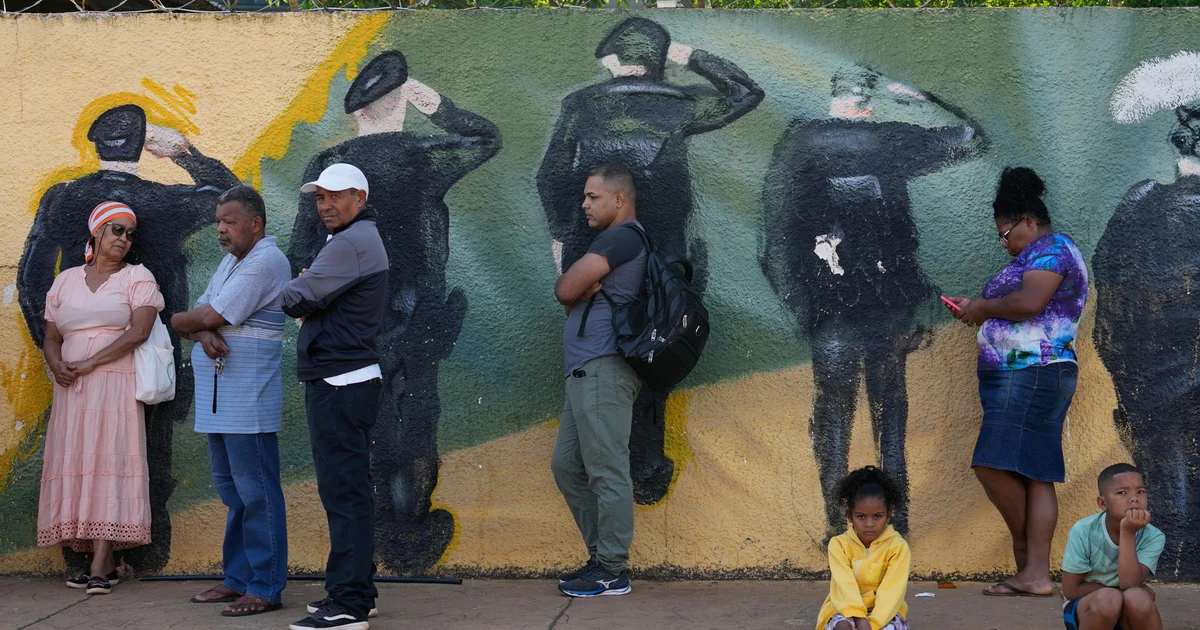
International observers said earlier that voting had been peaceful and transparent. The extension nevertheless created confusion at polling stations, including in Brasília, where most volunteers overseeing the count left shortly after the original closing time.
The two candidates needed more than half of the vote to win the presidency. Bolsonaro led Lula by more than 2.2 million votes in the first round earlier this month, although more than 33 million of Brazil’s nearly 160 million voters did not participate.
The contest has become a closely fought rematch between two sharply opposed political forces. Lula, a veteran left-of-centre politician who governed from 2003 to 2010, has presented the election as a choice between his record of supporting poorer Brazilians and what he portrays as a threat to democracy from Bolsonaro’s political movement.
Bolsonaro, the son of former president Jair Bolsonaro, has campaigned on crime, lower food costs and a promise of political change. Supporters at his polling station in Rio de Janeiro chanted against Lula, while Bolsonaro said: “The time of real change has arrived. Brazil can’t go on for another four years on its current trajectory.”
His father is under house arrest for attempting a coup, according to the campaign account presented by Lula, while Flávio Bolsonaro has promised to seek an amnesty for him if elected.
Cost of living and corruption allegations shape contest
Cost-of-living and security concerns have been central to the campaign. Lula’s government backed debt relief for small businesses and promised free public transport at weekends, while the Senate supported a proposal to end the six-day working week.
Both candidates have faced corruption suspicions involving relatives and allies. Lula spent more than a year in prison after corruption convictions that were later annulled.
Flávio Bolsonaro’s admission that he accepted about 12 million dollars from disgraced former banker Daniel Vorcaro to produce a film about his father has also cast a shadow over his campaign. He is under investigation for corruption, money laundering and tax evasion in connection with the case and denies being helped by the US Government.
The election is also being watched beyond Brazil. A Bolsonaro victory would represent a shift to the right in Latin America’s largest economy, while a Lula victory would leave Brazil and Mexico governed by left-of-centre leaders.
Lula has criticised the US president over tariffs on Brazilian exports and the classification of drug-trafficking groups as foreign terrorist organisations. Flávio Bolsonaro has stressed his proximity to the White House and said Brazil should negotiate better agreements with the Trump administration, including over rare minerals.
Mr Trump said he was watching the election but declined to endorse either candidate.
Supporters on both sides described the vote as a choice between continuity and change. Lula voter Anderson Falcão, a journalist in Brasília, said he feared Bolsonaro’s political vision was “exclusionary”, while Bolsonaro supporter Fabianne Borges Santoro said high prices and taxes had pushed her away from Lula’s party.
With third-party voters and those who abstained in the first round potentially decisive, some voters remained unconvinced by either candidate. One Rio de Janeiro voter said he planned to cast a blank ballot, arguing that Brazil had become dominated by “two names: Lula and Bolsonaro”.
