


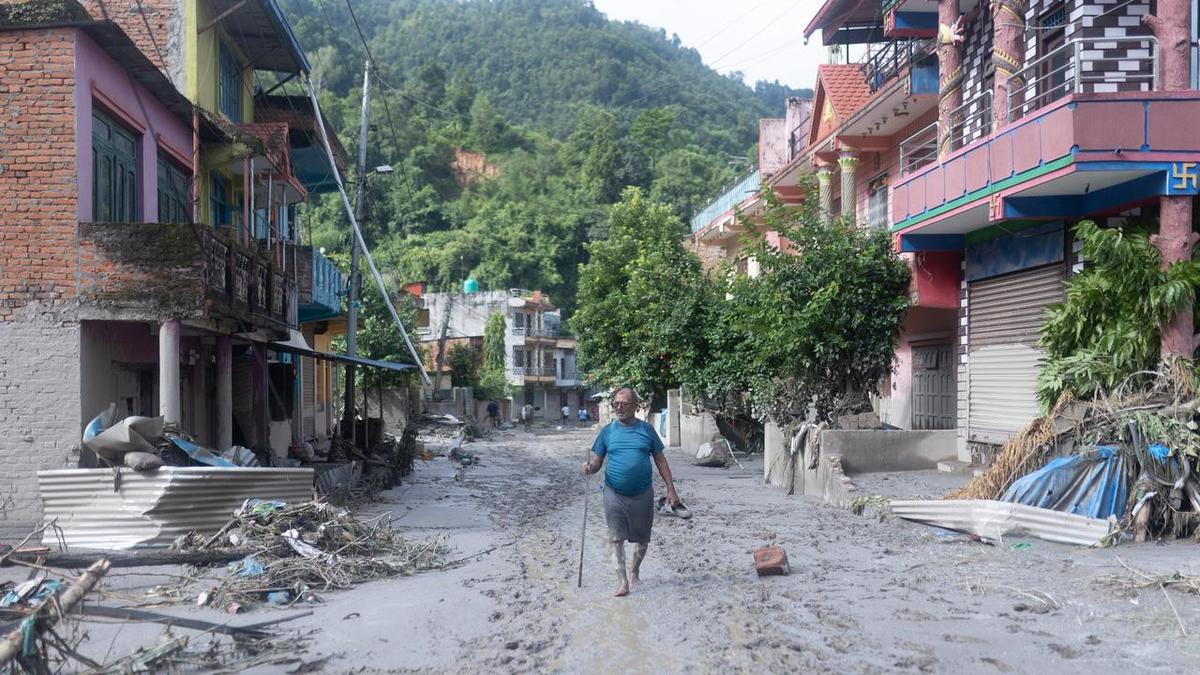
Forty-two Australians remain unaccounted for five days after a glacier collapse triggered devastating floods and mudslides across Nepal and Tibet, with rescue teams facing renewed warnings of further flooding as the death toll approached 800.
Nepal’s disaster agency said on Sunday that 788 people had died and 2,502 remained missing. Chinese authorities reported a further 16 deaths and 546 missing in Gyirong County, while 261 foreign nationals from 23 countries were still unaccounted for in Tibet.
Australian Assistant Foreign Minister Matt Thistlethwaite said the number of missing Australians had risen to 42, based on information from the Nepalese Tourism Board and officials on the ground.
One Australian, Cara Severino, has been found and taken safely to the Australian embassy in Kathmandu after hiking out of the worst-hit area to reach a road. Mr Thistlethwaite said 12 Australian crisis-response, consular, security and Australian Federal Police personnel were now supporting the search. ([ministers.dfat.gov.au](https://ministers.dfat.gov.au/minister/matt-thistlethwaite/transcript/interview-luke-grant-2gb-4bc-0))
Rescue operations have repeatedly been suspended since Friday because of heavy rain, unstable ground and rising river levels. Nepal issued fresh alerts to residents in Rasuwa, Nuwakot and Dhading districts after water levels rose in the Bhotekoshi River.
Although a lake created by the disaster had largely drained, Chinese authorities warned that a crater upstream still held an estimated 1.4 million cubic metres of water and required close monitoring. A separate landslide detected by drones 2.8km downstream created another dam and pool, adding to fears of a second surge. ([apnews.com](https://apnews.com/article/afec20e612514ca3598c65b29f485303))
Attention has focused on five damaged hydropower projects, including the Upper Trishuli complex, where hundreds of workers were believed to have been trapped in tunnels. Heavy machinery was flown into the remote site on Sunday and rescuers reached one entrance, clearing debris before teams equipped with oxygen supplies and cameras could enter.
“It’s very tough because there’s a lot of debris and we cannot blast things to make our way through,” said Dharam Raj Uprety, Nepal’s disaster management chief.
About 10,000 Nepali troops are taking part in the operation, alongside specialist teams from China and India. More than 6,600 people, including 261 foreign nationals, had been rescued, according to Mr Thistlethwaite, but blocked roads, damaged telecommunications infrastructure and dangerous terrain continued to hamper efforts. ([ministers.dfat.gov.au](https://ministers.dfat.gov.au/minister/matt-thistlethwaite/transcript/interview-luke-grant-2gb-4bc-0))
In the devastated Nuwakot district, aid workers described widespread destruction as survivors searched through mud and rubble for possessions and relatives. Save the Children said it had reunited 69 children with their families since Friday, although many remained separated.
“It’s very much still a rescue operation but of course, today is day five, and I think the chance of finding people alive is slowly dimming,” said Amy Lefevre, the charity’s global media manager.
Authorities have begun mass burials of unidentified victims as bodies deteriorate, while Nepal has requested international help with tunnel rescues, DNA testing and forensic identification.
Australia has increased its humanitarian response, with the Government committing a further $3 million on Sunday. The package includes $2 million for emergency supplies such as hygiene kits and solar lighting to be delivered by the Australian Defence Force, taking Canberra’s total support for the disaster to $8 million. ([ministers.dfat.gov.au](https://ministers.dfat.gov.au/minister/anne-aly/media-release/additional-humanitarian-support-nepal))
A public candlelight vigil is due to be held at Melbourne’s Federation Square on Monday evening for those killed as families continue to await news of the missing.
