


Perth life sciences company Syngenis Labs is joining forces with the Perron Institute and the scientists behind Gene S to create a precision-medicine venture designed to expand an Australian-developed pharmacogenomics platform.
The new company, Gene S Dx, has acquired the Gene S business, including its Rosa testing platform and the intellectual property behind its development. Pharmacogenomics uses a patient’s genetic profile to help guide the selection and dosage of medicines.
Syngenis will hold a one-third stake through its wholly owned Syngenis Ventures arm. The Perron Institute will hold another third, with Gene S founders Dr Svetlana Baltic and Dr Suzanna Lindsey-Temple collectively owning the remaining share.
Baltic will remain chief executive of Gene S Dx, while Lindsey-Temple will continue as chief medical officer. The existing technical, software, quality and regulatory teams will also transfer to the new business.
Rosa platform to expand into new treatment areas
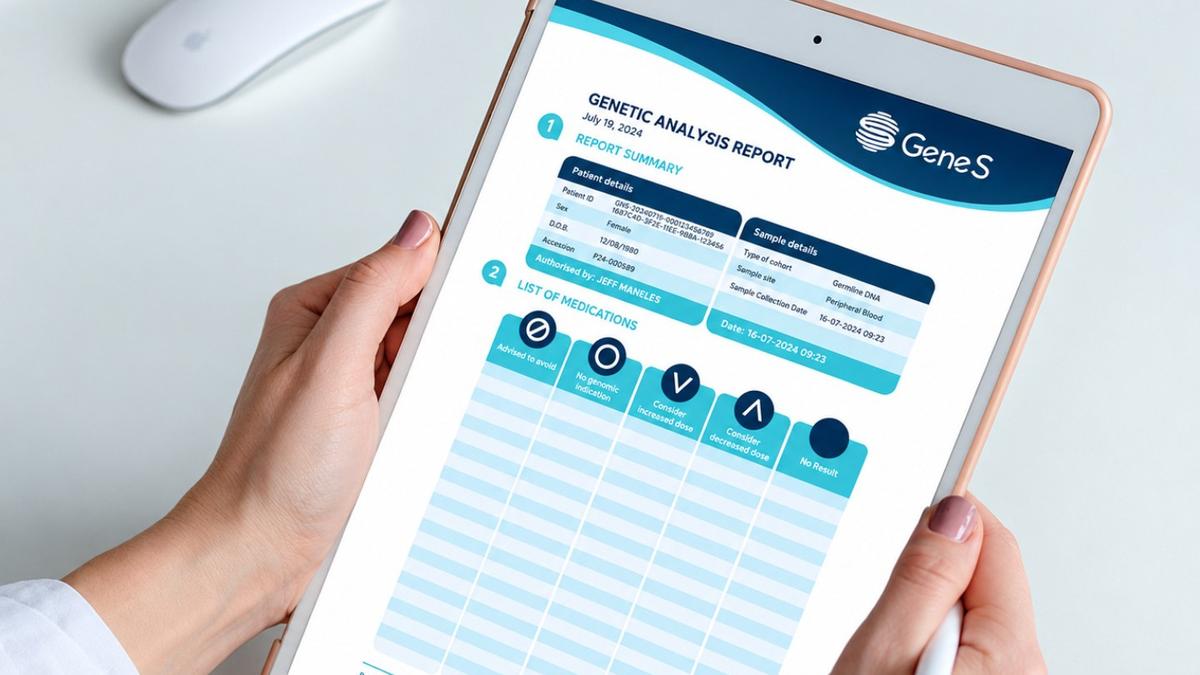
Rosa combines next-generation genetic sequencing with proprietary RosaAnalyser software, which assesses clinically relevant genetic variants and produces a report for doctors.
The report is intended to show how a patient may metabolise or respond to particular medicines and doses. Results are usually available within two to three days from a blood, cheek-swab or saliva sample.
Doctors can then consider the genetic findings alongside a patient’s medical history and other clinical factors. Genetic variation can influence how quickly a medicine is processed, whether it is likely to work and the risk of side effects.
The first application, RosaMind, examines eight genes and provides prescribing guidance across more than 20 medicines used to treat conditions including depression, anxiety, post-traumatic stress disorder, psychosis and attention-deficit/hyperactivity disorder.
Gene S Dx is planning further applications in pain management and cardiac prescribing, while a gut-health test is also under development. The new products are intended to use the same underlying Rosa platform rather than requiring separate systems.
The company says the platform could help address the uncertainty involved in prescribing antidepressants. The STAR*D study found that about one in three patients achieved remission after their first antidepressant treatment, while doctors may wait six to eight weeks to assess whether a treatment is working.
Because a patient’s genetic information does not change, the results could also inform later prescribing decisions involving medicines affected by the same genetic pathways.
Syngenis to provide testing and manufacturing expertise
The deal gives Syngenis an opportunity to apply its expertise in DNA and RNA chemistry, laboratory development and manufacturing to the Rosa platform.
The Perth company is developing an end-to-end genetic-medicine operation spanning AI-assisted discovery, laboratory work and, ultimately, manufacturing under good manufacturing practice standards.
Its focus is on oligonucleotides, short strands of DNA or RNA used in genetic testing and in medicines designed to target or silence disease-related genetic instructions. Syngenis can use its Discovery AI platform to identify prospective candidates before synthesising and testing them in its laboratories.
The company plans to manufacture the oligonucleotide components of Gene S Dx test kits in Australia. Its research-grade manufacturing operation at Bentley Technology Park is already generating revenue, while clinical-grade GMP production is targeted for 2027.
Syngenis chief technology officer and founder Professor Rakesh Veedu has longstanding research links with the Perron Institute, which is also a strategic shareholder in Syngenis.
Rosa is designed to work with sequencing equipment already used by pathology laboratories, allowing participating laboratories to adopt the system without buying entirely new hardware. The software will be supplied free, with Gene S Dx generating recurring revenue from the specialised reagents and consumables used for each test.
Syngenis said the arrangement could allow it to support the design and manufacture of additional genetic testing panels as more laboratories adopt Rosa and testing volumes increase.
“We have not bought a test,” Hanly said. “What Syngenis has effectively acquired is the science, and, just as importantly, the interpretation layer sitting between a patient’s genome and their doctor’s prescription.”
Perron Institute brings nucleic-acid research
The Perron Institute, founded in 1982, is Western Australia’s longest-established medical research institute. Its work includes motor neurone disease, Parkinson’s disease, rare diseases and youth mental health.
It has already collaborated with the Gene S team on GENE-YD, a study examining the use of pharmacogenetics-guided antidepressant prescribing in young people.
Perron researchers also developed gene-targeting technology using antisense oligonucleotides, contributing to research that led to the first US Food and Drug Administration-approved treatment for Duchenne muscular dystrophy. Two further approved treatments later followed from the same research.
The venture comes after Syngenis raised $4 million in a pre-IPO round ahead of a proposed Australian Securities Exchange listing. The company is targeting growth across precision medicine, RNA therapeutics and oligonucleotide synthesis.
The global precision-medicine market was valued by Grand View Research at US$116.6 billion in 2025 and is forecast to reach US$405.1 billion by 2033, representing annual compound growth of nearly 17 per cent.
For Syngenis, the Gene S Dx investment links its manufacturing and genetic-medicine capabilities to a platform that could be extended across several prescribing categories, while giving the new venture a route to develop and produce its own expanding range of test kits.
