


Palestinian-flag waving demonstrators forced their way into Rome’s Colosseum as protests over the war in Gaza, rising living costs, housing and political corruption spread across Europe.
Hundreds of young people entered the 2,000-year-old monument demanding an end to the conflict. Security guards later removed the protesters from the ancient building.
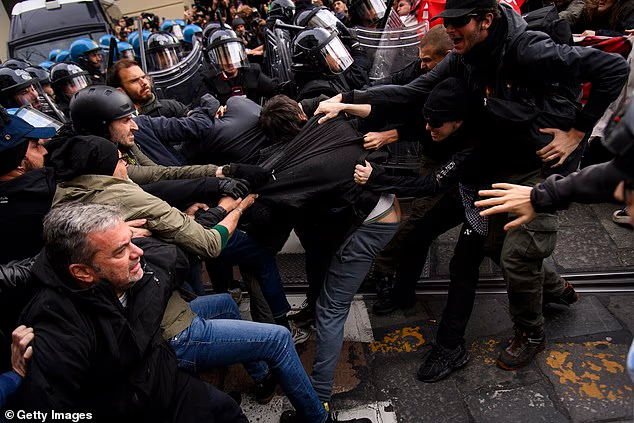
Demonstrations were also held elsewhere in Italy. In Milan, luxury shops including Versace barricaded their frontages amid fears of looting, while protesters in Turin clashed with riot police during a march against the cost-of-living crisis.
Protests and unrest in France
About 400,000 people took part in marches in major French cities. The movement began last month among students protesting about the quality of education and school buildings, but has since been taken up by organisations described as ultra-Left.
The demonstrations have been marked by violent clashes with police. Over the weekend, 1,314 people were arrested, 53 officers were injured, 75 fires were started and 24 shops were looted.
Marine Le Pen used a rally launching her presidential campaign to promise “true change”. The National Rally leader also said her party would “restore the rule of law”, in a criticism of President Emmanuel Macron’s centrist government.
In Barcelona, 128 people were arrested overnight, including 72 minors, over alleged vandalism and looting. Twenty-three businesses were looted and 33 fires were reportedly started after young people mobilised through TikTok.
Portugal has seen repeated police operations to clear protest camps in Lisbon and Porto, where demonstrators have been speaking out against soaring housing costs. Organisers accused officers of using excessive force.
Police said 11 people were injured during the latest operation, including eight civilians and three officers, while 171 structures were dismantled.
Student-led movements in the Balkans
Serbia’s parliamentary election has taken place amid nearly two years of student-led protests against the ruling Serbian Progressive Party and veteran leader Aleksandar Vucic.
The movement began after the collapse of a canopy at Novi Sad railway station in 2024 killed 16 people. The tragedy has been widely blamed on corruption and prompted some of Serbia’s biggest protests since the fall of Slobodan Milosevic in 2000.
A final pre-election rally in Belgrade on Thursday drew about 150,000 people. The Students’ List, made up of candidates backed by the largely leaderless movement, has emerged as the main challenge to the governing party, while several opposition parties chose not to stand and urged supporters to back the students.
Albania has also faced months of anti-government demonstrations, which have recently escalated into clashes between protesters and security forces.
Prime Minister Edi Rama said a new law would introduce fines of more than 550 dollars for anyone who remained in a crowd involved in violence or looting, or who concealed their identity. The proposed measures would also allow police to restrict gatherings where there was a risk of violence.
“Anyone demanding my resignation is mistaken if they think it can be forced or imposed in any way, but I do not believe that everything they are saying and demanding is wrong,” Mr Rama said in a speech broadcast on social media.
The proposed law would provide compensation for small businesses affected by protests and allow action against people who encourage, organise or co-ordinate the participation of schoolchildren in rallies.
Demonstrators in Albania have attacked the education ministry and other official buildings, citing corruption, poor conditions for students and demands for Mr Rama’s resignation. Police said 23 people had been formally arrested after Saturday’s protests, while 13 others faced legal proceedings and 30 were wanted.
