


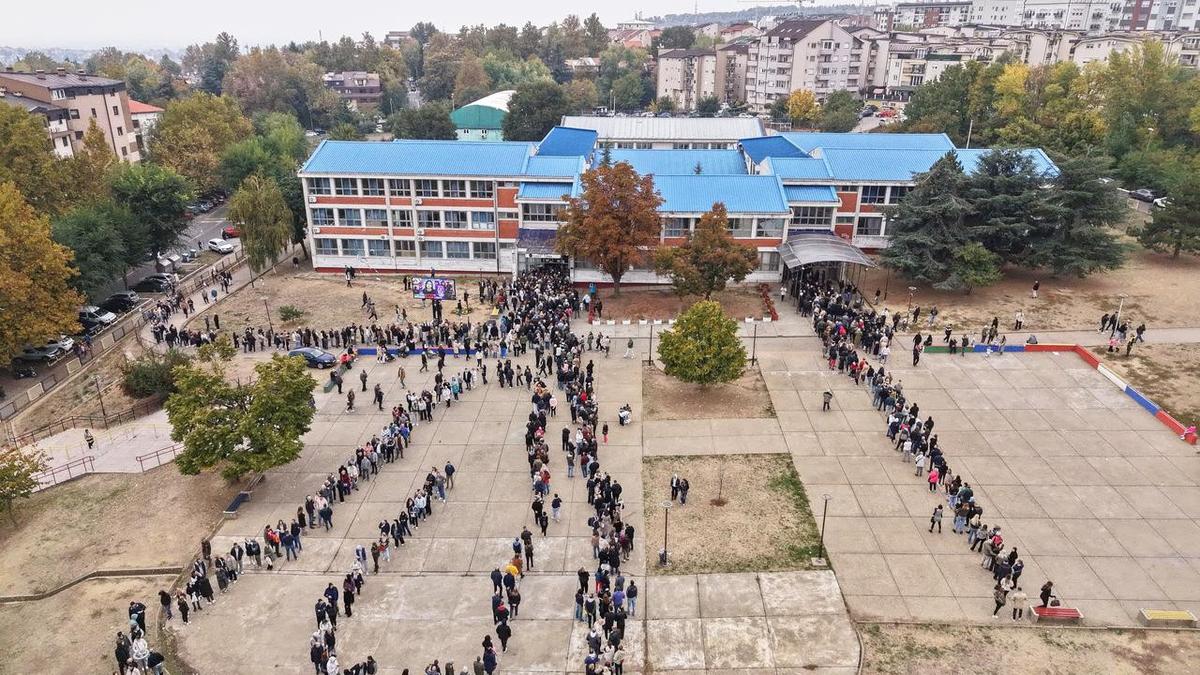
Serbia’s Aleksandar Vucic has conceded defeat in snap parliamentary elections to a diverse, student-led movement that has mounted the greatest challenge to his rule since he first became prime minister.
Speaking on Sunday, Mr Vucic said final results were still unavailable but that a projection based on a sample showed the Student List winning between 135 and 140 seats. His own bloc was expected to take 105, while no other group had entered parliament, he said.
“We still do not have final results, on the basis of a sample … it is clear that we have lost these elections,” Mr Vucic said. “The Student List has won, they will have between 135 and 140 seats and we will have 105, no one else has entered parliament.”
The snap vote, called by Mr Vucic in September, followed almost two years of protests over perceived corruption and creeping authoritarianism. The demonstrations began after 16 people died when a train station canopy collapsed in the city of Novi Sad in 2024.
The student movement has since attracted widespread support, emerging as the most serious threat to Mr Vucic since he became prime minister in 2014 and president three years later.
Mr Vucic, who had been endorsed by Russian President Vladimir Putin, has denounced the protests as a foreign-led attempt to remove him from power. The leaderless movement nevertheless proved a formidable opponent to a politician who had repeatedly outmanoeuvred Serbia’s divided opposition.
Tensions rose as voting continued. Police in anti-riot equipment cordoned off an area in central Belgrade around the headquarters of the election commission, while local media reported several violent incidents around the country.
Special police vehicles were also seen near a Belgrade park where Mr Vucic’s supporters have been camping for more than a year. Less than two hours before polls closed, a student representative urged citizens to “stay calm and composed”.
The result marks a seismic shift in Serbia after 14 years of dominance by Mr Vucic and his party. It echoes the recent defeat of his ally Viktor Orbán in Hungary, where youth participation helped bring in a new pro-European government after 16 years of autocratic rule.
The outcome is also likely to resonate beyond Serbia as countries across Europe face youth and student protests.
