


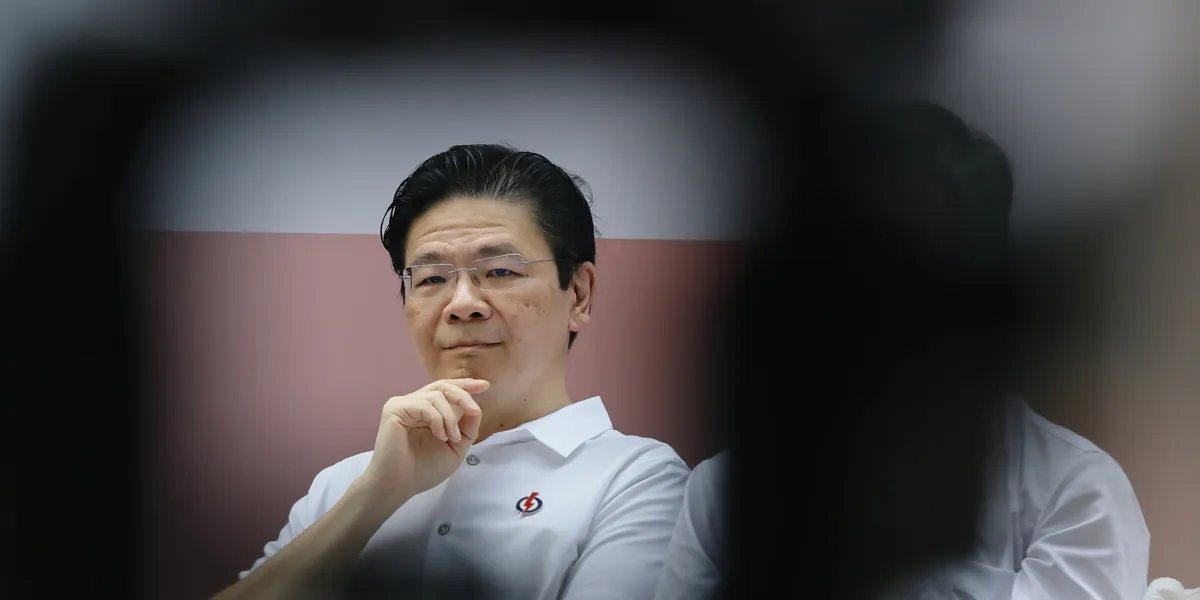
Indonesia’s decision to cut gas exports to Singapore by 9% has prompted Prime Minister Lawrence Wong to warn that commercial commitments must be honoured, adding to tensions between the neighbouring countries.
Singapore’s gas importer will take steps to protect its rights and interests, Mr Wong said at a party conference on Sunday. “Gas supplies are covered by commercial contracts, [and] we expect all parties to honor their commitments,” he said.
Indonesia announced the reduction on October 23, citing shortages at home. The move follows warnings from Indonesian officials that energy exports could be restricted while domestic demand is prioritised.
Bahlil Lahadalia, Indonesia’s coordinating minister for downstreaming and energy transition, said last week that the country was “in survival mode” and needed to meet its own requirements.
The export decision comes as Indonesia faces public discontent over high living costs, alleged government corruption and forest fires that have sent toxic haze across parts of the region. Motorists in Bali have also faced petrol queues lasting as long as 24 hours during the past month.
The haze has strained relations with Singapore and Malaysia, while Singapore plans to prosecute companies it considers responsible for the fires.
Singapore turns to alternative energy supplies
Singapore’s Minister for Energy, Trade and Industry, Tan See Leng, said the gas reduction represented less than 2% of the city-state’s daily power-sector demand. He said replacement supplies, including liquefied natural gas, were available.
Singapore’s total gas demand is more than 1,000 billion British thermal units a day, with natural gas providing 95% of its energy. Last year, 40% of its natural gas came through pipelines from Indonesia and Malaysia, while the rest arrived by sea from international markets.
The government announced on October 26 that it would begin storing Saudi Arabian crude oil in rock caverns on Jurong Island as part of what it described as “multiple lines of defence” for energy security.
Singapore is also strengthening cooperation with Malaysia. Its Energy Market Authority and Malaysia’s Energy Commission renewed an agreement covering energy security, cross-border electricity trading and the transition to cleaner energy.
Mr Wong said Singapore was examining nuclear power as a longer-term option for reliable electricity. “Safety must come first,” he said, adding that the country should not reject an option “simply because it is difficult or controversial”.
The dispute comes alongside wider friction over Indonesia’s international economic standing. MSCI has threatened to downgrade the country’s stock market classification to “standalone” status, two levels below its current emerging-market rating.
Former Indonesian trade minister Muhammad Lutfi alleged that Singapore’s state-owned investment groups Temasek and GIC had pressured MSCI to take the action. Singapore has denied the claim, with a Temasek spokesman describing it as having “no basis and are patently untrue”.
