


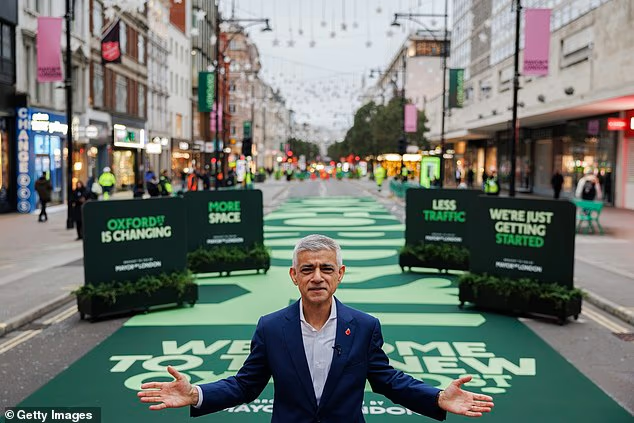
Oxford Street has been permanently closed to vehicles under Sadiq Khan’s pedestrianisation plan, in a major change to one of central London’s busiest shopping streets.
Cars, buses, taxis, bicycles and other vehicles are now barred from almost a kilometre of the road between Orchard Street and Great Portland Street. Traffic is being diverted on to nearby roads, while emergency vehicles will retain access at all times.
Deliveries will be permitted between midnight and 7am. New bus stops have been placed on Wigmore Street, Henrietta Place and Cavendish Place, around 200 metres from the traffic-free section.
The move has been welcomed by the Mayor as a major step towards creating a greener and more vibrant destination, but critics have warned that the scheme was rushed and could increase congestion in surrounding streets.
Tim Barnes, deputy leader of Westminster City Council, described the plan as “a disaster for local people” and accused Mr Khan of pushing it through to meet an “arbitrary deadline”.
He said the council was “extremely disappointed” that the Department for Housing, Communities and Local Government had ignored concerns about the impact on central London, adding: “London deserves a world class shopping district but I’m worried we’re heading for an unmanaged mess.”
One member of the public described conditions overnight as “absolutely pandemonium” after recording footage of buses coming up against the new diversion.
Mr Barnes said questions remained over access, air pollution, street cleaning and public safety. He warned that traffic could be pushed on to smaller nearby roads, causing “economic and environmental harm”.
Plans for Oxford Street regeneration
Oxford Street attracts around half a million visitors a day, with shoppers spending about £3 billion there each year. The area has also become increasingly popular as an office location following the arrival of the Elizabeth line.
Mr Khan said the pedestrianisation scheme would help revitalise the street, support economic growth and attract visitors. He described it as “a new vibrant destination” and said he was “hugely excited to see my bold vision for Oxford Street coming to life”.
“It is a truly momentous occasion for the capital,” the Mayor said, adding that the street had reinvented itself over the centuries and that pedestrianisation had been discussed for decades.
The project is intended to place Oxford Street alongside major shopping destinations including Times Square, the Champs-Élysées and La Rambla. Plans include opportunities for sporting, fashion and cultural events.
London transport commissioner Andy Lord said the changes would create a safer space for people to enjoy retail and leisure, while promising that their impact would be closely monitored.
Housing, Communities and Local Government Secretary Angela Rayner said the move would create “a greener, more vibrant place” capable of attracting visitors and investment while supporting businesses and jobs.
Businesses including John Lewis, Selfridges and Under Armour have backed the scheme, along with Grosvenor Property, UK Hospitality and the New West End Company.
Construction will be kept to a minimum in the immediate weeks to reduce disruption during the busy Christmas period. By the end of spring 2027, plans call for more than 50 new trees, two public squares, improved signage, over 100 new seats and dining tables, and new lighting.
