


A US fighter crewman has described surviving a missile strike over Iran, a damaged parachute and a 48-hour escape from pursuing Iranian forces before being rescued in one of the most complex operations in American military history.
The officer, known by the mission call sign Bravo, was the weapons systems officer aboard an F-15E fighter jet when it was hit during the war. The pilot, identified as Alpha, and Bravo ejected separately over a mountainous desert region, where bounties had reportedly been placed on them.
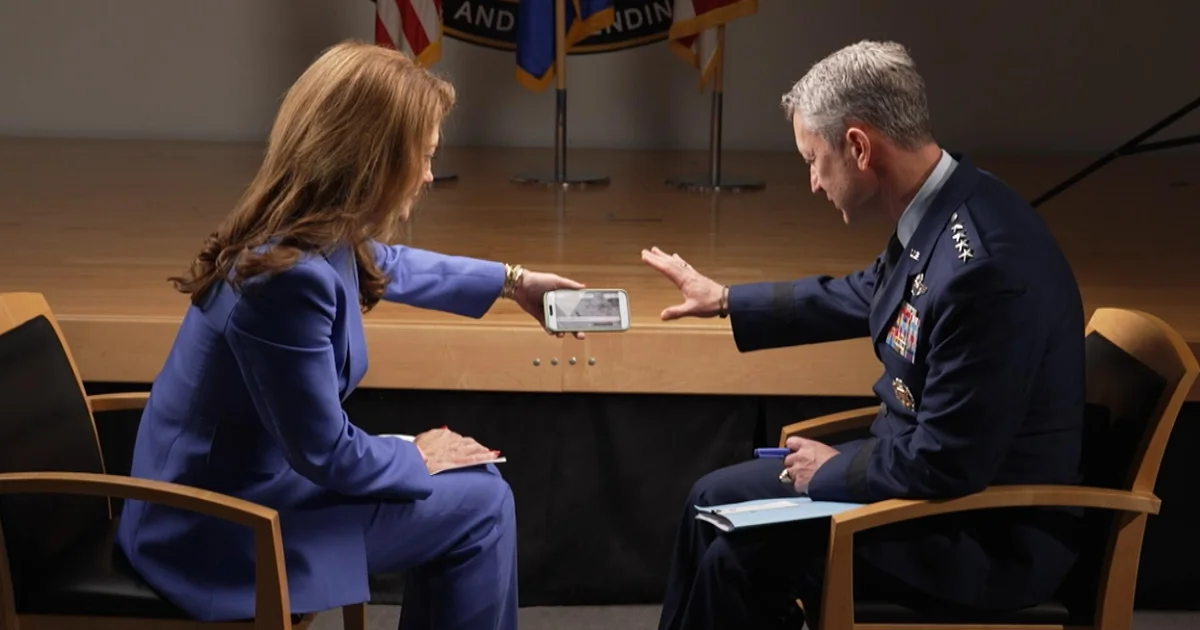
Speaking publicly for the first time in an interview with Norah O’Donnell, Bravo said the missile struck the aircraft with the force of a “freight train”. The damage was so severe that the crew quickly realised they could not save the jet, known as Dude 44.
“We do all we can to try to save the aircraft. It was evident that that wasn’t possible. And soon thereafter, we ejected and found ourselves floating over the heart of Iran,” he said.
Bravo credited Alpha with reacting quickly enough to save both their lives. “I will be thankful, to my dying day, for my pilot and crew mate, Alpha, for saving our lives and ejecting us,” he said.
Damaged parachute left Bravo falling towards the ground
The F-15E’s ejection system delayed the two men’s descent by several seconds, creating distance between them after they landed. But Bravo’s parachute had been damaged when the aircraft was struck.
“At one point when I looked up and saw no parachute, that was the most terrifying thing I’ve ever seen,” he said. “So I paused, right then. And I prayed, ‘Lord, your will be done. But if I’m getting through this, I need help.’”
He and military debriefers later estimated that he was falling at between 70 and 100 miles an hour. Despite breaking his back, shoulder and arm, as well as suffering a sprained ankle and cuts to his face and head, he worked to release parts of the parachute and control his descent.
Bravo described surviving the fall as “a miracle”, saying his injuries did not prevent him from continuing to evade capture. He also praised the airmen who had maintained the aircraft, his ejection seat and his survival equipment.
“Despite the damage to the aircraft, to include the damage to my ejection seat, it outperformed the design specifications,” he said. “And I call that a testament to their professionalism.”
US rescue team reached Bravo as Iranian forces closed in
After landing, Bravo chose not to use his communications equipment immediately. He said his priority was to leave the area before Iranian forces arrived and to find somewhere he could hide and communicate safely.
He climbed a 7,000-foot ridgeline while injured, as Iranian forces searched for him. US military sources said the troops came within a few hundred metres of his position.
“Never let a lack of motivation put you on Iranian TV,” Bravo said, explaining that he kept moving because of the “warrior ethos” in which he had been trained.
About 48 hours after the fighter was shot down, US forces reached him on the ridgeline. Iranian soldiers were gathering at the foot of the mountain, and Bravo said the arrival of the rescue party was “one of the greatest moments of my life”.
He declined to disclose what the rescuers said to him, but recalled his own response: “Let’s go.”
The escape was not yet complete. At a makeshift airstrip, the landing gear of the rescue aircraft became stuck in the desert sand, leaving the plane and the more than 90 special operators aboard stranded.
A clandestine US Air Force unit eventually freed them. The abandoned aircraft was then bombed by the US to prevent it from being captured by Iran.
Bravo said he had never doubted that the military would come for him. “It’s what we do,” he said. “I have great faith in my creator. And second only to that is my faith in the men and women of the United States military.”
