


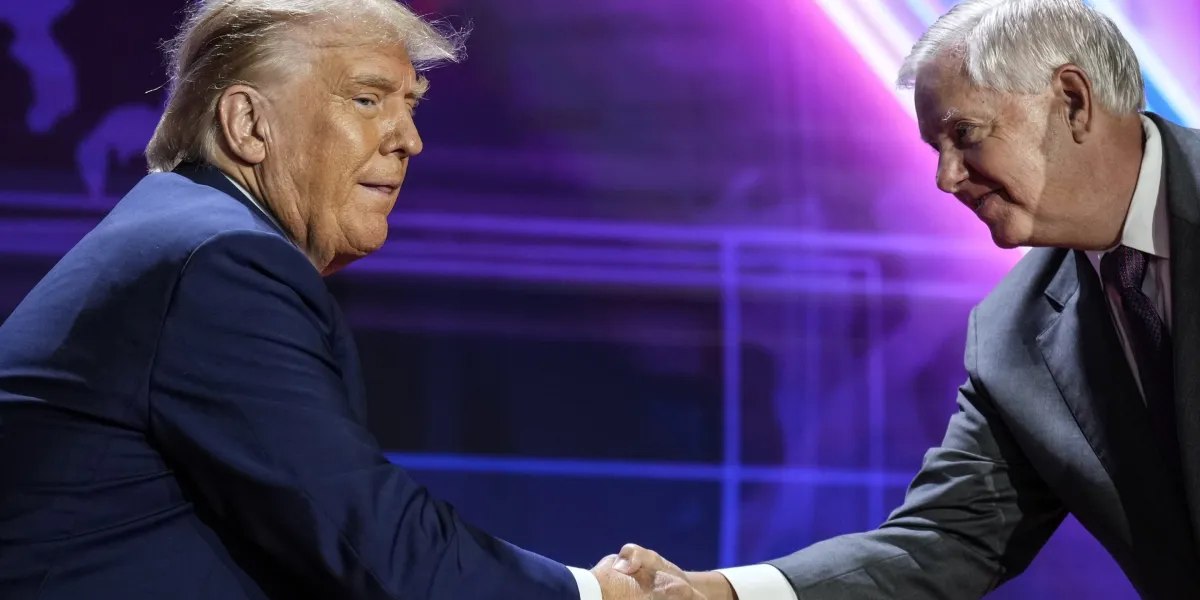
Democrat Annie Andrews has defeated President Donald Trump’s candidate, Darline Graham, in the South Carolina Senate race, according to calls by CBS News, NBC News and Decision Desk HQ.
The result makes Andrews the first Democrat to win a Senate election in South Carolina since Fritz Hollings in 1998. It also represents a significant setback for Trump in a state he carried by 18 percentage points in 2024.
Republican Alan Wilson held a narrow lead in the governor’s race on Tuesday evening, although that contest had not been called. Graham was running about 10 points behind Wilson, suggesting that some Republican voters backed the party’s gubernatorial candidate while choosing Andrews for the Senate.
Such ticket-splitting was rare elsewhere in the night, but it proved decisive in South Carolina, where Republicans had held the Senate seat for decades.
Trump’s backing secured Graham’s nomination
Trump played a central role in Graham’s political rise after her brother, Lindsey Graham, died in July. He lobbied Governor Henry McMaster to appoint her, despite her being a newcomer to politics, and she initially described the role as an opportunity to complete her brother’s work.
Days later, Trump wrote “RUN, DARLINE, RUN!” on Truth Social and promised his “complete and total endorsement”. Graham announced her campaign on Fox News three days afterwards.
His support helped her through the Republican primary, but she was forced into a runoff against Representative Ralph Norman, which she won by less than five percentage points.
Trump subsequently returned to South Carolina to campaign for her, holding rallies in Pendleton on October 21 and Rock Hill a week later. On election day, he described Graham as “a spectacular person, and a true American Patriot”.
The appearances appeared to give Graham a temporary boost. A Citadel poll showed Andrews one point ahead before the Pendleton rally, while Graham’s support was seven points higher among voters surveyed afterwards. A New York Times/Siena poll in the final week put the candidates level.
Republican unease over the Senate contest
Some South Carolina Republicans had expressed doubts about Graham for months. CJ Westfall, chairman of the Dorchester County Republican Party, said in October that he expected Wilson to win by 10 to 12 points but Graham by only two to four.
Ben Jacobs of Slate reported that some party members resented Graham securing the seat through what they viewed as nepotism, with Trump’s support linked to his relationship with her brother. Some Republicans organised a write-in campaign for Norman.
Republican groups nevertheless directed substantial resources towards the contest. The Senate Republicans’ main super PAC sent reinforcements to a seat it had not previously needed to defend, while American Mission, the Republican arm of the Leading the Future super PAC network, invested about 2.7 million dollars in Graham’s campaign.
Andrews, a former paediatrician, sought to appeal beyond the Democratic base. She rarely appeared alongside national Democrats and secured endorsements from former Republican governor David Beasley and former Democratic governor Jim Hodges.
She also said she would not run against Trump, telling voters: “I’m willing to work with anyone, including the president.” Andrews raised 10.8 million dollars, with 60% coming from small donors.
