


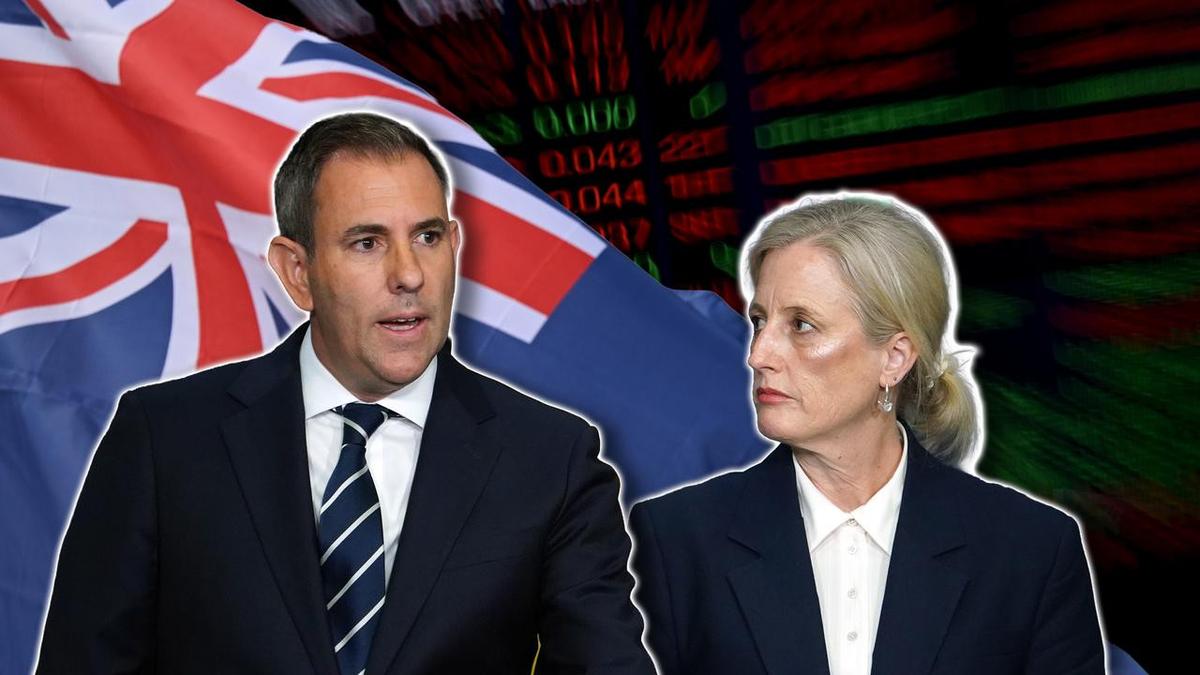
Australia’s improved federal budget result is unlikely to ease pressure on households facing a widely expected interest rate hike, with the Reserve Bank forecast to lift its cash rate to 4.6 per cent.
The underlying cash deficit for 2025-26 was $22.3 billion, $6 billion below the figure forecast in May. Treasurer Jim Chalmers said the result showed the government’s economic management was delivering, while acknowledging that financial pressures on households were intensifying.
“Despite this very welcome improvement in the budget, we know that pressures are intensifying rather than easing,” Mr Chalmers said.
Budget deficit improves as debt falls
Stronger revenue and lower-than-expected spending contributed to the improvement. The government collected $4.6 billion more than forecast and spent $1.4 billion less.
Gross debt fell to $971.4 billion, around $10.6 billion below Treasury’s most recent prediction.
Much of the additional revenue came from investors and businesses rather than wage earners. Tax receipts from individuals and other withholding taxes were $2.3 billion above forecasts, while superannuation funds generated a further $1.9 billion after stronger-than-expected foreign exchange gains.
Spending on the Support at Home aged-care scheme was $1.4 billion lower than anticipated because providers were unable to deliver services at the expected rate. Outlays on prescription medicines, childcare, regional development and Covid-19 vaccination programmes were also below forecasts.
However, several areas cost more than expected. Defence spending exceeded projections by $1.28 billion, while health spending was $1.02 billion higher. Transport and communications spending was almost $1 billion above budget estimates, with additional costs also recorded for disaster relief, roads, rail projects, home battery subsidies and renewable energy programmes.
Households face prospect of higher mortgage costs
The figures were released less than 24 hours before the expected Reserve Bank decision. Economists and financial markets are anticipating an increase to 4.6 per cent, which would put interest rates at their highest level in 15 years.
The Coalition has repeatedly argued that government spending is adding to inflationary pressure and keeping rates higher for longer. Liberal MP Zoe McKenzie said mortgage holders were already struggling with borrowing costs.
“The average Australian household with a mortgage is already having to find more than $30,000 a year in after-tax dollars just to meet the interest payments on their mortgage,” she said.
Treasury figures also showed tobacco excise revenue had fallen $200 million below forecasts and dropped below $4 billion for the first time this century, as illicit tobacco continued to erode the legal market.
Higher global oil prices are adding to concerns that inflation will remain elevated, with Brent crude rising above US$100 a barrel amid tensions in the Middle East and uncertainty over supplies.
The government is expected to use the stronger budget result to reinforce its claims of responsible economic management. For households, however, the immediate concern remains whether inflation will slow sufficiently for interest rates to begin falling rather than rising.
