


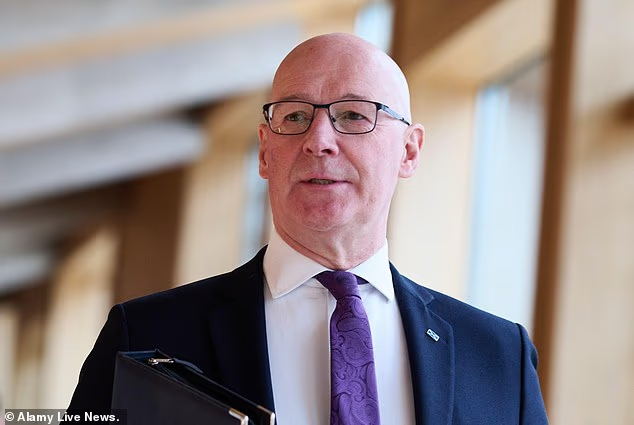
John Swinney has said he lacks confidence in the UK’s ability to protect itself from potential Russian threats, while insisting that Scottish independence would not make the country less secure.
The Scottish First Minister said he was “very worried” about a lack of coastal and offshore protection, particularly in vulnerable areas around Scotland. His comments came after the head of MI5, Sir Ken McCallum, described Russia as the UK’s “aggressor number one”.
Speaking ahead of the SNP conference in Aberdeen, Mr Swinney questioned whether the UK’s current defence posture was sufficient.
“I don’t think we’ve got nearly the presence in those areas that we require today,” he told BBC Scotland.
He added: “There’s an obligation on the United Kingdom government to make sure that the country is safe. And I don’t think the defence posture of the United Kingdom enables me to have that confidence.”
Mr Swinney rejected the suggestion that independence would weaken Scotland’s security, despite the SNP’s commitment to removing Trident nuclear weapons from their base at Faslane on the Clyde.
He argued that independence would instead provide Scotland with “more choices”, without setting out further details of how its defence arrangements would operate.
The First Minister also used Andy Burnham’s wish to discuss closer ties with the European Union at an upcoming summit to argue that the question of Scottish independence could be revisited.
“I think it’s an interesting precedent that if we can reopen an issue that’s been decided by a referendum, then we can also reopen Scottish independence,” he said.
In a separate interview with STV, Mr Swinney said he would be “very happy” to support another referendum on EU membership.
Meanwhile, SNP Westminster leader Dave Doogan said he had a “comprehensive overview” of defence in an independent Scotland, including services, equipment and personnel.
However, he did not disclose the plans, saying: “There will be a time and a place to release that to people and that will be when there’s an audience that is willing to receive it.”
