


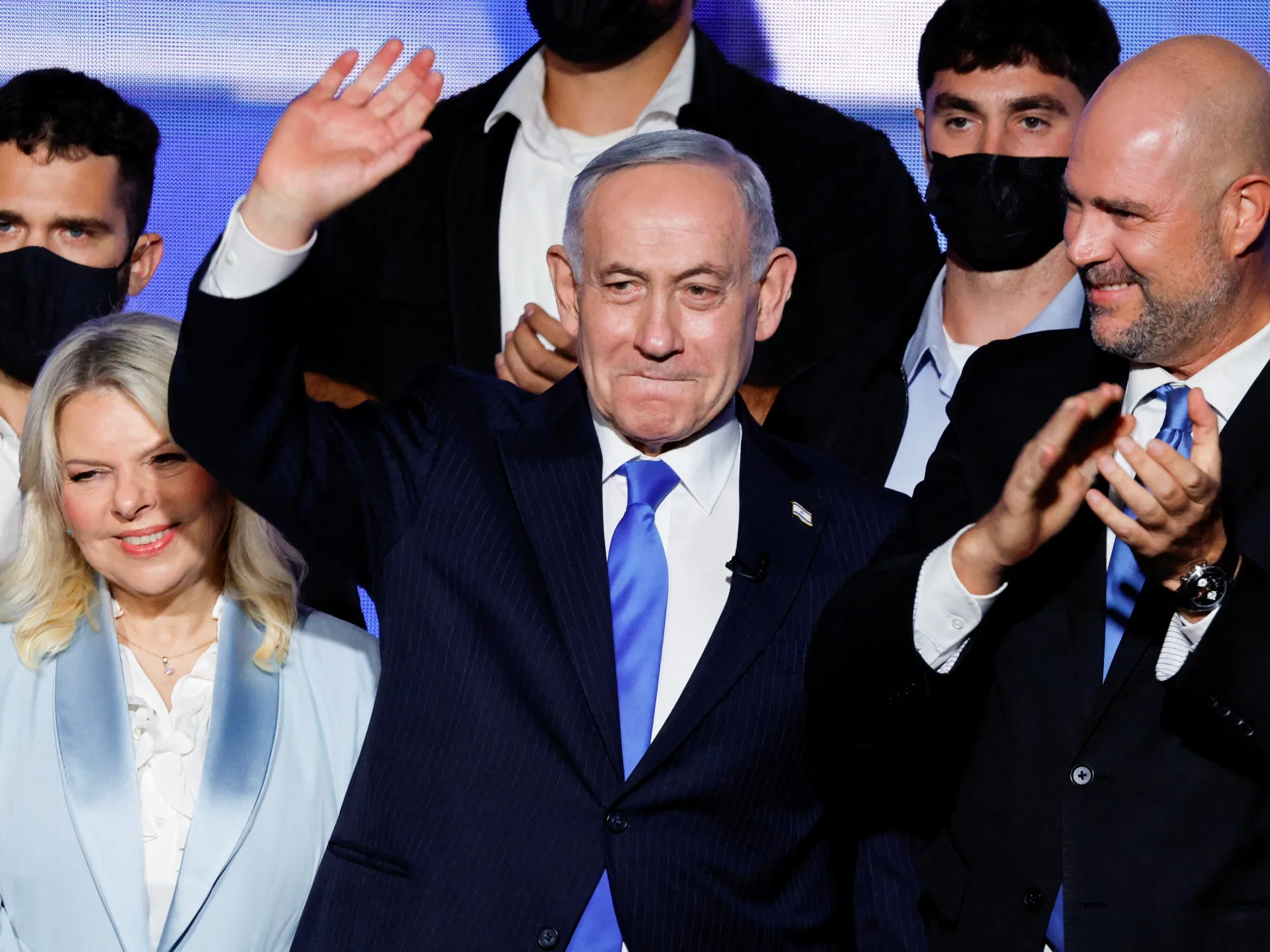
Benjamin Netanyahu’s reshaping of Israel’s institutions is at the centre of the country’s political debate as its longest-serving prime minister seeks re-election in polls on October 27.
Supporters regard Netanyahu as a leader who has delivered where others failed. His opponents say his decades in power have deepened corruption, widened social divisions and left Israel increasingly isolated internationally.
Analysts say his most lasting domestic legacy may be the right-wing, militaristic opposition he helped build and now confronts. His transactional style of leadership has made extreme-right and religious parties indispensable to his governing alliance.
Netanyahu entered national politics in the early 1990s by campaigning against possible peace agreements with the Palestinians and Syria. He was accused by Israeli political leaders of helping to fuel the climate that preceded the 1995 assassination of Prime Minister Yitzhak Rabin by an ultranationalist Israeli.
Netanyahu had led rallies where Rabin was portrayed in a Nazi SS uniform and demonstrators held signs showing him in the crosshairs of a gun. Others called the prime minister a “traitor”. Netanyahu denies responsibility for the assassination, while former security officials have said they warned him to moderate his rhetoric.
His populist approach helped him win office in 1996, when he became Israel’s youngest prime minister. During his periods in power, religious courts gained authority over civil and business disputes, while state institutions adopted religious agendas and ultra-Orthodox schools and institutions received record levels of funding.
In 2018, the Knesset passed the Nation-State Basic Law, declaring Israel to be the exclusive state of the Jewish people and making the advancement of illegal settlements a national priority. Human rights organisations petitioned the High Court against the legislation, but their challenge was rejected.
International experts and rights groups have cited the law, among other measures, as evidence of what they describe as apartheid in Israel’s treatment of Palestinians. The legislation has remained part of the wider argument over the country’s identity and the status of its Palestinian citizens.
Judicial reform and political control
Netanyahu also sought to re-engineer the state’s security structures, appointing loyalists and political allies to senior posts and clashing with security chiefs he regarded as hostile. After the Hamas-led attack of October 7 2023, he shifted blame towards the security establishment, prompting Ronen Bar, then head of the Shin Bet, to sue him for defamation.
The judiciary has been another major target of his government. Legislation changed the make-up of the Judicial Selection Committee, giving the governing coalition greater political influence over appointments.
Netanyahu described the programme as “judicial reform”, arguing that it was needed to prevent what he called a “judicial dictatorship” from ruling over elected politicians. Opponents condemned it as a coup aimed at weakening the independence of the High Court and increasing ministers’ influence over the courts and their legal advisers.
The proposals triggered widespread protests. Netanyahu repeatedly tried, without success, to dismiss the attorney general, but did remove the military’s advocate general after a video was leaked showing Israeli soldiers allegedly gang-raping a Palestinian detainee. The soldiers were released and cleared of charges.
The prime minister is also facing three corruption cases filed in 2019 and denies any wrongdoing. The proceedings could result in a prison sentence if he is convicted.
Netanyahu, who is wanted by the International Criminal Court on war-crimes charges relating to Gaza, has said his work is unfinished. He has promised supporters that he will complete the overhaul of judicial review and pursue other deeply controversial policies.
Many of the changes made during his years in office are now embedded in law, leaving opponents who want to reverse them with a formidable task. While his allies describe his record as proof of effective leadership, critics argue that undoing the institutional and political changes associated with his rule may prove easier said than done.
