


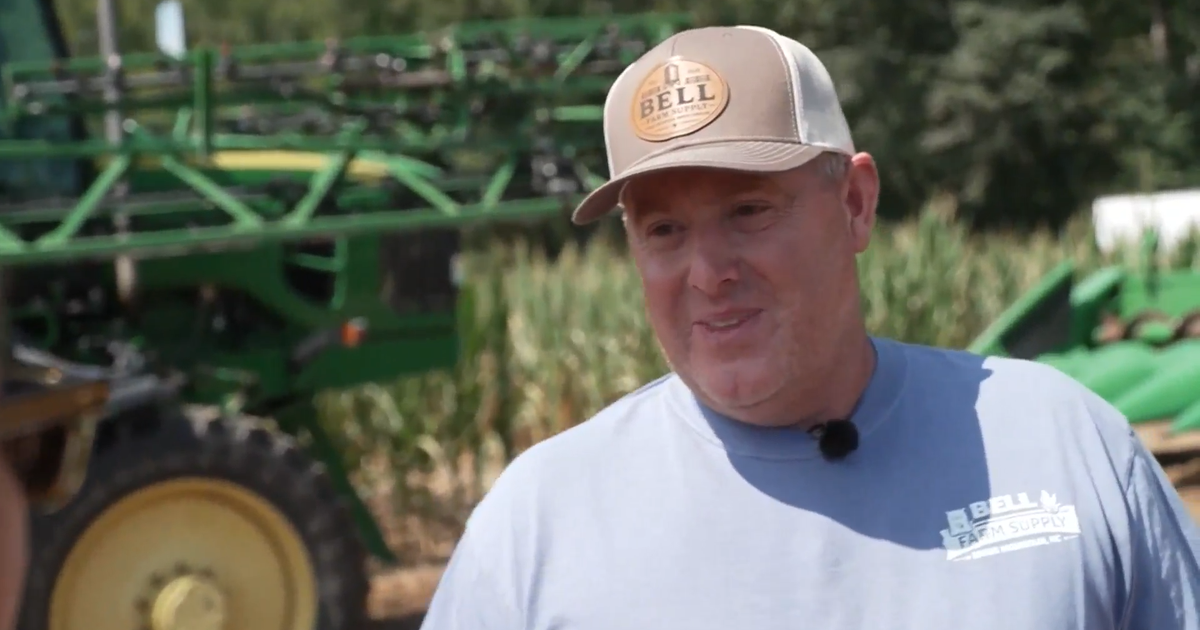
A North Carolina farmer who voted for Donald Trump says soaring fuel, fertiliser and equipment costs have pushed his business to the brink, leaving him considering whether he can continue after this growing season.
Matt Bell, 52, farms more than 1,000 acres near Kings Mountain, growing soybeans, corn and wheat while raising beef cattle. He has worked in agriculture for 34 years but said he had never experienced such pressure.
“I’ve done this 34 years. I have never worried and stressed like I have the last year,” Mr Bell said.
The farmer has altered his operation to reduce spending, switching some of his acreage, extending the working life of his machinery and making his own fertiliser. His children have also opened a shop offering pumpkin picking and hayrides in the autumn.
But Mr Bell said there was little left to cut. “We’ve cut everything we can cut,” he said. “The last several years in agriculture have been terrible, and we have, you know, just cut the fat anywhere we could. But we’re just getting to the point now there’s nothing left to cut.”
Diesel costs put North Carolina farm under pressure
Diesel prices have become one of the most immediate problems. Mr Bell said the cost of fuel for his farm had roughly doubled in a year, with the price quoted by his distributor in the morning sometimes rising again by the afternoon.
His combine now uses about 600 US dollars’ worth of diesel each day, he said. The farm’s annual fuel budget of 35,000 dollars had already been exhausted by August, and he expects the final bill to reach between 50,000 and 60,000 dollars.
“Every piece of equipment on this farm runs on diesel,” Mr Bell said. “Without it, his farm wouldn’t be able to function.”
The conflict with Iran has driven up fuel costs and disrupted supplies, while fighting involving Russia and Ukraine has further limited oil-refining capacity, according to the account of the market pressures facing the farm.
National diesel prices were averaging about 6.40 dollars per gallon, nearly twice the level a year earlier. In North Carolina, the average reached a record 6.19 dollars per gallon on Thursday.
Tariffs add to farmers’ costs
Fuel is not the only expense weighing on Mr Bell. He said tariffs introduced by the Trump administration had increased the cost of fertiliser, chemicals, seed and replacement parts, while the threat of further measures had made it difficult for farmers to plan.
“Everything we’re touching, the fertilizer, fuel, chemicals, seed, parts — you know, the whole nine yards, everything that we touch has gone up,” he said.
Farmers had welcomed an announcement in May that China would buy 25 million metric tonnes of US soybeans each year through to 2028. But a 10 per cent Chinese tariff on American soybeans remains in place, and Mr Bell said the market had been left in limbo.
China has bought more US soybeans in 2026 than in 2025, but Mr Bell said the price being paid had not risen to reflect the higher cost of producing them.
The American Soybean Association has called for the tariff to be removed ahead of a planned meeting between Mr Trump and Chinese President Xi Jinping.
Trump voter says he may split his ticket
Mr Bell initially backed Mr Trump’s policies and believed the short-term cost of the conflict with Iran might be justified by the aim of preventing the country from obtaining a nuclear weapon.
He now believes the administration has made mistakes over the war. “We’re just being strung along as a country and that’s not good,” he said, adding: “I think we’ve been misled.”
He also said agricultural policy had failed to deliver what farmers had been promised. “We were sold a bill of goods that agriculture was going to be on the forefront … and there was going to be some policy that would put America’s farmers and ranchers first. And right now, that has not happened.”
Mr Bell said a government farming support programme sounded significant but amounted to “not a lot of money”. At November’s elections, he said he would vote for candidates with “common sense” and was likely to split his ticket.
He said some farmers he knew had already been forced out of business because they could no longer sustain their operations.
“I do not want any Americans to feel sorry for the American farmer,” Mr Bell said. “I want the Americans to be mad that we have been put in this situation. We are fighting for survival, and we’re running out of options.”
Despite saying money was not his main concern, Mr Bell acknowledged that he too could be forced to close. “I can’t stay in business under these conditions. Something has got to give,” he said.
Asked what he would do if he were no longer a farmer, he hesitated. “I don’t know. It’s all I’ve ever done.”
