


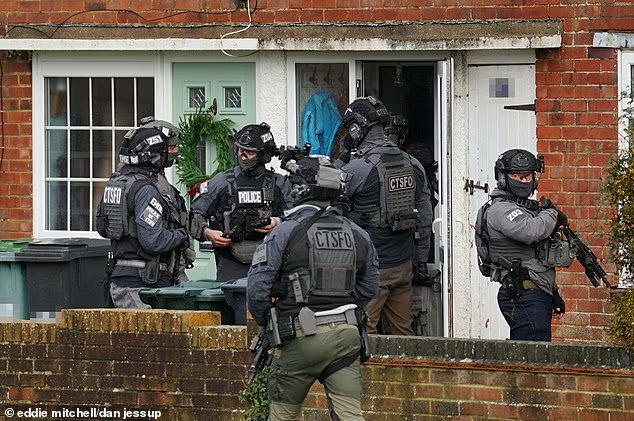
The number of people imprisoned in Britain for terrorism offences has reached a record high, with the majority classified as holding Islamist-extremist views, Home Office figures show.
There were 275 people in custody for terrorism offences at the end of June, up 7 per cent on the previous year and above the previous record of 273 set at the end of March. The total is the highest recorded since comparable records began in 2010, when 126 people were imprisoned.
Islamist extremism accounted for 57 per cent of those in prison for terrorism. A further 29 per cent were classified as holding extreme Right-wing beliefs, while 14 per cent – around 38 people – were placed in an “other” category.
Separate Ministry of Justice figures showed that, of the 34 people in the “other” category in March, four were described as far-Left or anarchist, eight as holding multiple ideologies, 10 as having no ideology and 12 as holding other beliefs.
Palestine Action arrests drive rise in terrorism figures
The figures come after Palestine Action was proscribed in July last year, making it the first direct-action protest group to be banned under the Terrorism Act.
Of 7,385 people arrested for suspected terrorism-related activity since the attacks of 2001, 3,867 were arrested in the year to June. That means more than half of all such arrests over the period took place during the latest 12 months.
The Home Office said 94 per cent of those arrests were linked to support for Palestine Action. In the preceding 12-month period, before the ban came into force, there were 234 terrorism arrests.
Members or supporters of Palestine Action can face up to 14 years in prison under the proscription, which was introduced by then-home secretary Yvette Cooper.
The ban is being challenged by the group’s co-founder, Huda Ammori. High Court judges ruled in February that the proscription was unlawful, but the decision was overturned by the Court of Appeal, which found the ban to be a “justified and proportionate” interference with freedom of expression rights.
Ms Ammori has applied to take the case to the Supreme Court and has said she will go to the European Court of Human Rights if necessary. Supreme Court judges are due to hear the challenge next month.
The decision has faced criticism from politicians on both sides of the political divide. Conservative former Cabinet minister Sir Jacob Rees-Mogg said earlier this week that the ban had “made the Government look stupid” in an interview with American journalist Tucker Carlson.
“We have historically protected freedom of speech and we are now attacking freedom of speech, and I’m deeply concerned about that,” he said.
Sir Jacob added: “Governments have power to stop terrorist organisations. Quite right, they need to have that power. But what they’ve done with Palestine Action is confuse the people who support it politically with the people who are bad people who want acts of violence.”
He said he believed it was reasonable to arrest people who proposed or prepared acts of terrorism, but not those arrested solely for supporting a political view.
A total of 52 terrorists were released from prison during the past year. Terrorism offenders are not eligible for the Government’s early-release measures intended to tackle overcrowding; they must still serve two-thirds of their sentence in custody and face the Parole Board before release.
