


The US-Canada trade dispute has intensified after Donald Trump imposed new tariffs and threatened restrictions on Canadian imports, despite the two countries’ closely integrated economies and a trade agreement covering most goods.
Trump has accused Canada of treating American exporters unfairly and said the United States had been “ripped off for 50 years by Canada”. The remarks came after trade talks between the two countries collapsed on August 21.
Canada responded to US tariffs on about $20 billion (£14.9 billion) of its products with measures of its own. Trump then announced plans to ban imports including Canadian whey, most alcoholic drinks, motorcycles and mopeds, while saying toilet paper, bedsheets and fishing rods would be removed from the list of targeted goods.
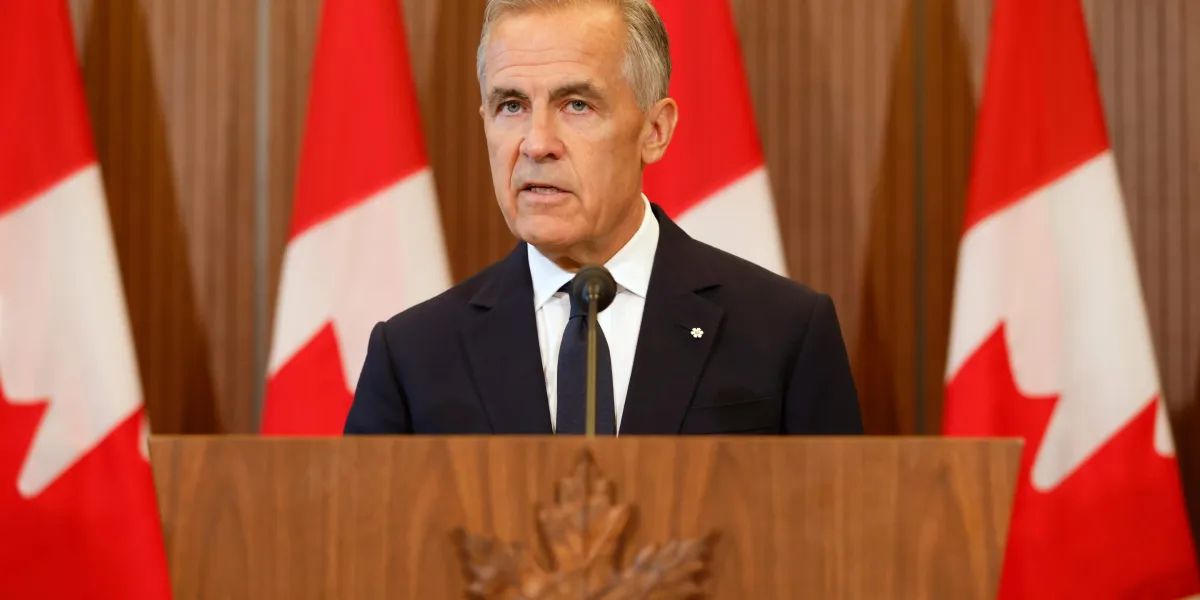
The restrictions are not due to take effect until September 29, leaving time for negotiations to resume. Canadian prime minister Mark Carney said: “Canada is always ready to strike a fair deal.”
The US-Canada trade dispute centres on dairy and oil
Washington has long criticised Canada’s protection of its dairy industry. Canadian rules impose tariffs of more than 200% on many dairy products once imports exceed agreed quotas, rising to almost 300% for some items including butter.
Canada says the system protects domestic producers, while the United States argues that it restricts access for American farmers. Barry Appleton, co-director of New York Law School’s Center for International Law, described Canada as “a modestly protected economy with two or three genuinely closed sectors”.
However, the United States already sells considerably more dairy to Canada than it buys. American dairy exports to Canada rose by more than 11% last year, following an 8% increase in 2024. The US exported $1.3 billion of dairy products to Canada last year, compared with imports worth $585 million.
Trump claimed on social media that Canada did not allow American dairy farmers to sell into its market. But the US-Mexico-Canada Agreement, known as USMCA, allows Canada to retain its supply-management system while providing American producers with greater access.
The wider US trade deficit with Canada stood at $27.3 billion last year. Much of that imbalance is explained by oil rather than a broad pattern of Canadian exports overwhelming American goods.
Canada sent more than $85 billion of crude oil to the United States in 2025. Refineries in the American Midwest rely on the heavy sour crude produced from Alberta’s oil sands, and the Canadian oil is sold at a discount to the main US crude benchmark.
“It’s the only oil they can use,” Mr Appleton said. “They can’t use Texas crude. They can’t use Venezuelan crude. They’re not set up for it. It would take years and billions of dollars to shift over.”
Economic ties make a settlement likely
The dispute has placed pressure on a trading relationship in which Canada sends about 70% of its exports to the United States. American farmers depend on Canadian potash fertiliser, while communities along the northern US border rely on electricity generated in Canada.
Most US products enter Canada duty-free under the USMCA, which took effect in July 2020. Before the latest escalation, Canada’s effective tariff rate on American imports was about 2.4%, compared with 5% imposed by the United States on Canadian goods, according to calculations cited in the source material.
Canada has also ranked more highly than the United States in two measures of economic freedom. The Heritage Foundation placed Canada 14th among 184 economies and the United States 22nd, while the Fraser Institute ranked Canada 11th out of 165 countries and territories.
Trump and his trade negotiators are seeking lower Canadian barriers for American farmers and are also pressing Ottawa to move some manufacturing to the United States. Inu Manak, a senior fellow at the Peterson Institute for International Economics, said that would be difficult for Canada to accept.
She said the delay before the proposed import ban takes effect means “there could be a way out of this”. Trump, speaking in Dublin alongside Ireland’s prime minister, said Canada would probably reach an agreement once it treated American farmers more fairly.
The standoff has also put the future of the USMCA under strain. Barry Appleton said the agreement had helped build an integrated automotive industry across the United States, Canada and Mexico, warning: “We had the best integrated North American economy going. And now we don’t.”
